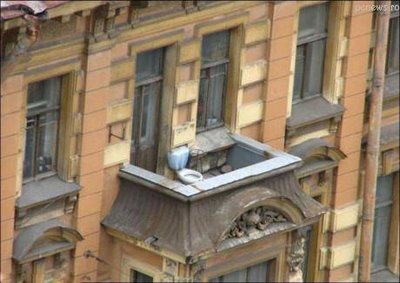
Here is something for everyone to laugh at.......
Enjoy,
Monday, September 14, 2009

Sunday, September 13, 2009
National Cat of Russia - The Siberian

Taken from the Cat Fanciers offical website.
Breed Profile: Siberian Cat
Recorded history shows that the Siberian breed has been around for at least one thousand years.
They were first mentioned in Harrison Wier's book Our Cats and all About Them, which included information about one of the earliest cat shows held in England in 1871.
However, finding written information in Russia is fairly difficult.
Despite the fact that the Siberian is a natural breed and is the national cat of Russia, its very ubiquity makes it taken for granted rather than worthy of note in Russian literature.
Add to this the vast expanse of Russia which encompasses 13 time zones as well as a multitude of ethnic and cultural diversity and you have a cat that seems as difficult to standardize as the country which gave rise to it.
The Siberian was first imported in 1990.
Despite it's popularity the Siberian is extremely rare in the United States.
Most breeders have waiting lists for their kittens.
The Siberian, considered a semi longhair, has a rich full coat in the winterwhile the summer allows for a somewhat shorter less dense coat.
The Siberian can come in just about every color of the rainbow but because of the rarity of the breed those colors may not be available in your neighborhood.
The Siberian was accepted for registration by CFA February 2000 and advanced to championship status in February 2006.
The Siberian tends to be both a great problem solver and also, rather like dogs, are loyal to their adopted families which is why they are so well suited to the households in which one spouse, usually a husband or significant other, professes to be a "dog person" not a "cat person."
Often it is that same "dog person" who is greeted at the door by their Siberian and after being dutifully followed around the house by their Siberian, then decides that one Siberian is simply not enough!
Siberians are extremely agile and can leap great distances and heights to "fly through the air with the greatest of ease!"
However, their agility also means they usually navigate potentially breakable brick-a-brac without leaving a path of destruction in their wake.
Prudence dictates that one would still want to think twice about placing a Ming Dynasty vase on the mantle.
A delightful combination of the flying Walenda's and the sleuth "the Pink Panther," the Siberian is a zany mixture of both.
Expect the unexpected when sharing your home with a Siberian.
Pricing on Siberians usually depends on type, applicable markings and bloodlines distinguished by Grand Champion (GC), National, National Breed and/or Regional winning parentage (NW, BW, RW) or of Distinguished Merit parentage (DM).
The DM title is achieved by the dam (mother) having produced five CFA grand champion/premier (alter) or DM offspring, or sire (father) having produced fifteen CFA grand champion/premier or DM offspring.
Usually breeders make kittens available between twelve and sixteen weeks of age.
After twelve weeks, kittens have had their basic inoculations and developed the physical and social stability needed for a new environment, showing, or being transported by air.
Keeping such a rare treasure indoors, neutering or spaying and providing acceptable surfaces (e.g. scratching posts) for the natural behavior of scratching (CFA disapproves of declawing or tendonectomy surgery) are essential elements for maintaining a healthy, long and joyful life.
The shrinking Russian population.
Since the collapse of the USSR, the Russian population has dropped dramatically, mainly from emigration to countries offering better opportunities following the economic contractions of the 90s.
Today, population decline is still a major issue in Russia. Factors include very high abortion rates and low birth rates, since there is little incentive to have children while one's income is low, which can in many cases push families under the poverty level.
Other causes include very high levels of suicide (which have declined since the end of the major recessions of the late 90s), alcohol poisioning, and recurring illnesses and lifestyle diseases related to alcohol consumption. Other, more often cited factors relate to the fall of the Soviet Union, especially its health care and pension systems directly relating to the decline in Russia's standard of living.
To counter these issues, Vladimir Putin started many programs to curb population decline. Benefits to mothers that have children, crackdowns on alcohol sales, and rising economic conditions seem to be slowly reversing the trend, even though population growth is still negative.
A very interesting approach to promoting more births was taken up by governor Sergei Morozov of Ulyanovsk Oblast (Ульяновская область) a small federal district of 1.5 million, roughly 300 miles east of Moscow. Governor Morozov created a regional program called "Family Contact Day", on June 12, the national holiday of Russia's independence from the USSR. The program gives out prizes such as cars and cash amounts to families that have births on the day, and also promotes staying home for the day and having sex.
Today, population decline is still a major issue in Russia. Factors include very high abortion rates and low birth rates, since there is little incentive to have children while one's income is low, which can in many cases push families under the poverty level.
Other causes include very high levels of suicide (which have declined since the end of the major recessions of the late 90s), alcohol poisioning, and recurring illnesses and lifestyle diseases related to alcohol consumption. Other, more often cited factors relate to the fall of the Soviet Union, especially its health care and pension systems directly relating to the decline in Russia's standard of living.
To counter these issues, Vladimir Putin started many programs to curb population decline. Benefits to mothers that have children, crackdowns on alcohol sales, and rising economic conditions seem to be slowly reversing the trend, even though population growth is still negative.
A very interesting approach to promoting more births was taken up by governor Sergei Morozov of Ulyanovsk Oblast (Ульяновская область) a small federal district of 1.5 million, roughly 300 miles east of Moscow. Governor Morozov created a regional program called "Family Contact Day", on June 12, the national holiday of Russia's independence from the USSR. The program gives out prizes such as cars and cash amounts to families that have births on the day, and also promotes staying home for the day and having sex.
Saturday, September 12, 2009
Sea Buckthorn
 I was reading a magazine when I came across an interesting article about the wonders of Sea Buckthorn. With a little bit of extra research I now know that Sea Buckthorn originates in northwest Europe and central Asia. The Russians introduced the berries to North America in the beginning of the 20th century. Sea Buckthorn berries have amazing medicinal purposes. The oil is anti-inflammatory, anti-microbial, analgesic, and regenerative. To find out more about Sea Buckthorn berries health benefits click here
http://www.wwfpak.org/nap/dnap_medicinalplants_seabuckthorn.ph
Clinical tests on Sea Buckthorn medicinal uses started in Russia during the 1950s. The first Russian factory for Sea Buckthorn product development was located in Bisk. The Sea Buckthorn industry has been thriving since then. The berries are sold throughout the world as juice, oil, crème, tea, sorbet and jelly. Because of their anti-aging properties many Russian and European cosmetic companies are adding the oils to there products. For more information visit
http://www.itmonline.org/arts/seabuckthorn.htm
http://www.hort.purdue.edu/newcrop/ncnu02/v5-393.html
Friday, September 11, 2009
Russian Folk Instrument of the week: Russian Wooden Spoons

See those babies? I now not only own a pair of them, I know how to play them. While dancing.
The Russian Wooden Spoons are pretty much a staple of traditional Russian folk music. I learned this when I joined the brave Russian choir during my summer at Middlebury College.
How do you play three spoons, you ask?
The convex surfaces of the bowls are struck together in different ways. For example, two spoons are held by their handles in the left hand, and the third, held in the right hand, is used to hit the two spoons in the left hand. The hit, in a sliding motion, produces a typical sound. You can also hold three spoons in the left hand and put a fourth into the bot or the pocket. (I wouldn't try this at home though) A fifth spoon is then held in the right hand and used to hit the other four. Finally, if you're really nervous about it, you can hold the bowl of a single spoon in the left hand and hit it with another spoon. In this style, different sounds can be emitted by holding the bowl more or less tightly.
Look forward to next week's installment of fun with Russian Folk Instruments when we cover the Balalaika!
Thursday, September 10, 2009
Poetry
I've always been interested in Russian poetry, especially that of Anna Akhmatova. On the website RussiaToday you can get samples from all types of Russian literature from various authors. This is one of my favorites (and depressing!) by Akhmatova =)
The Last Toast
I raise my glass
To ravaged home,
My bitter life,
And lonely days with you.
I drink to you,
To lying lips' betrayal,
To deathly frigid eyes;
To that the world is cruel and crude,
To that we weren't saved by God.
To ravaged home,
My bitter life,
And lonely days with you.
I drink to you,
To lying lips' betrayal,
To deathly frigid eyes;
To that the world is cruel and crude,
To that we weren't saved by God.
Another of my favorites is My Way, which she wrote in 1940:
One goes in straightforward ways,
One in a circle roams:
Waits for a girl of his gone days,
Or for returning home.
But I do go —and woe is there—
By a way nor straight, nor broad,
But into never and nowhere,
Like trains —off the railroad.
Wednesday, September 9, 2009


Sergei Prokofiev and Alexander Nevsky
In 1938 Sergei Prokofiev (Сергей Сергеевич Прокофьев) collaborated with film director Sergei Eisenstein(Цергей Михайлович Зйзенштейч) to write music for the film Alexander Nevsky, depicting the historic battle(s) between the Russians and the Teutonic Knights. The film was much a success along with the music. Later after the film was released Sergei Prokofiev made the score into a cantata, basically a vocal piece with instrumental accompaniment in this case orchestra. The soundtrack recently was re-recorded and the film was given a face lift also. I include what I feel are two of the most powerful movements of the cantata. They are shown with the orignial scenes of the movie.
The historic "Battle on the Ice," also known as the "Battle on Peipus."
To me in the beginning it sounds like a train! The music gives a mood of an impending clash of forces, and once the choir enters the music is almost pure energy. A side note, some of the words in the cantata are written in what is belived to be a "fake latin," some believe this is a personal jab Prokofiev is making at Igor Stravinsky (fellow Russian composer of The Rite of Spring and The Firebird), for leaving Russia and essentially not coming back.
This is perhaps the most touching movement in the entire cantata. To me it was explained as a mother or woman searching for her loved one among the dead. The lyrics are:
I shall go across the show-clad field,
I shall fly above the field of death.
I shall search for valiant warriors,
my betrothed, my stalwart youths.
Here lies one felled by a wild saber;
there lies one impaled by an arrow.
From their wounds blood fell like rain
on our native soil, on our Russian fields.
The choir in this instances is all male and begins with almost a shimmer of sound, before taking on the tone of anguish, which then leads into the alto solo.
Thanks for reading if you did! Stephan A. Fillare
The historic "Battle on the Ice," also known as the "Battle on Peipus."
To me in the beginning it sounds like a train! The music gives a mood of an impending clash of forces, and once the choir enters the music is almost pure energy. A side note, some of the words in the cantata are written in what is belived to be a "fake latin," some believe this is a personal jab Prokofiev is making at Igor Stravinsky (fellow Russian composer of The Rite of Spring and The Firebird), for leaving Russia and essentially not coming back.
This is perhaps the most touching movement in the entire cantata. To me it was explained as a mother or woman searching for her loved one among the dead. The lyrics are:
I shall go across the show-clad field,
I shall fly above the field of death.
I shall search for valiant warriors,
my betrothed, my stalwart youths.
Here lies one felled by a wild saber;
there lies one impaled by an arrow.
From their wounds blood fell like rain
on our native soil, on our Russian fields.
The choir in this instances is all male and begins with almost a shimmer of sound, before taking on the tone of anguish, which then leads into the alto solo.
Thanks for reading if you did! Stephan A. Fillare
Tuesday, September 8, 2009
Democracy and Russian Culture
Before anything else is said I would like to point out that this is simply an OPINION nothing more.
 These two men are Dimitri Medvedev and Vladamir Putin: the leaders of the Russian Republic and it is clear from the actions of these two men that Russia will never become a Western captalist Republic so many Western leaders hope it will become and the Russian people are fully aware and accept this. Although, Medvedev took over the job of Putin in 2008 in a "fair" election (taking over 70% of the vote) the incumbent hand picked Medvedev and will still be a force to be reckoned with in Russian politics as Russia's prime minister. As president of Russia Putin took every step to squeltch political opposition and any potential outside threats to his power as well. This is evident in the alleged poisoning of the now elected Ukrainian president Viktor Yushchentko, Russian beligerance in Georgia, and the alleged assasinations of several exiled powerful Russian bussinessmen. All of these actions were accepted and even applauded by the Russian people. Although Russia has the trappings of democracy it is not and never will be.
There are two reasons why Russia will never be a democracy. First there is a short term reason: the nature of Russain capitalism. Even a cursory glance at the nature of business dealings in Russia will draw comparisons to the American Wild West. Many people have gone as far to say that Russia is not ruled by government but rather by controlling business intrests. Putin has gone after these so called oligarchs with a vengence, imprisoning some, forcing legislation that caps their intrests, and even going as far as killing some of them off (although he most likely denies this). Putin and his successor act like authoritarian dictators because they have to be. As long as Russian capitalism exists the Russian government will never embrace true democracy according to the Western ideals.
The second reason why Russia will never become a Western democracy is due to the multi ethnic nature of Russia. Because it is so huge the Russian Republic has swallowed up large numbers of non Russian people. Even after the break up of the Soviet Union in 1991 non Russian people make up 20% of Russia's population of 140 million people. True Western democracy reflects the will of the people and in several parts of Russia the will of the people is to seperate from the Russian motherland. This desire to break off from the government in Moscow is best shown in the long drawn out conflict in Chechnya. The Chechins do not want to be part of Russia and want to form their own state. Moscow reacted in a very non-democratic manner and occupied Chechnya. Not only does the Russian government have to contend with problems within its borders but it also must keep the countries it considers to be within its "sphere of influence" (Ukraine, Belarus, Estonia etc.) in line. Although democracy is a good form of government it is uneffective and incapable of swiftly reacting to many of the problems Russia faces today. If Russia were to become more democratic along Western lines it would be a much smaller nation, somthing no ethnic Russian would want to see.
 These two men are Dimitri Medvedev and Vladamir Putin: the leaders of the Russian Republic and it is clear from the actions of these two men that Russia will never become a Western captalist Republic so many Western leaders hope it will become and the Russian people are fully aware and accept this. Although, Medvedev took over the job of Putin in 2008 in a "fair" election (taking over 70% of the vote) the incumbent hand picked Medvedev and will still be a force to be reckoned with in Russian politics as Russia's prime minister. As president of Russia Putin took every step to squeltch political opposition and any potential outside threats to his power as well. This is evident in the alleged poisoning of the now elected Ukrainian president Viktor Yushchentko, Russian beligerance in Georgia, and the alleged assasinations of several exiled powerful Russian bussinessmen. All of these actions were accepted and even applauded by the Russian people. Although Russia has the trappings of democracy it is not and never will be.
There are two reasons why Russia will never be a democracy. First there is a short term reason: the nature of Russain capitalism. Even a cursory glance at the nature of business dealings in Russia will draw comparisons to the American Wild West. Many people have gone as far to say that Russia is not ruled by government but rather by controlling business intrests. Putin has gone after these so called oligarchs with a vengence, imprisoning some, forcing legislation that caps their intrests, and even going as far as killing some of them off (although he most likely denies this). Putin and his successor act like authoritarian dictators because they have to be. As long as Russian capitalism exists the Russian government will never embrace true democracy according to the Western ideals.
The second reason why Russia will never become a Western democracy is due to the multi ethnic nature of Russia. Because it is so huge the Russian Republic has swallowed up large numbers of non Russian people. Even after the break up of the Soviet Union in 1991 non Russian people make up 20% of Russia's population of 140 million people. True Western democracy reflects the will of the people and in several parts of Russia the will of the people is to seperate from the Russian motherland. This desire to break off from the government in Moscow is best shown in the long drawn out conflict in Chechnya. The Chechins do not want to be part of Russia and want to form their own state. Moscow reacted in a very non-democratic manner and occupied Chechnya. Not only does the Russian government have to contend with problems within its borders but it also must keep the countries it considers to be within its "sphere of influence" (Ukraine, Belarus, Estonia etc.) in line. Although democracy is a good form of government it is uneffective and incapable of swiftly reacting to many of the problems Russia faces today. If Russia were to become more democratic along Western lines it would be a much smaller nation, somthing no ethnic Russian would want to see.
Clever Russian Commercial
I'm not exactly sure how I came across this little commerical, but it amused me. I have no idea what is being said (although hopefully I will soon!), but understanding Russian isn't really necessary to understand the video.
http://www.youtube.com/watch?v=np5r-gYso5w
However, I would like to point out that the company in the video is called "Vigvam Insurance", most obviously an English name. I wonder if that is very important; is the service bad because it is an American/English company? Maybe one of the points of the commericial is "Use a decent, welcoming, Russian insurance agency".
http://www.youtube.com/watch?v=np5r-gYso5w
However, I would like to point out that the company in the video is called "Vigvam Insurance", most obviously an English name. I wonder if that is very important; is the service bad because it is an American/English company? Maybe one of the points of the commericial is "Use a decent, welcoming, Russian insurance agency".
Subscribe to:
Posts (Atom)