Tuesday, March 8, 2011

Friday, March 4, 2011
Мат
In Yuzhno-Kurilsk, caviar poaching is serious business
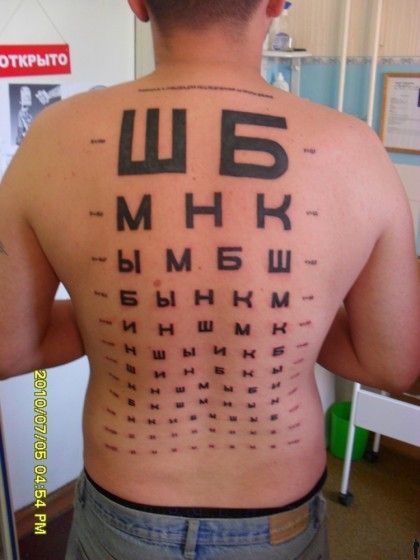
According to the article, the caviar was "deemed inedible," probably because it was procured illegally more than anything else. The environmentalist in me feels like the situation was not handled in the most responsible of ways, but the 14-year-old in me also thinks this picture looks freaking awesome:

See all the pictures of Yuzhno-Kurilsk and the burning of the caviar here.
Wednesday, March 2, 2011
Russian Ark Film
The film, “The Russian Ark”, directed by Alexsandr Sukorov, is a wonderful story based around the Russian State Hermitage Museum. The film is in a very strange style, with only one camera shot comprising the whole of the viewtime. At first, it was quite unsettling; I must admit that I felt a bit like Sartre’s characters in his play, “No Exit”, with the ability to blink having been taken away from me. After a while, however, the story makes use of this style of cinematography and uses it to add to the feeling of confusion that one can feel in sympathizing with the main character. Something that I still can’t get my mind around is the tremendous amount of effort it must have taken to put the film together, as all 800-something actors would have had to know their parts completely perfectly for each take, having only one chance to get their part right before having to start all over again.
One is introduced after a while to the Marquis, or the European as he is referred to by the main character, nameless himself. The Marquis is a sort of time-travelling character, ageless and wise. Excuse my science-fiction reference, but he reminds me of the Doctor, from Doctor Who, fumbling through time and space, alas all alone. The pair walk through the corridors of the museum, travelling also through time as they meet various characters in Russian history, such as Peter the Great, Catherine the Great, and the last Romanov Tsar, Nicholas. As the film progresses, one learns the opinions of the Marquis, being himself all too ready to reveal them. His character develops until the very end, when he refuses to go on with the main character past a ball and out of the museum, showing that he is entrapped in the affairs of history to such an extent that he might not be able to bear normal existence outside of the museum walls. In this, he reminds me of Mr. Dorrit from the Dickens novel, afraid to walk outside of the prison walls in which he has lived for years.
All in all, this was a wonderful film which I would recommend that anyone watch. It was truly enjoyable and I know I’m watching it again!
UNIT 7, Decorated Eggs-pysankas

The tradition began when Mary gave the emperor a humble white egg, as was custom to give gifts, saying, “The Christ has risen!” The emperor expressed his disbelief, “Nobody can rise from the dead ….. this is as hard to believe as it is to believe this egg can turn red!” At once the egg became red, and since that time eggs serve as a symbol of Christ’s resurrection, the victory of life over death.
The tradition to paint eggs in the Ukraine dates back to pagan times when people performed magic rituals connected with nature awakening each Spring. After Christianity was introduced into the Ukraine, the tradition continued, assimilating magical beliefs from the past. Ukrainians believed that blessed eggs could help to put out fire or to find lost cattle.
Traditional Ukrainian eggs or pysankas are painted on birds eggs using hot wax. First, the wax is laid on the egg by means of a small metal tube with a wooden handle, making a contour. Then, an egg is dipped into one color, again covered by wax in parts which should preserve that color and then put into another color. When the egg painting is finished, the egg is warmed to melt the wax. Each color and pattern has different meanings.

Tuesday, March 1, 2011
Unit 7 Tetris wade invented by a Russian!
- "Korobeiniki is a famous Russian folk song that tells of an incident between a peddler and a girl 'haggling' over a price, with the details only being said in metaphor.
- In western culture, the song is primarily known for being used as the "Type A" music in the Game Boy version of Tetris. However, Korobeiniki was written and published in 1861, a full 128 years before Tetris was released on the Game Boy.
- Tetris is a puzzle video game originally designed and programmed by Alexey Pajitnov in the Soviet Union. It was released on June 6, 1984 while he was working for the Dorodnicyn Computing Centre of the Academy of Science of the USSR in Moscow. He derived its name from the Greek numerical prefix tetra- (all of the game's pieces, known as Tetrominoes, contain four segments) and tennis, Pajitnov's favorite sport.
- The song "Korobeiniki" is based on a poem with the same name by Nikolay Nekrasov, written and printed in the Sovremennik magazine in 1861. Due to its increasing tempo and the dance style associated with it, it quickly became a popular Russian folk song.
- Nekrasov's poem is a sad story about the love between a peasant girl, Katya, and a young peddler. They meet each other in a rye field at night where he has promised her a good deal on the goods he carries, before they are sold in the market during the day. Only the night knows what happens between them in the rye field, but she is not so simple and does not take any of the goods which he offers her. What is the point, she figures, to have all that without him—her first and only love? She takes only a small turquoise ring, as a memory, and he promises to marry her when he comes back from his commerce trip. He continues his journey and she waits for him with caution. His business goes very well and he makes a lot of money, but on the way back he is killed and robbed by a forest ranger who he asks for directions. So he never comes back to marry Katya. The song is only the very beginning of the original poem; it only recounts Katya's first meeting with the young peddler when their relation is getting off to a happy start.
Стратегия-31
Joseph Bové

