Students @ Stetson University exploring Russian culture. Неофициальный сайт студентов Стетсноского университета изучающих русский язык и культуру.
Tuesday, September 16, 2014
Для Тебя
When one thinks of Russian music, pop songs rarely come to mind. However, Russia has its own genre of pop music. one of the more popular bands is Звери (Zveri) with their hit song Для Тебя (Dyla Tebya). The song when tranlsated into english is titled "For You" and amounts to a romance turned violent in what can only be dubbed a quick escalation. With it's catchy beat and captivating lyrics it's no wonder it became so popular. The band Zveri it self formed in 2002 by Roman Bilyk, whose nickname (Zver') was used to create the band's name. The bands first album, "Hunger" was released in 2003 and since then Zveri has gone on to have one of their songs used in the top-selling game "Grand Theft Auto IV".
https://www.youtube.com/watch?v=chmVIURReWE - Dyla Tebya music video
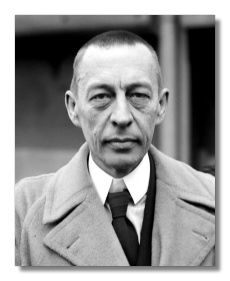
Сергей Рахманинов
Sergei Vassilievich Rachmaninoff
Born on (1 April, 1873 - 28 March 1943) in Semyonova Russia to an aristocratic family. Both Rachmaninoff's parents were amateur pianists who gave Sergei his first lessons when he was young. However, after Rachmaninoff's talents came to light, it was his maternal grandfather Arkady Alexandrovich who hired Anna Ornatskaya a musician from Saint Petersburg to give Rachmaninoff personal lessons in 1882.
Ornatskaya taught Rachmaninoff for three years until the Rachmaninoff family had financial issues said to be caused by gambling debts and had to sell 4 of their 5 estates. Upon returning to her home Ornatskaya arranged for Rachmaninoff to attend the Saint Petersburg Conservatory which he started at the age of 10. However soon after moving to Saint Petersburg Rachmaninoff's sister Sofia died in a diphtheria outbreak, at this same time Rachmaninoff's parents separated. This of course left Sergei in an academic disaster causing him to fail all of his exams.
At this point the faculty of the conservatory advised Rachmaninoff's mother to ship off her 12 year old son to study at the conservatory in Moscow. It was here where Sergei's musical career was put back on track due to Nikolai Zverev's strict work ethics. In fact Sergei thrived in Moscow not only was he getting piano lessons from Nikolai Zverev he was also getting them from Alexander Ziloti who was a former student of Franz Liszt.
In Moscow he was also being taught music theory and composition by names such as Anton Arensky and Sergei Tanyev. Quickly becoming their best and most valued student Rachmaninoff finished his piano studies a year early, and quickly finished his composition course in a single year by writing the one-act opera Aleko.
When Rachmaninoff first moved to Moscow his maternal grandmother frequently took Sergei to Russian Orthodox services, where he was first introduced to the liturgical chants and the big church bells of the city both of which have a huge influence on Rachmaninoff's compositions.
One composition you can clearly hear the influence of the big bells of the Moscow is in his Prelude in C# minor Op.3 No.2 which is one of his most popular/famous compositions. It also has been called "the bells of Moscow" and if you listen to the motif in the A section of the piece you can hear the bells ringing in the distance, and near the end you can hear them slowly fade away into the air.
Thanks for reading and Listening!
In Moscow he was also being taught music theory and composition by names such as Anton Arensky and Sergei Tanyev. Quickly becoming their best and most valued student Rachmaninoff finished his piano studies a year early, and quickly finished his composition course in a single year by writing the one-act opera Aleko.
When Rachmaninoff first moved to Moscow his maternal grandmother frequently took Sergei to Russian Orthodox services, where he was first introduced to the liturgical chants and the big church bells of the city both of which have a huge influence on Rachmaninoff's compositions.
One composition you can clearly hear the influence of the big bells of the Moscow is in his Prelude in C# minor Op.3 No.2 which is one of his most popular/famous compositions. It also has been called "the bells of Moscow" and if you listen to the motif in the A section of the piece you can hear the bells ringing in the distance, and near the end you can hear them slowly fade away into the air.
Please Enjoy My Horrible Playing of Rachmaninoff's Prelude in C# minor
Thanks for reading and Listening!
Putin - The Man, The Myth, The Legend
Although these days Russia's president, Vladimir Putin, is almost always regarded with a certain air of disdain, it cannot be said that Putin hasn't gone to extremes to ensure a good public image. From finding ancient Greek ceramic jugs whilst scuba-diving to riding horses lacking a shirt, Putin has definitely made an effort to show the people not only his bounding masculinity but also a gentle side rarely believed to exist in Russia nowadays.
Simply Google "Vladimir Putin shirtless," and hundreds upon hundreds of results will pop up. The man clearly doesn't mind being seen without a shirt, unlike several other notable presidents today (Mr. Obama...). The common folk have even gone so far as to Photoshop Mr. Putin riding a bear, a dragon, and numerous other interesting things. While this undoubtedly secures Vladimir the number 1 spot in the testosterone category for presidents, he doesn't stop there. While on a trip to Siberia, Putin reportedly rescued the camera crew from almost certain death at the hands of a rare Siberian tiger. Unfortunately, the unbelievably courageous act of heroism was not caught on camera.
However, masculinity itself does not make a great president. Putin simply couldn't let the commoners of the world see him as a simple, one-sided brawn-oriented man that had no respect for the gentler folk. While scuba-diving back in 2011, Vladimir and the crew managed to find broken pieces of vases from Greece well over 2000 years old. Since then he has admitted to the pieces being planted, but hey, it was worth a shot, right? However, leaving you all with Putin in such a bad light would be unfair to Mr. Vladimir, so I shall conclude with this. In 2010, Putin received a young Bulgarian Shepard as an expression of thanks from the Bulgarian prime minister. Being a smart man, he seized the opportunity when he saw it. Mr. Putin offered up the naming of the puppy to the common folk of Russia. Finally deciding on the fierce name of Buffy (don't forget Fluffy from Harry Potter now, this thing could be highly dangerous), Putin not only invited the 5 year old boy who somehow managed to come up with this legendary name into his home, but made sure he left with none other than a signed football from the man himself.
Simply Google "Vladimir Putin shirtless," and hundreds upon hundreds of results will pop up. The man clearly doesn't mind being seen without a shirt, unlike several other notable presidents today (Mr. Obama...). The common folk have even gone so far as to Photoshop Mr. Putin riding a bear, a dragon, and numerous other interesting things. While this undoubtedly secures Vladimir the number 1 spot in the testosterone category for presidents, he doesn't stop there. While on a trip to Siberia, Putin reportedly rescued the camera crew from almost certain death at the hands of a rare Siberian tiger. Unfortunately, the unbelievably courageous act of heroism was not caught on camera.
However, masculinity itself does not make a great president. Putin simply couldn't let the commoners of the world see him as a simple, one-sided brawn-oriented man that had no respect for the gentler folk. While scuba-diving back in 2011, Vladimir and the crew managed to find broken pieces of vases from Greece well over 2000 years old. Since then he has admitted to the pieces being planted, but hey, it was worth a shot, right? However, leaving you all with Putin in such a bad light would be unfair to Mr. Vladimir, so I shall conclude with this. In 2010, Putin received a young Bulgarian Shepard as an expression of thanks from the Bulgarian prime minister. Being a smart man, he seized the opportunity when he saw it. Mr. Putin offered up the naming of the puppy to the common folk of Russia. Finally deciding on the fierce name of Buffy (don't forget Fluffy from Harry Potter now, this thing could be highly dangerous), Putin not only invited the 5 year old boy who somehow managed to come up with this legendary name into his home, but made sure he left with none other than a signed football from the man himself.
Russian Sports
When considering Russia's sport repertoire, one may not be surprised at the favoritism of cold weather sports, due to Russia's cold climate, and some parts of the ginormous country even lying within the arctic circle. Nor should a love for challenge and competition come as surprising, given Russia's impressive history, and the size of the once great empire, the U.S.S.R. The important thing to take away is that Russians have an applaudable affinity for challenging sports, and they have within their favorites a source of common ground with every great nation, including ours.
I thought it would be a good idea to research Russia's main sports in order to better understand their culture. I know in the past sports have allowed me to connect with people of all nationalities and backgrounds. It is amazing how effectively a ball, puck, or chess piece can cross cultural lines. Sports are not only common ground, but they are demonstrative of a nation's past, and many times their future. In learning about how a nation spends their free time, we learn an incredible amount about their personality and their character.In researching Russia's sports, I came across a website from the travel channel, http://www.travelchannel.com/interests/sports/articles/russian-sports. I expected hockey, mostly due to the movie "Miracle". But there were other, less prominent sports that Russia favors. For instance, I never considered Artistic Gymnastics. Apparently this is a style of rhythmic gymnastics, and it is not just big in Russia, but it is their source of national pride. They have prominent competitors in this realm, most famously Nikolai Andrianov and Svetlana Khorkina. Russia's love for chess took me at an equal degree of surprise. Not only is it favored as a popular sport, but the very idea of chess is different to Russians. They view it as not just an activity of mental execration, but as a sport that takes a physical toll as well. This mindset shocked me, but upon consideration I'd have to agree. I've certainly been stressed enough playing chess that my head has hurt! In addition, Russia enjoys the great sport of Football (American soccer), figure skating, and skiing.

The Educational System of Russia
The structure of the educational
system in Russia is very similar to that of the United States. Schooling is
state sponsored and available to all. Completing compulsory education from ages
6-15, the order of the schooling is Primary, Basic, Complete Secondary, and vocational
or another form of higher education.
There are four popular forms of
Complete Secondary Education. General schools, or Общеобразовательная средняя,
are comparable to public schools with a Kindergarten through eleventh grade education.
Общеобразовательная с уклоном are intensive general schools that offer a more specialized
education in a specific area of study. Next, gimnaziya- Гимназия, Gymnasiums,
offer specialized education in the humanities. Very similar to the Gymnasium is
the Lyceum, licej– Лицей, which only differs in terminology, rather than
content and curriculum (The System of Education in Russia). There are also
private schools in Russia, however, they are not very common. Of all of these
forms of schooling, general schools are the most heavily attended. After
completing Secondary Education, students receive certificates stating the
completion of general education (Russia).
After finishing their Secondary
Education, about half of all Russians go on to complete some sort of tertiary education,
a college degree in the United States. The number of adults completing higher
education in Russia is one of the highest in the world (Frohlich). These
schools are under the jurisdiction of the Ministry of Education and Science. At
these Universities, students can receive degrees equivalent to an associate’s
degree (incomplete higher education), bachelors (Bakalavr’s degree), masters (Specialist
diploma or Magistr), or doctorate (Candidate of Sciences or Doctor of Sciences)
(Russia).
The education system of Russia is
very similar to that of the United States, making it very easy to understand and
relate to. Russians complete various levels of schooling culminating in the
attendance of some form of tertiary education for most individuals.
Works Cited
Frohlich, Thomas
C. “The most educated countries in the world.” USA Today. 13 September 2014. Web. 16 September 2014.
“Russia.” The European Education Directory. IAU.
2006. Web. 16 September 2014.
“The system of
education in Russia.” NORRIC. Norric
Recognition Network. February 2005. Web. 16 September 2014.
Romanticism in 18th and 19th century art
The Romantic aesthetic was largely a
result of residual Neoclassicist and Baroque stylistic nuances. In Russia, ornamentation
and complexity generally gave way to high emotionalism and a nearly palpable
softness. Romanticism valued an intense aesthetic experience often inspired by
emotion and nature.
Thus, a visual gentleness popularly
characterized subject matter in portraiture. Often featuring a naturalistic
representation of everyday life (as opposed to the previous heavily
commissioned portraits of the Russian elite), portrait painters poetically depict
the common man. For this reason, Romanticism in Russia ushers in a revolutionary
and widely held notion: the individual is now a valuable measure of society.
Orest Kiprensky’s portrait of
Alexander Pushkin portrays romantic suggestions of an individual personality.
Early Romanticism and the classical reference of the statue in the background
suggest realism and idealism found in Pushkin’s poetry.
-Jenna Bolusky
Shostakovitch
Dmitri Shostakovitch was a renowned composer during the 20th Century. He was born in 1906 in St. Petersburg, and attended the Petrograd Conservatory. The style of music he wrote was very controversial at the time in Soviet Russia. His earlier compositions were satirical in nature, which led him to be attacked by the Soviet press and threatened by Stalin. Over time, his compositions became more dark and defiant against the Soviet government. Orchestras and ballets were wary of performing his compositions because they feared the Soviet government's reaction. Shostakovitch was basically a blacklisted composer at the height of the Reign of Terror when he wrote one of his most famous symphonies- Symphony No. 5.
If you listen to it, you can imagine the loss of control Shostakovitch was feeling, as well as the feeling of desolation and apathy. The symphony is rather long, but if you listen to just the beginning then skip around, you'll get a feel for the emotion he portrays.
As a side note, Shostakovitch would include his German initials in several of his compositions - D. Sch. These translate to the note names D, E-flat, C, and B. The combination of these notes appear as a main motif in many of his compositions, especially his String Quartet No. 8. The theme is the first thing you hear in this quartet, and if you keep listening, you can hear it change from the slow motif to a more quick, agitated version of the same notes.
If you listen to it, you can imagine the loss of control Shostakovitch was feeling, as well as the feeling of desolation and apathy. The symphony is rather long, but if you listen to just the beginning then skip around, you'll get a feel for the emotion he portrays.
As a side note, Shostakovitch would include his German initials in several of his compositions - D. Sch. These translate to the note names D, E-flat, C, and B. The combination of these notes appear as a main motif in many of his compositions, especially his String Quartet No. 8. The theme is the first thing you hear in this quartet, and if you keep listening, you can hear it change from the slow motif to a more quick, agitated version of the same notes.
Monday, September 15, 2014
Blini; a Traditional Russian Dish
Now I know you must be wondering, what are blini? Blini were originally a traditional Russian dish eaten during Shrovetide to celebrate the beginning of spring and the god of animals, pets, and cattle-- Volos (Veles). A blin was golden and circular-shaped, symbolizing the sun and hopes for good harvest. Blini were also traditionally served to the mother at one's birth as well as at one's final funeral ceremony, accompanying one from the very first breath to the last. Commonly appearing as a flat pancake nearly equivalent to the French crepe, blini are a traditional part of the Russian diet. Blini can come with a multitude of different fillings--berries, sour cream, and cheese to name a few. So, if you ever come across a blini, don't pass up the opportunity to try one of these delicious traditional Russian pancakes!
Thursday, September 11, 2014
Russians have quite a few weird superstitions pertaining to different days of the week.
Monday -
Russians believe that on monday you should NEVER start a new task! They also think that if you sneeze on monday you'll be receiving a gift later on in the week, and if you have visitors on monday, expect visitors every day of the week.
Tuesday -
Now is the time to make major changes in your life and to start new ventures. It’s a great day for travel too. The only time you should be really careful is Tuesday evening and only if you feel like you need to borrow some money.
Wednesday -
If you were to move into a new house or apartment on a Wednesday you would have terrible luck in that place.
Thursdays -
Do whatever you need to get done without worries, but if you wake up before sunrise and wash your face you will be blessed with not only cleanliness but good health.
Friday -
Only clean the house after mid-day on a Friday. Actually, nothing considered woman's work should be done on a Friday before mid-day.
Saturday -
If you were to start doing something on a Saturday, you will do it every Saturday from there on out.
Sunday -
Don't eat breakfast early on a Sunday, otherwise it will lead to tears. Also, if you make the mistake of clipping your toenails you are not only bound to lose money, but happiness.
Monday -
Russians believe that on monday you should NEVER start a new task! They also think that if you sneeze on monday you'll be receiving a gift later on in the week, and if you have visitors on monday, expect visitors every day of the week.
Tuesday -
Now is the time to make major changes in your life and to start new ventures. It’s a great day for travel too. The only time you should be really careful is Tuesday evening and only if you feel like you need to borrow some money.
Wednesday -
If you were to move into a new house or apartment on a Wednesday you would have terrible luck in that place.
Thursdays -
Do whatever you need to get done without worries, but if you wake up before sunrise and wash your face you will be blessed with not only cleanliness but good health.
Friday -
Only clean the house after mid-day on a Friday. Actually, nothing considered woman's work should be done on a Friday before mid-day.
Saturday -
If you were to start doing something on a Saturday, you will do it every Saturday from there on out.
Sunday -
Don't eat breakfast early on a Sunday, otherwise it will lead to tears. Also, if you make the mistake of clipping your toenails you are not only bound to lose money, but happiness.
Wednesday, September 10, 2014
Путин ... для Сталин?
Владимир Путин holds the stature of a monolith - stone faced, brooding, domineering in any social situation. This visage is one similar to a certain mustachioed icon from Soviet history who took the world by storm, scorned Western influence and created an oddly oppressive social system dedicated to the preservation of his people. This individual is obviously Таварищ Йосеф Сталин.
Now, while news agencies in Russia and the West take pleasure in characterizing Putin as Stalin incarnate (often without irony and lately as a compliment), there are dissenting opinions on such matters, particularly provided by the news agency Кеноша. A major point of challenge is that Putin lacks the military might and cog like society which supported Stalin, and these claims are not entirely unfounded. However, it seems essential to challenge Kenosha in the allusion that Russia is merely a declawed kitten since the fall of the USSR. While the developmental speed and efficacy of the Kremlin homeland was stalled by the oil crises, social unrest and vast demilitarization, the presence of a large scale nuclear threat still constitutes a bartering chip which Putin is not afraid to levy.
Now, this article was produced shortly after the catastrophe of the Malaysian flight incident before Putin made clear his proclivity to use nuclear force for less than atomic problems, and hindsight is 20/20. But it is still integral to read critically and consider what concepts the world, both Eastern and Western, are trying to convey through the media.
So, is Putin trying to play the roll of Stalin? The man would definitely claim that he was, in fact, trying to play the roll of Vladimir Putin and pave his own trail. And in some ways, this is true. While the advances made by Stalin could be considered perversions of the Leninist, and previously Marxist, ideologies, Putin has seemed to abandon these ideologies in general. Instead he seeks to permeate, or pervert in his own right, the ideas of the conservative moralists in the state. Any good idea can be altered and embraced so it will be subserveant to the salesperson, and Putin's use of tradition is no different. The juxtaposition of Stalin and Putin is far more similar in method than in content, but even here the interpretation remains in the eye of the beholder.
What do you think?
http://www.kenoshanews.com/opinion/putin_doesnt__have_the_army__to_act_like_stalin_478085522.html
Subscribe to:
Posts (Atom)