Mussorgsky wrote Picutres at an Exhibition originally for four hands piano but it has now been widely known as an Orchestral piece, as orchestrated by French composer Maurice Ravel and Russian composer Nikolai Rimsky-Korsakov. I give you the last movement the great gates of Kiev.
Monday, May 3, 2010

Travel All Russia
I was browsing the Internet for information on Russia and came across this travel site:
http://www.travelallrussia.com/destinations/
This site is actually pretty cool; it has brief but informative descriptions of several major cities and regions of Russia, and what I've seen of the photography is quite good. Click around this different destination tabs, and take a quick look at the "facts" tab while you're at it. There is also an interesting "IQ" quiz to test your knowledge of Russia.
I'd love to book a trip to Russia sometime (other than studying abroad, of course), but I suppose that will have to wait for now. Still, before I go, I will probably return to this website.
http://www.travelallrussia.com/destinations/
This site is actually pretty cool; it has brief but informative descriptions of several major cities and regions of Russia, and what I've seen of the photography is quite good. Click around this different destination tabs, and take a quick look at the "facts" tab while you're at it. There is also an interesting "IQ" quiz to test your knowledge of Russia.
I'd love to book a trip to Russia sometime (other than studying abroad, of course), but I suppose that will have to wait for now. Still, before I go, I will probably return to this website.
Sunday, May 2, 2010
Mosfil'm: online movie theatre
this is very cool...
Moscow Times (April 30, 2010): Mosfilm Launches Online Movie Theater
In a bid to fight piracy, Mosfilm, the leading state-owned film studio,
launched an online service Wednesday, set to offer 2,500 classic movies for
free or for a small fee.
The service, accessible at http://cinema.mosfilm.ru, is in test mode,
scheduled to become fully operational "in a few days." The site has an
English version, making it available to users worldwide.
The current catalogue, set to expand, offers 142 movies produced at Mosfilm
over the course of its 85-year history, including Andrei Tarkovsky's "Ivan's
Childhood" and "Stalker" and Nikita Mikhalkov's "An Unfinished Piece for a
Player Piano."
The movies are screened for free on a daily timetable and can be either
watched online for 25 rubles (90 cents) or downloaded for 65 rubles ($2.20)
the rest of the time. Only the free screening option is presently available.
Saturday, May 1, 2010
Owner of Stalin museum killed in Russia
This one showed up in my Reuters Oddly Enough newsfeed on my iGoogle page this morning, so I figured I should post it. Apparently, a businessman named Vasily Bukhtiyenko (according to the article's spelling) was just "resting at a tennis court" on Friday when he was attacked by three men wielding electric shock devices. He was electrocuted and bludgeoned to death, according to reports. Bukhtiyenko set up the Stalin Museum in Volgograd in 2005; according to the article, it is unclear as to whether or not the museum had anything to do with Bukhtiyenko's death. There is some indication that the attack was politically motivated, but there aren't many details available yet.
Link
Link
Tchaikovsky Also Fills Space

So my videos for some reason are really messing up the page so in the theme of Tchaikovsky I am just re posting a blog I had written before about Tchaikovsky that will help coax my current blog down the page faster.
Many people know of the famous Romantic era Russian composer Pyotr Ilyich Tchaikovsky (Пётр Ильи́ч Чайко́вский) who lived from May 7th 1840 to November 6th 1893. His most widely known compositions include such famous ballets as “Swan Lake” and “The Nutcracker”. No patriotic American could forget his 1812 Overture, played at every 4th of July extravaganza (its original intended purpose to celebrate Moscow's successful defense against Napoleon's advancing troops at the Battle of Borodino in 1812). His western oriented training at the St. Petersburg Conservatory set him apart from the contemporary nationalistic music written during his time, earning him wide acclaim and success. Many people are unaware, however, of Tchaikovsky's severe personal struggles and the argued circumstances of his death. It is largely believed that the composer was a homosexual (as researched most extensively by author Alexander Poznansky). In fact there are letters available today, previously censored by the Soviets, in which Tchaikovsky himself openly discusses his sexual preferences. Nevertheless, in 1877 he entered into a disastrous marriage with Antonia Miliukova that ended unofficially in 6 weeks (although divorce was never filed and Tchaikovsky died a married man). As he rose to the top of the composing scene between 1877-1890, Tchaikovsky corresponded with another woman, Nadezhda Von Meck, who supported his composition monetarily under the stipulation that they never meet in person. The letters between them deeply affected the composer and he professes in one particular excerpt that her contact seemed to him “the hand of fate itself, watching over me and protecting me”. This relationship too, proved devastating when in 1890 her correspondence abruptly ended, allegedly due to her filing for bankruptcy (a few music historians postulate that the cut was made in her discovery of his homosexuality). The real mystery lies in how the composer died. Despite that a true diagnosis may never be possible due to unreliable accounts at the time of his death and the lack of knowledge of effects of certain lifestyle habits such as drinking, there has been much research as too what may have caused his unexpected (and relatively young) death. Most musicologists attribute his demise to cholera by contaminated water. The question that is debated is whether or not the contamination was purposely executed by Tchaikovsky in suicide. There have been rumors that his former classmates urged him to commit the act to avoid being exposed as the lover of a nephew of a member of the Russian aristocracy. Others claim that the poisoning may have been the result of his bitterness over the loss of his contact with Von Meck. Regardless his passing occurred just nine days after the premier of his now famous and emotionally charged Symphony Pathetique (No. 6). He was interred in the Tikhvin Cemetery next to fellow composers Borodin, Mussorgsky, Rimsky-Korakov, Glinka, and Balakirev (a.k.a. The Five). -Posted by Courtney E. Van Cleef
Cello Awesomeness
I am just so excited to get started in learning the Rococo Variations for Solo Cello and Orchestra this summer that I decided it would be a great use of my time do some research for my unit 10 blog about the history behind this brilliant work by Maestro Tchaikovsky! Please enjoy the recording I have included below of Yo Yo Ma in the Leningrad Hall performing as a part of the Tchaikovsky Gala in honor of his 150th anniversary!
It’s not a concerto, but it does feature a brilliant soloist with orchestra. Notice what an enormous range the cello has, from very low to as high as the violins. Rococo Variations was written at a stressful time, but it is a joyous piece.
Toward the middle of 1876, Tchaikovsky sank into one of his many depressions. His financial situation was precarious. The wealthy noblewoman Nadejda von Meck had not yet initiated the correspondence and patronage that were subsequently to allow him to devote himself to composition free of monetary concerns. His confidence in his own talent had been severely shaken by what he perceived as some career setbacks. The violent swings of his moods are reflected in the astonishing diversity of style in the music he wrote during this troubled period.
One of the most challenging works in the cello literature, the "Rococo" Variations, as this work has come to be known, is an analog to Tchaikovsky's later Mozartiana Suite in that it pays homage to Mozart, who was Tchaikovsky's musical idol.
Tchaikovsky composed the piece for Wilhelm Karl Friedrich Fitzenhagen, a cellist friend who taught at Moscow Conservatory. Fitzenhagen had a significant hand in the fine-tuning of the solo part. Yet his interest was a mixed blessing, for he exercised editorial jurisdiction over the orchestral parts and the order of the Variations as well as over cellistic details. Still, Fitzenhagen's championship of the Variations contributed greatly to Tchaikovsky's growing reputation abroad. After Fitzenhagen performed the Rococo Variations at the prestigious Wiesbaden Festival in 1879, he wrote to Tchaikovsky that Franz Liszt had exclaimed: "Here, at last, is music again."
The piece consists of a theme, seven variations and two cadenzas. The four-square theme is preceding by a wistful, "once upon a time" orchestral introduction before the cello declares the melody. Within individual variations Tchaikovsky adapts sonata principles, also drawing on the precedent of the Baroque through use of tripartite forms and rondo-styles. Each segment presents formidable challenges to the soloist, in several places exploiting the outermost range of the instrument.
While the Rococo Variations continue to strike awe -- and sometimes terror! -- into the hearts of cellists, their accessibility and transparent grace have made them a great favorite of audiences, and the next-best thing to a Tchaikovsky cello concerto.
The score calls for woodwinds and horns in pairs, solo violoncello, and strings.
-Program Notes by the Dallas Symphony
It’s not a concerto, but it does feature a brilliant soloist with orchestra. Notice what an enormous range the cello has, from very low to as high as the violins. Rococo Variations was written at a stressful time, but it is a joyous piece.
Toward the middle of 1876, Tchaikovsky sank into one of his many depressions. His financial situation was precarious. The wealthy noblewoman Nadejda von Meck had not yet initiated the correspondence and patronage that were subsequently to allow him to devote himself to composition free of monetary concerns. His confidence in his own talent had been severely shaken by what he perceived as some career setbacks. The violent swings of his moods are reflected in the astonishing diversity of style in the music he wrote during this troubled period.
One of the most challenging works in the cello literature, the "Rococo" Variations, as this work has come to be known, is an analog to Tchaikovsky's later Mozartiana Suite in that it pays homage to Mozart, who was Tchaikovsky's musical idol.
Tchaikovsky composed the piece for Wilhelm Karl Friedrich Fitzenhagen, a cellist friend who taught at Moscow Conservatory. Fitzenhagen had a significant hand in the fine-tuning of the solo part. Yet his interest was a mixed blessing, for he exercised editorial jurisdiction over the orchestral parts and the order of the Variations as well as over cellistic details. Still, Fitzenhagen's championship of the Variations contributed greatly to Tchaikovsky's growing reputation abroad. After Fitzenhagen performed the Rococo Variations at the prestigious Wiesbaden Festival in 1879, he wrote to Tchaikovsky that Franz Liszt had exclaimed: "Here, at last, is music again."
The piece consists of a theme, seven variations and two cadenzas. The four-square theme is preceding by a wistful, "once upon a time" orchestral introduction before the cello declares the melody. Within individual variations Tchaikovsky adapts sonata principles, also drawing on the precedent of the Baroque through use of tripartite forms and rondo-styles. Each segment presents formidable challenges to the soloist, in several places exploiting the outermost range of the instrument.
While the Rococo Variations continue to strike awe -- and sometimes terror! -- into the hearts of cellists, their accessibility and transparent grace have made them a great favorite of audiences, and the next-best thing to a Tchaikovsky cello concerto.
The score calls for woodwinds and horns in pairs, solo violoncello, and strings.
-Program Notes by the Dallas Symphony
Unit 10 - Amazing Abandoned Areas
I stumbled on this site that has pictures of 10 different abandoned locations. Three of them are Russian.
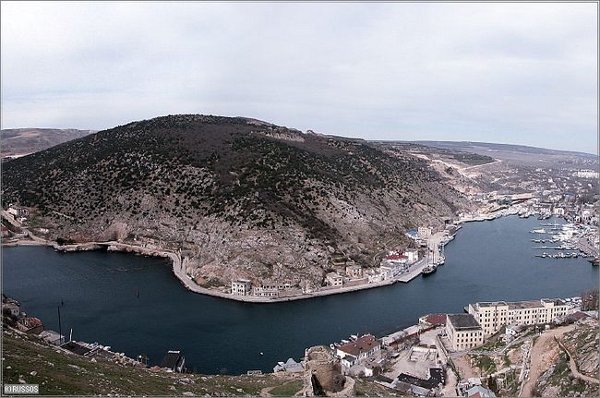
1. An abandoned submarine base in Balaklava, Ukraine off the Black Sea that is now a museum and memory of and testament to the Cold War.


,+the+Crimea,+Ukraine.jpg)
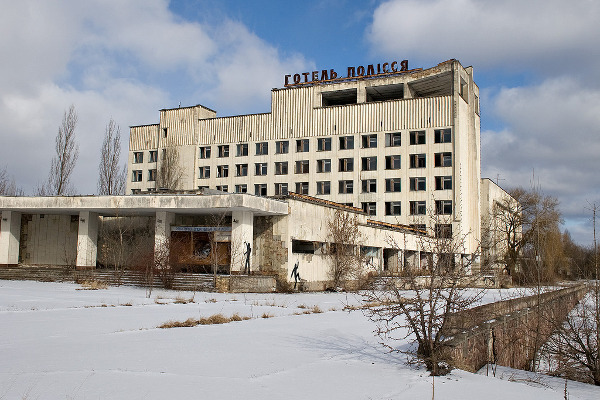
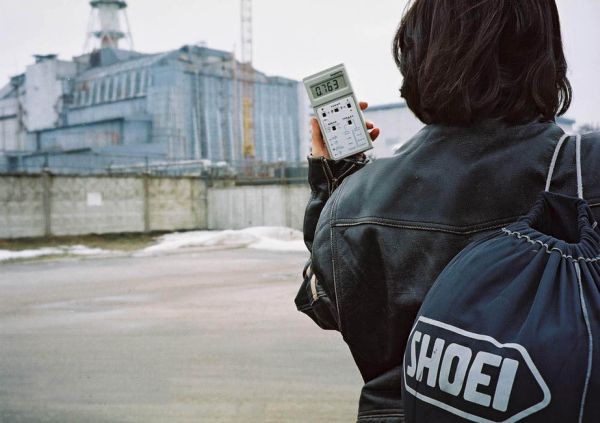
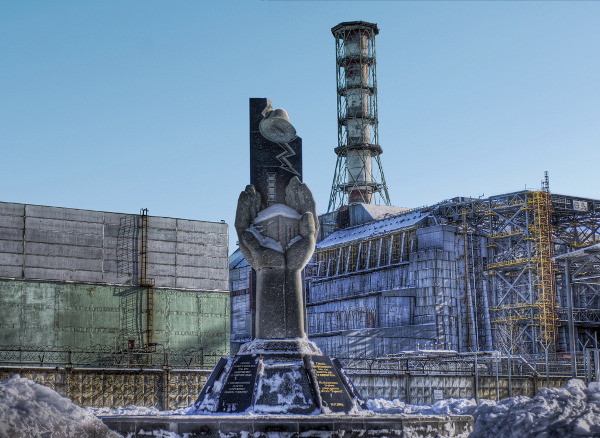
2. Pripyat, Ukraine and Chernobyl, everyone knows about this one, one of the greatest nuclear disasters in history.

3. An abandoned indoor water park in Russia. Apparently the company that was building it ran out of money a few months before finishing construction. It was originally intended to be a huge kids park with lots of rides and attraction, but now it's a collection of concrete, steel, and graffiti.
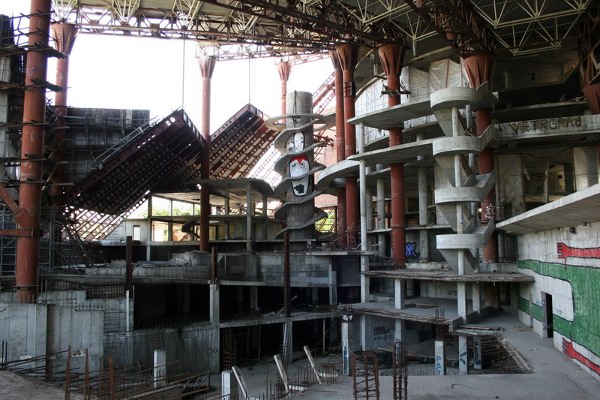
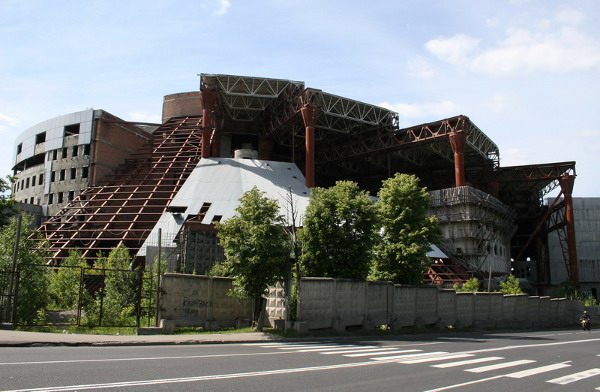
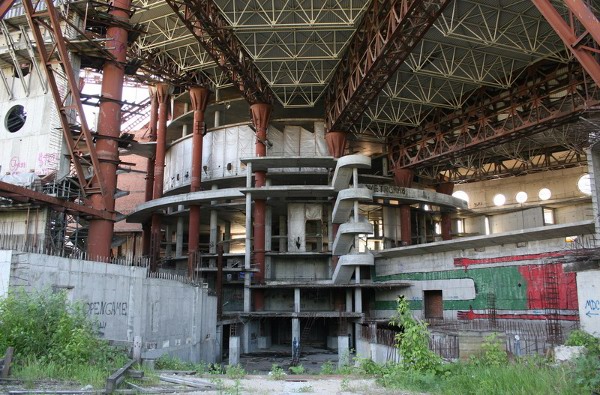
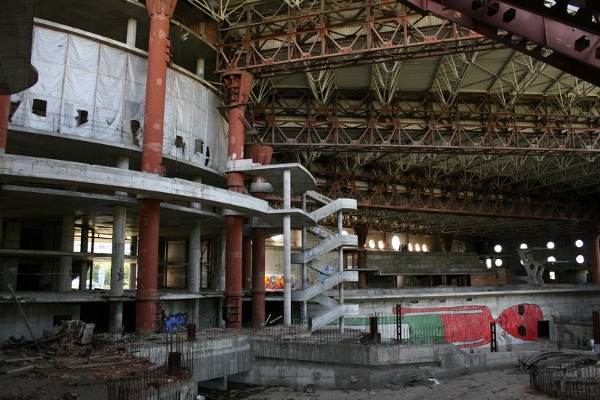
Here's the link if you want to look at the other pictures. One of them is an abandoned hospital in Germany where the young Adolf Hitler recovered from a bullet wound during WWI.
It's rather interesting how what was once so prominent in our minds and in the world can be reduced to rubble or memories. It's so surreal...
Ruslan and Ludmila UNIT 10!


This is a summary of the poem written by Aleksander Pushkin. He began writing the poem in 1817. The poem is based off of other folktales he had heard. He dedicated it to "unnamed young beauties, the “queens of my soul” (души моей царицы), and states that his reward is the hope that some lovesick girl will read the poem in secret".
Ruslan and Ludmila
Ruslan and Ludmila
A long long time ago there was a great feast to celebrate the wedding of the beautiful princess Ludmila and the knight Ruslan. But the bride was kidnapped on the wedding day. Ruslan, along with three other knights named Rogday, Farlaf and Ratmir who also wanted to marry Ludmila, rode off to search for her.
Ruslan met a good wizard who told him that Ludmila had been kidnapped by the evil sorcerer Chernomor. During his quest to find the sorcerer, Ruslan was forced into a battle with his jealous rival Rogday and killed him by knocking him from his horse into the waters of the Dnieper river.
A short while after, Ruslan met a huge head on a battlefield and also won a victory over it. The head told Ruslan that all of Chernomor's power was contained in his beard. And under the head, Ruslan found a shining sword. Ruslan left and went to search his beloved Ludmila.
She had been held at Chernomor's castle. The scorcerer made her life comfortable, but she missed Ruslan and wasn't happy.
A short while after, Ruslan met a huge head on a battlefield and also won a victory over it. The head told Ruslan that all of Chernomor's power was contained in his beard. And under the head, Ruslan found a shining sword. Ruslan left and went to search his beloved Ludmila.
She had been held at Chernomor's castle. The scorcerer made her life comfortable, but she missed Ruslan and wasn't happy.
Once she was frightened by the magical appearance of the sorcerer and lost conscious for a long time. When Ruslan arrived at Chernomor's the castle they battled for two days. Chernomor tried to use the power of his beard, but finally Ruslan managed to slice off the beard with his powerful sword.
Ruslan carried the unconscious Ludmila back to Kiev and on the way met Farlaf. At night the cowardly and evil Farlaf plunged a sword into Ruslan, leaving him to die. Farlaf then carried the unconscious Ludmila back to her father.
It happened that at that time the city of Kiev was besieged by enemies. Ruslan, who was revived by a good wizard, came charging to the city and saved it. He then went to to his bride-to-be and awakened her with with a magic ring. Ruslan and Ludmila were together again and lived happily after that.
It happened that at that time the city of Kiev was besieged by enemies. Ruslan, who was revived by a good wizard, came charging to the city and saved it. He then went to to his bride-to-be and awakened her with with a magic ring. Ruslan and Ludmila were together again and lived happily after that.
Friday, April 30, 2010
Unit 10 - International Women's Day
Since Mother's Day is on May 9th, it seems appropriate to have a blog entry about a Russian holiday in honor of women.
International Women's Day (Международный женский день) is celebrated on March 8th to coincide with two major events in Russian history.
First was March 8th, 1857 when women marched to complain about being left out of a recent legal reform. Men had won the right to 10 hour work days while women were stuck working 16 hour work days. The march gained international press and sparked further debated about women's rights.
Second was March 8th, 1917 when women began campaigning for greater rights from the Provisional Government; part of the argument stemmed from how much of the war effort women were shouldering (working in factories, raising funds, making care packages for soldiers, etc.).
Back in 1913, legislation had been passed to create a day in honor of women, but no official date for the holiday had been selected. Saint Petersburg celebrated the first holiday in 1913, but March 8th did not become the official date for the holiday until 1963.
Now, the day is a day off work where men are expected to have a gift - flowers, candy, a card, or something else - for the important women in their lives. Men usually do tasks that are typically seen as feminine in Russia such as housework or cooking for the day.
Visit http://www.sras.org/russian_holidays for more information.
International Women's Day (Международный женский день) is celebrated on March 8th to coincide with two major events in Russian history.
First was March 8th, 1857 when women marched to complain about being left out of a recent legal reform. Men had won the right to 10 hour work days while women were stuck working 16 hour work days. The march gained international press and sparked further debated about women's rights.
Second was March 8th, 1917 when women began campaigning for greater rights from the Provisional Government; part of the argument stemmed from how much of the war effort women were shouldering (working in factories, raising funds, making care packages for soldiers, etc.).
Back in 1913, legislation had been passed to create a day in honor of women, but no official date for the holiday had been selected. Saint Petersburg celebrated the first holiday in 1913, but March 8th did not become the official date for the holiday until 1963.
Now, the day is a day off work where men are expected to have a gift - flowers, candy, a card, or something else - for the important women in their lives. Men usually do tasks that are typically seen as feminine in Russia such as housework or cooking for the day.
Visit http://www.sras.org/russian_holidays for more information.
That little guy on the chalkboard

Here is a little bit on the little doll that we see on the chalkboard every Russian class. It's called a domovoi, at least that's what I think...
Traditionally, every house is said to have its domovoi. It does not do evil unless angered by a family’s poor keep of the household, profane language or neglect. The domovoi is seen as the home's guardian, and he sometimes helps with household chores and field work. Some even treat them as part of the family, albeit an unseen one, and leave them gifts like milk and biscuits in the kitchen overnight. To attract a Domovoi, go outside of your house wearing your best clothing and say aloud "Grandfather Dobrokhot, please come into my house and tend the flocks." To rid yourself of a rival Domovoi, beat your walls with a broom, shouting "Grandfather Domovoi, help me chase away this intruder." When moving, make an offering to the Domovoi and say "Domovoi! Domovoi! Don't stay here but come with our family!"
The favorite place for these spirits to live is either the threshold under the door or under the stove. The center of the house is also their domain. The Domovoi maintains peace and order, and rewards a well-maintained household. Peasants feed him nightly in return for protection of their house. When a new house was built, the Polish homeowner would attract one of the domovoi by placing a piece of bread down before the stove was put in, and the Russian one would coerce the old house's domovoi to move with the family by offering an old boot as a hiding place. People made sure they only kept animals the domovoi liked, as he would torment the ones he did not. Salted bread wrapped in a white cloth would appease this spirit, and putting clean white linen in his room was an invitation to eat a meal with the family. Hanging old boots in the yard was another way to cheer him.
The domovoi was also an oracle, as his behavior could foretell or forewarn about the future. He would pull hair to warn a woman of danger from an abusive man. He would moan and howl to warn of coming trouble. If he showed himself, it forewarned of death, and if he was weeping it was said to be a death in the family. If he was laughing, good times could be expected, and if he strummed a comb there would be a wedding in the future.
The domovoi does have a more malicious side. Although one's own domovoi could be considered an ally, the domovoi from a neighboring household brought no happiness. Russian folklore says that a domovoi could harass horses in the stable overnight, as well as steal the grain of a neighbour to feed his own horses. Still, domovie could befriend one another and were said to gather together for loud winter parties.
The domovoi does have a more malicious side. Although one's own domovoi could be considered an ally, the domovoi from a neighboring household brought no happiness. Russian folklore says that a domovoi could harass horses in the stable overnight, as well as steal the grain of a neighbour to feed his own horses. Still, domovie could befriend one another and were said to gather together for loud winter parties.
If a domovoi becomes unhappy, it plays nasty tricks on the members of the household. Those include moving and rattling small objects, breaking dishes, leaving muddy little footprints, causing the walls of a house to creak, banging on pots and moaning. If the family can determine the cause of their domovoi's discontent, they can rectify the situation and return things to normal. If not, the spirit's tricks may escalate in intensity, coming to more closely resemble those of a ghost, or he may threaten to stifle people in their beds. More often than not, however, families live in harmony with the spirits, and no problems arise.
Ineresting little side note. After the October Revolution the new Soviet government created the "domovoi komitet" or "House Commitee" to put poor people into tennament buildings. It was a standing joke in Russia at this time to imagine that the whole commitee to be made up of little domovoi
Subscribe to:
Posts (Atom)