Showing posts with label Unit 6. Show all posts

Wednesday, February 3, 2016

Lebedushka – A Russian Dessert

a Russian dessert

Lebedushka is a two layer gelatin dessert, with the first layer consisting of a creamy ricotta mixture, with the top layer being fruit and a flavored gelatin.

Ingredientslebedushka
2½ tbsp unflavored gelatin
1 cup water
2 cups ricotta cheese
1 cup sour cream
1 cup granulated sugar
1 teaspoon vanilla extract
2 (3 oz) packages flavored gelatin (such as strawberry, raspberry, strawberry-kiwi, etc.)
2-3 kiwis
1 pint strawberries (or any other berries)


Directions
1. Pour the water into a shallow bowl. Sprinkle the unflavored gelatin over the water. Set aside for about 5 minutes for the gelatin to bloom( you will know what this means when you wee it). Place the bloomed gelatin mixture in the microwave for 1 minute. Do NOT boil. Set aside to cool.

2. Place the ricotta cheese, sour cream, sugar, and vanilla extract into the blender. Blend just until smooth.

3. When the gelatin mixture has cooled for about 5 minutes, add it to the ricotta mixture and blend to combine.

4. Divide the ricotta mixture among 6 individual cups. Chill in the refrigerator until the mixture sets, 1-4 hours. The longer the mixture to sets, the thicker it will become.

5. When the ricotta mixture has set, prepare the flavored gelatin according to the package instructions. Cool for 10-15 minutes. Peel and slice the kiwi and slice the strawberries. You can use many combinations of fruit and berries for this recipe. Place the kiwi and strawberries on top of the chilled ricotta layer. Pour the prepared flavored gelatin over the fruit and the ricotta layer. Chill until set, 1-4 hours. Garnish with more fruit or whipped cream.

Tetris

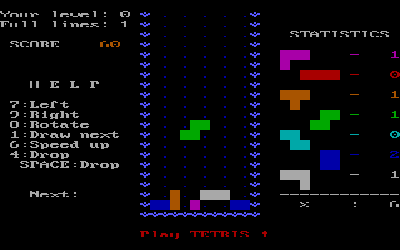
Tetris, or Тетрис, is a Soviet Era Russian video game. It was made by Alexy Pajitnov while he was working at the Academy of Science in Moscow in 1984. The game was the first exported entertainment software to be exported from the USSR to the US.  The game was sold for many arcades and home computers but it was made famous by and made famous from the Nintendo's Gameboy. It went on to become one of the most regarded video games of all time. Electric gaming monthly, a well known game magazine, gave it #1 in their greatest video games of all time. Even now its being ported to the news consoles, the Xbox One and the Playstation 4.

Tuesday, February 2, 2016

Russian Randoms

While reading about Russia, I came across some rather random and often obscure facts. Some may be fact, some may be fiction, but all are at least somewhat interesting. For this post I've collected 10 of my favorites.


1. McDonald's "local" food for Russia includes McShrimp.

2. Some rich people use ambulances in order to get around traffic.

3. Though we are often critiqued for our own low voter turnout, how does that compare to Russia's turnout of 146% in one district?

4. Beer was considered non-alcoholic until 2011.

5. 25% of Russian men die before 55. 1.5 liters of vodka weekly may have some effect on that.

6. Whistling indoors is not good per Russian superstition.

7. Russia's land mass is so large it covers 9 time zones.

8. Russia and the US are actually less than 3 miles apart (at the closest point).

9. Metro 2 is a supposed secret metro line running below the main line and used to connect underground bunkers.

10. Russian citizens can identify as any ethnicity...including Hobbit.

Russia. A one-of-a-kind place.


The 8th Sister - Never Built

     
             The Grand Palace of the Soviets was designed to be the largest, grandest, most Stalinist building the whole world. The plans began in the '20s and depicted a building larger than the Empire State Building. As if that wasn't enough, the contest-winning architect added a giant statue of Lenin on top, since the peasants had been going cray over monuments since his death (I guess having him displayed like Sleeping Beauty wasn't enough?). This wasn't just any giant statue though. It was to be nearly twice the size of the Statue of Liberty. So the Empire State Building + Giant Statue of Lenin = World's Tallest and arguably most ridiculously Soviet building eva.

The tender for the Palace of the Soviets in Moscow was one of the largest and representative architectural competitions of the last century. The idea of erecting a building in the capital of the world's first state for workers and peasants as a symbol of the "imminent triumph of communism" first appeared in the 1920s.
             
         Stalin intended for this building to be the grand poobah of the 7 existing sister buildings in Moscow. All of these buildings were built with the large and in-charge Stalinist architecture and could be seen from virtually any point in the city. Even though this building was to be so large you would be able to see it from Vladivostok, Stalin decided he needed to blow up a 70 year old church in prime real estate.


          Construction on just the foundation took two years, three people died constructing a plastic model, and then construction halted due to the advancement of Nazi troops. The USSR needed all the building materials from this project to repair train tracks, build war machinery and reinforce war ships. After the war, the area was left unattended and went to seed. Then, Khrushchev decided this space had to be at least the biggest something, so he made it the world's largest public swimming pool. After the collapse, a replica of the former church was built and still stands today.


The Pool


File:Moscow - Cathedral of Christ the Saviour.jpg  The reconstructed church

Russians' Opinion on Yeltsin


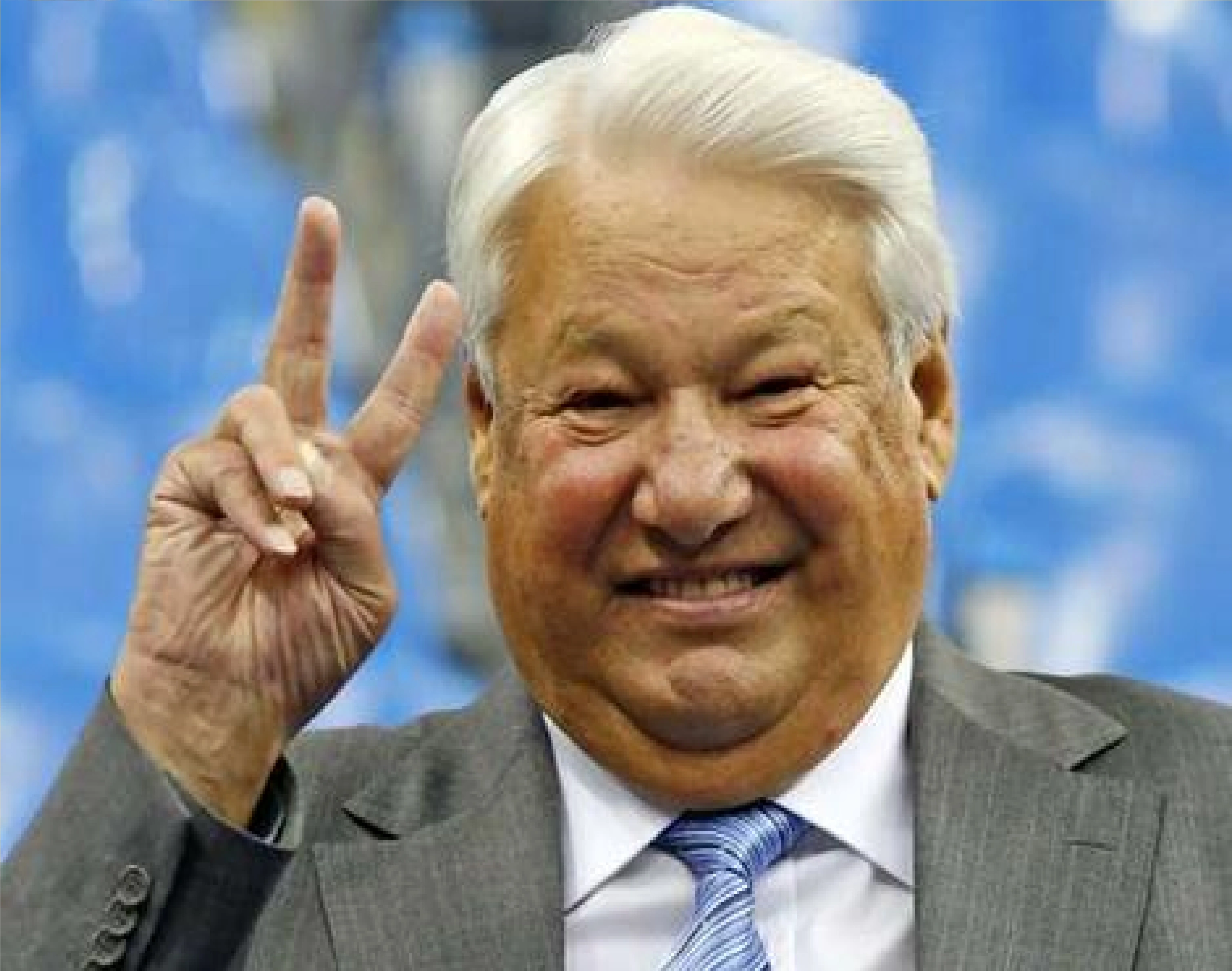
Recently a group of researchers conducted a poll of peoples' opinion on the late president Boris Yeltsin. Many have found a more negative-neutral opinion of Yeltsin rather than positive, with people remembering the negatives, such as the Chechen war, rather than the positives of his presidency. 

"When researchers asked the audience about their general attitude to Yeltsin’s era in Russian history, 56 percent answered that this period brought more bad than good to the country. Only 18 percent said that they considered that the effect of this period was good in general and 26 percent found the question too difficult to answer."

Monday, February 1, 2016

Gender Neutral Pronouns?

Pronouns are either, masculine, feminine or neuter. The grammar follows a gender based system. The LGBT community tries to be gender inclusive by trying to use plural conjugations to express gender neutral, which leads people having to explain why they are talking in plural. There as been small calls on the internet to get Russia to create a gender neutral pronoun to use in speech, but this is ultimately rejected. In Russia it is still illegal to expose anyone under the age of 18 to homosexuality therefor a call in change in language is not popular. Others try using masculine as a default mode for gender neutral pronouns, others have been using words like Ze and Hir to help solve this issue. What would adding a neutral pronoun do to the grammar of the Russian language?

Theosophical Society

Madame Helen Blavatsky, a Russian Aristocrat founded the Theosophical Society in 1875. Theosophical means "divine wisdom". Helen Blavatsky attained this divine wisdom though ascended masters, which she was able to communicate with through her psychic powers. She supposedly also traveled around the world learning from esoteric schools and tibetan masters, though many now believe that she was in Europe during this time. Her society was based on the idea that "There is no religion higher than truth". The Theosophical Society also introduced ideas such as karma, reincarnation, and subtle energies to the Western world. Currently, the Theosophical Society has spread  to over 70 countries.

Это Петя

Anyone with a Facebook account has seen these "Be like Bill" passive aggressive stick figure images complaining about peoples' social media habits but a recent article on Radio Free Europe and Radio Liberty explains that Eastern Europe has taken it a step farther. Twitter and Facebook are now seeing «Будь как Петя» memes criticizing Russia's rejection of Europe, and «Будь как Паша» complaining about corruption in journalism and the dangers of being a journalist in Belarus. This is a great way to raise awareness about issues but the real question is whether social media angst will lead to any real changes or just provide an opportunity for people to vent their frustrations. It is the revival of slacktivism in the technological era where silly Western culture like these memes can spread thousands of miles and represent a political message. http://www.rferl.org/content/be-like-bill-russia-ukraine-belarus/27519662.html

Sunday, January 31, 2016

First McDonald's Opened In Russia 26 Years Ago

Today marks the 26th anniversary of McDonald's coming to Russia.  The first Russian McDonald's was opened on January 31, 1990 in Moscow when the Soviet Union was still in tact.  The appearance of McDonald's in the Soviet Union at the time indicated the changing of the times.  People received this sign of capitalism with great enthusiasm and would line up outside the restaurant to buy its fries, shakes, and Big Macs (which would equate to a few days' wages for them).  According to a few journalists, the Soviets were amazed at the politeness of the restaurant workers and encouraged by the "expression of American rationalism and pragmatism toward food."  Today more than 500 McDonald's exist in Russia.

Saturday, January 30, 2016

ОНУФРАК

One morning over Winter break, my father walked into my room and showed me the origin of our last name, along with the accompanying immigration collection. The original name was ОНУФРАК, before being adjusted to Newfrock, the Americanized equivalent. Apparently, my last name is Slovakian/Ukrainian of origin.

Diving deeper, I found records and settler information for my ancestors, dating back 200 years ago. Most of the settler information is fairly accurate as well, considering most of them settled around the New York, Pennsylvania, and New Jersey. If you haven't checked out your own name, I would give it a try!

http://www.americanlastnames.us/O/ONUFRAK.html
http://www.ancestry.com/name-origin?surname=onufrak

Wednesday, February 4, 2015

Mariinsky Orchestra/Симфонический оркестр Мариинского театра

Mariinsky Orchestra
    
      The Mariinsky Theatre Orchestra or the Kirov Orchestra is located in the Mariinsky Theatre in St. Petersburg, Russia. The orchestra was founded in 1783 during the reign of Catherine the Great, it was known before the revolution as the Russian Imperial Opera Orchestra. The orchestra is one of the oldest musical institutions in Russia.
Program from concert
In 1935 Joseph Stalin changed its name (and that of the Ballet) to the Kirov, after Sergei Kirov, the first secretary of the Communist Party in Leningrad, whose 1934 murder by his regime Stalin was attempting to whitewash. After the collapse of the Soviet Union, the name was changed back to the Mariinsky in 1992.
The current artistic and general director of the Mariinsky Theatre is the conductor Valery Gergiev and the principal guest conductor is Nikolaj Znaider. Under Gergiev, the Mariinsky Orchestra has become one of the leading symphony orchestras in Russia.
Valery Gergiev
     I am lucky enough to be in the Making Russian Music course with Dr. Zavlunov where we were able to get free tickets to see the Mariinsky Theatre Orchestra. On Tuesday February 3rd at 7pm the orchestra and a special guest conductor will be performing at the Peabody Auditorium in Daytona Beach.

Unit 6

One of the first animated cartoons I had seen when I was a little child was about a young kid who did not want to wash himself and all his things were avoiding him.  The reason why I am posting on the blog about this is because when we first started going over rooms and items in the house the first thing that came up in my mind was this animation.  The animation names quite a few of the vocabulary words we studied this unit but it also includes location words like under and next to.

https://www.youtube.com/watch?v=6xypy4CCcE4

Tuesday, February 3, 2015

The 'Great' Debate

There is a large debate concerning Peter the Great’s reign of the Russian Empire from 1682-1725. Historians are split between the belief that he created a revolution, of sorts, in Russian, and the idea that he simply made many reforms but did not create a revolution. There is no doubt that he did attempt to make very drastic changes to not only the Russian government, but also the lives of every day townspeople and nobles. By “Europeanizing” the empire, Peter attempted to force people to dress, look, and act like the Europeans he has seen during his travels. He wanted to civilize his people. Unfortunately, for Peter, these new policies emulating the European style did not reach all the way into the rural areas of Russia where peasants continued to dress and wear their beards in the traditional Russian style. 

белые ночи

White Nights is a Russian celebration that runs from May through July to welcome the summer. The celebrations weren't extravagant for most of the 20th century because of wars and revolution. Now, Russia's economy grew stronger and the life of the celebration grew with it. Cultural festivals are held within the months; Dostoevsky, held on July 3, celebrates local authors, and other festivals have performances of classical music, opera, and ballet. Even the clubs stay open until 6 am on the weekends. The festivals draw attention of Russian tourists. Most travel from Moscow, but some arrive from as far away as Siberia.

Read about a first hand experience of the White Nights in Russia from the New York Times: http://www.nytimes.com/2011/06/05/travel/russias-white-nights-in-st-petersburg.html?pagewanted=all&_r=0

Monday, February 2, 2015

Ruzhany Palace

This ruined palace was built in 1602 in western Belarus for the Lithuanian diplomat Sapieha family. The head of the family was a wealthy diplomat for Lithuanian kings whose kingdom reached into many other present day countries. By the time the 1700's rolled around, the land turned into a battleground between many kingdoms and after was renovated into an English style palace. It was called the Belarussian Versailles. By 1780 the renovation stopped and around 1831, after the November Uprising, the palace was sold and turned into a textile factory. Around those early 1800's the Russians, invaded the area and as the palace was sold to them, they claimed everything in it. In 1914 the palace was accidentally set on fire when a lamp fell over in one of the basement compartments. Rebuilding projects had been started many times but WWI and WWII prevented that and further damaged it. 

The palace was as ornate as you can imagine. There used to be a huge ballroom and theatre. It is rumored that the underground compartments go so deep that oxygen supply would be too low to stay for long. There were statues in every archway lining the corners of the palace. These statues were taken by the Russians when they invaded and brought to present day St. Petersburg and were kept in the Winter Palace. It is not known if they are used for display now. There are no pictures from back then of the palace except an engraving. 


Tuesday, February 4, 2014

Moscow School Shooting


Starting Off with a Bang…
With the Soichi Olympics rapidly approaching, the last thing Russia needs is another reason to question its security. But northeast Moscow was rocked this morning when local student Sergei Gordeyev open-fired in School No. 263, killing his geography teacher and the police officer who responded to the call. The boy’s own father (who simultaneously helped the other students escape) reportedly held the 10th grader at bay via phone until the police arrived, at which point the young man was promptly apprehended. Gordeyev fired eleven rounds in all, wounding a second police officer in his attack.


Putin pets a snow leopard

Putin, when arriving for the Olympics, visited a preserve for the endangered snow leopards. The location of the preserve for the snow leopards is located in the mountains around the growing Sochi. Putin said that since hosting the Olympics Games, they should also try to help preserve the snow leopards. The preserve was created 5 years ago during the first steps of hosting the Olympics Games, which was all about environment conservation. Soon snow leopards from the preserve will be released into the wild in southern Russia where they previously became extinct in 1970.

Monday, February 3, 2014

Who Knew Russian Tangos Existed?

The first week back to school all the students in my vocal studio were required to go to the faculty piano recital of Kristie Born and another piano professor. These two professors are amazing performers and did an excellent job that evening. As I was on the edge of my seat listening to what they had to say about their pieces there was one piece Dr. Born spoke of where she said "and this next one I'm going to say in the English translation because I know I would butcher the Russian," this peaked my interest even more. The piece she was speaking of is called "Book of Marches and Dances in Memory of Valeriy Gavrillin"/"Тетрадь Маршей и Танцев Памяти Валерия Гавриаина" by Igor Yefimovich Rogalyov/Игорь Рогалев. The story she told to about the piece is that Valery Gavrillin/Валерий Гаврилин was thought to be one of the greatest Russian composers during the time of the USSR and he was awarded numerous prizes and was an honored artist of Russia. Later, during Igor Rogalyov's time tango was becoming very popular and many composers were trying it out, even Russian composers. Rogalyov wanted to honor Gavrillin and try out this tango thing so he wrote a piece for two pianos. Rogalyov composed one of the first Russian tangos. Below I left a link for anyone's listening pleasure:
(20 minutes in and you will find the Tango,
it's brilliant!)
http://www.youtube.com/watch?v=ArVEKl9qsBw

Ukraine Today

CULP stands for the Cultural Understanding and Language Proficiency program. This is where for many ROTC cadets the world becomes there classroom. Cadets are now given the opportunity to compete for the chance to become immerged in another countries different culture and intensify their language study by immersing themselves in the location, which helps the ROTC program by producing commissioned officers who possess the abilities to empathize with other cultures and develop skills to support global operations. On average cadets get to spend three weeks to a month in these foreign countries. I had a friend who over the summer went to the Ukraine for this program and had a great time getting to know how the military works there and the different views of America from the outside. It is funny to think how just over the summer a friend was there teamed up with the Ukrainian military to get a better cultural understanding and today there is a revolution happening. By the pictures and stories he told you would never be able to tell the troubles of the country. How did the jump occur and when did the countries fervor spike for revolution? There are pictures of my fellow cadets trip below…..


Moscow Circus

Catherine the Great’s reign issued in the circus and it has played an important role in the rich cultural traditions of Russia since that time. In Russia, the circus is regarded as an art form on par with the ballet or opera. It is a showcase for highly skilled and creative artists. An Englishman, Charles Hughes, is partly responsible for the huge popularity of the circus in Russia today. A showmanship horseman, Hughes gave a performance with his circus performers for the court of Catherine the Great. She was mesmerized by the performance. She ordered two circus rings to be built for the Hughes. He remained in St. Petersburg for a year before returning to England. However his performers, remained behind, thus giving began to the Russian circus we know today. The circus became extremely popular with the Russian people in the 19th century. The circus quickly became one of the chief forms of entertainment. The Old Moscow Circus was founded in 1880. It quickly became the most respected and loved circus in Russia. After the 1917 revolution, the founding fathers of the Soviet Union quickly recognized the circus’ importance. All, regardless of race, language, age, education or class, enjoyed the circus. Through the establishment of state circus schools in Moscow in 1927 and later other major cities, circus developed exponentially and in far greater ways than other countries. At its pinnacle, there were 70 permanent circus buildings and 50 traveling circuses when the Communist regime collapsed in the early 1990’s. The fall of Communism threw this massive organization into disarray, and the future was at times uncertain. However, the Moscow Circus has continued to thrive, recently celebrating its 120th anniversary.