Sunday, February 8, 2009

Crater on Mercury named after Lermontov

I was surprised to discover that one of my favorite authors is now a crater on Mercury.

Photobucket

Lermontov is an impact crater on the planet Mercury, 152 kilometers in diameter. It is located at 15.2°N, 48.1°W, southwest of the crater Proust and northeast of the crater Giotto. It has a circular rim and a flat, featureless crater floor. Lermontov is likely a mature crater, but it remains a bright feature because of low opaque material on its floor. The crater is named after Mikhail Yuryevich Lermontov, a 19th century Russian poet. The name was approved by the International Astronomical Union in 1976.

Aleksandr Karelin Unit 6


Greco-Roman Wrestling is one of the two types of wrestling in the olympic games. This certain style does not allow any attacks below the waist. Wrestlers only use their arms and upper bodies to attack their opponents. The Greco-Roman style of wrestling is dominated by Russian athletes. One very famous Greco-Roman wrestler was Russia's Aleksandr Karelin. Karelin competed in the heavyweight division in the 1988, 1992, 1996, and 2000 olympic games. Karelin took home gold medals for the 1988, 1992, and 1996 games and. He was undefeated until the Sydney 2000 games when was matched against Rulon Gardner from the United States.

Unit 6 Russian 102

Russia's Economic Crisis Leads To Mounting Protests

The Kremlin's rule is beginning to look much shakier than at any time since Vladimir Putin came to power, after a series of protests in cities across its vast landmass this weekend by Russians disgruntled about the economy. And as the country starts to feel the effects of the global credit crunch, there are also signs of a growing rift between Prime Minister Putin, and his hand-picked successor as President, Dmitry Medvedev.
In Vladivostok, 2,000 protesters took to the streets, with some carrying banners reading "Kremlin, we are against you", and other people chanting directly for the removal of Mr Putin. The Pacific port city, seven time zones away from Moscow, has become a focal point for dissent after riot police broke up a march last year over car imports and detained 100 people. Saturday's demonstration, under the watchful eye of the police, passed off peacefully.
Nearly every major city had a street rally, and though most were low key, the unusual scale of dissatisfaction is likely to worry the authorities. The Russian economy has been hit hard by falling oil prices, many oligarchs have seen billions of pounds wiped off the value of their shares, and ordinary Russians are feeling the pinch as factories struggle to stay afloat and companies lay off employees.
In Moscow, a motley band of communists, anarchists and liberals gathered at several points across the city to protest against Kremlin rule. At one spot, a dozen protesters taped over their mouths with white tape, held up white placards with no slogans, and handed blank white flyers to passers-by. Bemused by such a conceptual approach to protest, the police rounded them up and arrested them anyway, and the organiser got five days in prison.
Mr Putin has made several speeches blaming the economic chaos on America, and says he expects things to improve by the end of the year. State-controlled television is playing down the crisis, and most newspapers are also toeing the Kremlin line, but the internet is a worrying medium for those in charge, and offers a forum for dissenters to exchange ideas. Tiger, an acronym for The Society for Proactive Russian Citizens, is an online community of anti-government activists based across Russia's 11 time zones. Participants use the online forum to discuss how best to oppose the government. Those involved estimate that about 10,000 people have signed up since last autumn.
"We're waiting for warmer weather because it's simply difficult to stay outside for long when it's minus 20," said Maria Baranova, a 27-year-old resident of Vladivostok active in the Tiger movement. "But in the spring we plan to mount protests every weekend. Before I got involved I never realised how many people are unhappy. I can't believe that there are so many people living near me who are politically aware and saying smart things."
While there are signs that the ripple of anger could turn into a tidal wave, few analysts expect street protests to have any chance of bringing down the government. "There will be more unrest, but it will be localised," says Dmitry Oreshkin, a political analyst in Moscow. "There is not the organisational structure in place for anything more."
But, says Mr Oreshkin, the business and political elite, who largely accepted the trade-off of political freedoms for the economic prosperity of the past few years, is becoming disillusioned. "Two or three years ago, we could talk about the 'Putin Consensus' among the elites. Now that consensus has broken down. The elites are better informed than the rest of the population, have more to lose, and understand just how bad things are."
Mr Medvedev, who was swept into the Kremlin last year with the backing of Mr Putin, has begun to emerge as a more independent player. He has criticised the government for failing to implement anti-crisis measures effectively, stating that only 30 per cent of measures had been put through and the government was working "more slowly than the current situation demands". Though he did not mention Mr Putin by name, the economy is traditionally the responsibility of the Prime Minister, and many commentators noted the water he was putting between the presidency and the premiership.
"Everyone serious knows that in six months, things will be catastrophically bad here," says Mr Oreshkin. "Medvedev is subtly trying to make it clear that the economy is Putin's responsibility. However well-disposed he is towards Putin, it's very clear that the beginnings of a divide are there."
The prospects: Grim, and getting grimmer
*Oil prices: Urals crude has slumped to $43 per barrel from a high of more than $150 last summer. Russia's 2009 budget is based on an oil price of $95 and will be in deficit if oil averages less than $70 this year.
*Currency reserves: During the boom in oil prices, Russia built up the third- largest currency reserves in the world. But since August, more than $200bn has been spent defending the rouble, with reserves now standing at around $380bn and decreasing by the day.
*Rouble rate: Last summer, President Medvedev suggested the rouble would become a major world currency. Now, the ailing rouble has lost 30 per cent of its value against the dollar and euro.
*Inflation: Officially, inflation for 2009 is forecast to be 13 per cent, but many expect the actual figure to be much higher.
*Unemployment: Unemployment grew grew by a quarter to nearly six million in 2008, and, with the grim economic climate, could rocket higher this year.

Vasily Kalinnikov

The Stetson band is doing a Kalinnikov piece now (his Finale from Symphony in G minor). Might as well find out who he is....


Vasily Sergeyevich Kalinnikov was born in 1866 at Voina, in the Oryol District, where Turgenev, Henry James's "beautiful genius", had been born in 1818.

The son of a police official, he was allowed, through the ecclesiastical connections of the family, to study at the seminary in Oryol, where he took charge of the choir at the age of fourteen.

In 1884 he went to Moscow as a scholarship student at the Philharmonic Society School, taking lessons on the bassoon and in composition with Alexander Il'yinsky and the self-taught Pavel Blaramberg, a statistician by profession.

The poverty of his family which had made it impossible for him to study at the Conservatory forced him to earn a living playing the bassoon, timpani or violin in theatre orchestras and further weakened his health, already affected by childhood privations.

He was able to profit, however, from the friendship and teaching of S. N. Kruglikov.

In 1892 Kalinnikov's fortunes seemed about to take a turn for the better, with his appointment, on the recommendation of Tchaikovsky, as conductor at the Malïy Theatre in Moscow and the following year by a similar appointment at the Moscow Italian Theatre, but a few months later his deteriorating health compelled him to resign in order to seek in the relative warmth of the South Crimea a cure for the tuberculosis from which he suffered.

He was to remain in Yalta for the rest of his short life, completing there his two symphonies, and, among other instrumental works, incidental music for the play Tsar Boris by Alexey Tolstoy, staged at the Malïy Theatre in 1899.

Towards the end of his life Kalinnikov received some financial relief through the good offices of Sergey Rachmaninov, who had visited him in Yalta and been appalled at the conditions in which he found him living.

He died early in January 1901, before his 35th birthday.


It's amazing that Tchaikovsky and Rachmaninov helped him along. It's interesting to think of three of the most talented Russian composers alive at the same time, helping each other...

Here's a video of the first half of the Finale from Kalinnikov's Symphony, played by some high school band, sorry about that:


Greatest Disco Song Ever

In 7th grade in Mr. Carson's social studies class we did a month long unit on the Bolshevik revolution. It quickly became my favorite revolution, even more so than the French or American revolution (although I do love Alexander Hamiltion), and probably my favorite period in history to study, as well. I mean come on. You have curses caused by not properly observing mourning, stampeding peasants, sketch priests that may or may not have run around Siberia naked and were apparently immune to poison, gunshot wounds, and frostbite, troops beign sent into battle armed with nothing but pitchforks, those crazy Bolsheviks... what's not to love?
I was very disappointed when we all but skimmed over this in high school World History and was annoyed that I seemed to know more about it then my teacher.

In honor of "Peace, Land, Bread" (who cares about liberty when you're starving to death?) I'd like to share what is in my humble opinion the GREATEST DISCO SONG EVER!!! I happened to stumble upon it during the same time that I was studying the the man for whom the song was named.

"Rasputin", originally perfomed in 1978 by Boney M

This video uses the original recording accompanied by the lyrics and pictures of the man himself


Here's the music video for the 2007 cover version by Finnish "symphonic folk metal" band Turisas. While the dude's fedora is pretty sweet, I want to know, where's the scraggly beard with bit of food stuck in it? Come on, there's nothing hotter than that.

Vladimir Kunin and Chronicles of a Dive Bomber.


For my last birthday my friend knew that I was in Russian so he decided to go to some Russian shop and get me a bunch of stuff. Among them were Russian soda flavored with Tarragon (it kind of tastes like licorice), Russian pretzels, Russian graham crackers, and also a book in Russian. With some effort I found out it was Chronicles of a Dive Bomber by Vladimir Kunin. I was a little interested so I asked Dr. Denner and he hadn't even heard of Kunin. So here's a little bit of info on him and the book.

He was born in 1927 in Leningrad and immigrated to Germany at some point in his life. He was a member of several Russian film and writer's associations. He was quite prolific and wrote around 35 short stories, 4 novels, and 18 movies based on his writings. Chronicles of a Dive Bomber was made 1967 set in the working days of aviation during World War II. It's about this aviation crew that tries to photograph enemy air fields and the dangers they encounter. The pictures above are from the movie.

Dior Photoshoot in Moscow

I stumbled across this Dior Photoshoot that took place in Moscow in the 60s. I became immediately infuriated. Christian Dior was obviously aiming to make his fashionable line stand out amongst the frumpy, bland dress of the little Russian бабушки. However, the cruel nature of these photographs is undeniable.

Women in the Soviet Union were deprived of luxury designer dresses and could only buy their clothes from the Communist Designer Company. Not much fashion got past the iron curtain and if any did, the people of the Soviet Union would resign themselves to never attaining such icons as Levi Jeans.

Click here for more pictures of Dior making poor fools out of Russian Ladies themselves.

Russian Architectural Aspects

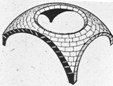
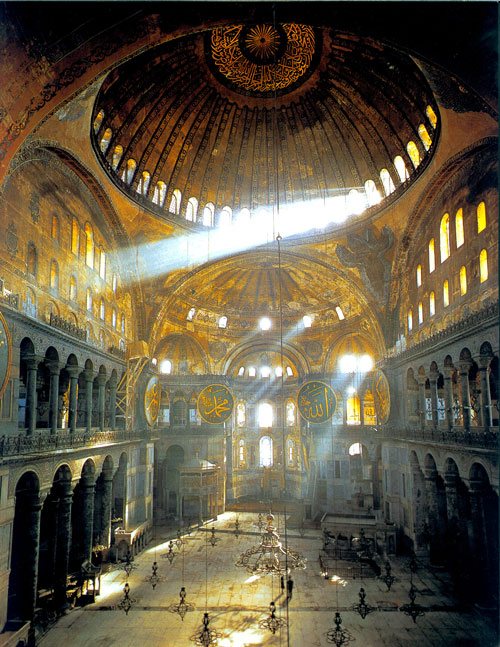
A major characteristic of Russian architecture is the famous domed cathedrals, created in the Byzantine style. These domes are held up by a geometric structure called a pendative. A Pendative is a hollow hemi-spherical dome with four slices cut from the sides and a hole in the center so that the weight of the dome on top of it can be equally distributed down into the four pillars of a
square room. This structure better distributes the weight of the dome and solves the problem of fitting a round dome to its square base.


Saturday, February 7, 2009

Who is Dmitry Medvedev again?

Hey All,
This is just a link i thought everyone should look at. It gives a profile on the most recent President of Russia-Dmitry Medvedev. What i found interesting is he is the 3rd Russian president. All the others weren't considered "Russian Presidents." Not until the Soviet Union fell, did they get that title. Any who here is the link of Medvedev (which means bear for all who don't know that)

http://www.russiaprofile.org/resources/whoiswho/alphabet/m/medvedev.wbp

Russians are bartering?

Apparently the barter system has returned to Russia. A certain automobile factory is trading Hyundai Santa Fe SUV's in exchange for circuit boards or metal sheets or sneakers. This article is really interesting, including some information about the current economic times in Russia and past instances of bartering in Russia. Take a peek!


Have Car, Need Briefs? In Russia, Barter Is Back

Here is a sign of the financial times in Russia: Barter is back on the table.

Advertisements are beginning to appear in newspapers and online, like one that offered “2,500,000 rubles’ worth of premium underwear for any automobile,” and another promising “lumber in Krasnoyarsk for food or medicine.” A crane manufacturer in Yekaterinburg is paying its debtors with excavators.

And one of Russia’s original commodities traders, German L. Sterligov, has rolled out a splashy “anti-crisis” initiative that he says will link long chains of enterprises in a worldwide barter system.

All this evokes a bit of déjà vu. In the mid-1990s, barter transactions in Russia accounted for an astonishing 50 percent of sales for midsize enterprises and 75 percent for large ones.

The practice kept businesses afloat for years but also allowed them to defer some fundamental changes needed to make them more competitive, like layoffs and price reductions. It also hurt tax revenues.

The comeback is on a small scale so far. The most recent statistics available, from November, showed that barter deals made up about 3 to 4 percent of total sales, according to the Russian Economic Barometer, an independent bulletin. Nevertheless, economists are taking note.

“Russians are so arrogant that they never cut prices,” said Vladimir Popov, a professor at Moscow’s New Economic School. By turning to barter systems during an economic downturn, he said, “you are hiding your head in the sand.”

It would be hard, however, to dissuade business owners who see barter as a point of light on a bleak financial horizon.

Among the most upbeat of them is Mr. Sterligov, who, just as the credit crunch brought most business deals to a halt, shoveled $13 million into the Anti-Crisis Settlement and Commodity Center.

Mr. Sterligov, 42, is one of the great characters of Russian capitalism. In his mid-20s, on the eve of the Soviet Union’s collapse, he was a freewheeling, chain-smoking commodities trader surrounded by leggy assistants.

But Mr. Sterligov sat out the oil-fueled prosperity of recent years. After a failed run against Vladimir V. Putin in the 2004 presidential election, he retreated to a log house outside Moscow, opting for the beard and boots of a Russian shepherd. In August, intimations of the financial crash lured him out of the woods.

He plans to use a computer database to create chains of six or seven enterprises having difficulty selling their products for cash, in which the last firm on the chain would pay the first in a single cash transaction.

It is the kind of multiparty barter that rose to prominence in the 1990s, when managers of factories across Russia devised complex barter chains to keep the maximum number of enterprises in business when none had cash to pay their bills. A computer, he said, can do the same job faster and more efficiently.

“What was in the past will remain in the past,” Mr. Sterligov said in an interview last month, from the 26th-floor suite he has rented in a Moscow high-rise. “We are making a step into the future.”

So far, economists doubt that barter will grow to the level it reached in the 1990s. Earlier in the transition to a market economy, industrialists still had little monetary stake in their businesses but were dependent on the prestige that went with executive positions, said Andrei Yakovlev of the Higher School of Economics here. They had little incentive to cut costs, and barter deals kept them going for five years, he said.

Now, business owners and managers “are really trying to reduce costs and reduce inefficiency,” Mr. Yakovlev said. Interest in barter, he said, is more likely to come from regional governments, which have the most to lose from high unemployment.

Barter is a side effect of tight monetary policy, said Mr. Popov, who is teaching at Carleton University in Ottawa. Russia is in the grip of a liquidity crisis. As in the mid-1990s, the government has made it a priority to shore up the economy by buying up rubles, hoping to avoid the panicky sell-off that comes with rapid devaluation. The ruble has gradually slid from 23.4 to the dollar in early August, before Russia’s war in Georgia, to 36.2 to the dollar last week.

As a result, the money supply continues to contract, and some enterprises turn to barter to survive. “We are stepping for the second time on the same rake,” Mr. Popov said. “The second time is a greater sin.”

Long-term macroeconomic trends, however, are the last thing manufacturers were thinking about in recent weeks.

The Hyundai factory in Taganrog, the southern seaport where Chekhov was born, rolled out a barter promotion on its Web site, offering to trade vehicles for “raw materials,” “high-tech equipment” or “other liquid goods, including finished products of various branches of industry.” Gleb Korotkov, a spokesman for the factory, said he could not be specific about what goods were meant, saying it was a “commercial secret.”

Barter deals seem to be spreading fastest in construction industries. Dmitri Smorodin, who runs a large St. Petersburg building firm, said he thought for two months before announcing in late January that he was willing to accept barter items — including food products — as payment for construction work.

He said he hoped that adopting the strategy early in the crisis would give him an edge over his competitors.

“Food we would happily accept, because it’s easy to sell,” he said. “Of course, money is always preferable.”

In contrast, Uralchem, a fertilizer producer, refused payment in grain and beef, because the company conforms to international financial reporting standards in its reports to shareholders, said Andrei Kocherov, a spokesman for Uralchem, which was founded in 2007. The modern accounting system would preclude barter, he said.

Sergei Ryazanov, 30, a businessman from the Siberian city of Surgut, took out an advertisement a month ago offering to barter excess metal piping. So far, he has not been impressed by the offers he has received; he said people were not desperate enough to drop prices. He is looking for a truly liquid commodity, something universal, like gasoline. Even underwear, which, he said, “is much more liquid than automobiles.”

He was intrigued by Mr. Sterligov’s idea, though he questioned the wisdom of planning a career in barter. “It will take him a couple years to get it right,” Mr. Ryazanov said. “And then, in two years, liquidity will be back.”