Wednesday, December 9, 2009

Unit 5 - Russian Roulette


SO, I was wondering where Russian Roulette originated from since I've heard it's possibly not really Russian itself. This is what I found:

Most of the legends that abound regarding the invention of Russian roulette are, predictably, set in the Russian Empire or occur among Russian soldiers.

In one legend, 19th-century Russian prisoners were forced to play the game while the prison guards bet on the outcome. In another version, desperate and suicidal officers in the Russian army played the game to impress each other.

Whether Tsarist officers actually played Russian roulette is unclear. In a text on the Tsarist officer corps, John Bushnell, a Russian history expert at Northwestern University, cited two near-contemporary memoirs by Russian army veterans: The Duel (1905) by Aleksandr Kuprin and From Double Eagle to Red Flag (1921) by Pyotr Krasnov. Both books tell of officers' suicidal and outrageous behaviour, but Russian roulette is not mentioned in either text. The standard sidearm issued to Russian officers from 1895 to 1930 was the Nagant M1895 revolver. A double-action, seven chambered revolver, the Nagant's cylinder spins clockwise until the hammer is cocked. While the cylinder does not swing out as in modern hand-ejector style double action revolvers, it can be spun around to randomize the result. It is possible that Russian officers shot six and kept the seventh cartridge live. Due to the deeply seated rounds unique to the Nagant's cartridge and that the primers are concealed, it would be very difficult to tell from the outside where the live round was and which were spent; this would add to the uncertainty of the results.

Several teen deaths following the release of the film The Deer Hunter caused police and the media to blame the film's depiction of Russian roulette, saying that it inspired the youths.

-----

Thank you Wiki!

Russian ska

Я так рада! I finally found Russian ska music!

Here's После программы время by Ландыши (music starts about 40 seconds in):


If you want to learn more about Ландыши, you can read about them here
http://www.landyshi.ru/
I think. This website may or may not be in Russian.

Otherwise, sit back and enjoy!

Tuesday, December 8, 2009

The Vikings and the Russians


We all know this guy as the stereotypical Viking. We often associate these guys with plundering, violence, and anarchy and for the most part it is true. These raiders were the scourge of Europe for the better part of 200 years, their fast ships allowed them to raid with impunity. The only way to beat them was to either be incredibly lucky or to buy them off. But wait you might ask, were'nt they from Norway, Sweden, and Denmark? What on earth do these people have to do with Russia? In order to understand we must first look at Russian geography. Russia is known for its rivers, most of which flow north to south. Three of the largest rivers are the Volga, the Dnieper, and the Dvina. The proximity of these rivers allowed for easy transportation of goods from the Baltic Sea to the Black Sea. Around the 9th century A.D a group of Viking traders set up a trading post around the current city of Novgorod. The name of the tribe is the Rus and that is the beginning of the Vikings impact on the foundation of Russia. The Vikings were more than savage raiders out for blood and a good time, they were successful merchants and traders. After establishing a successful base of operations at Novgorod the Vikings branch out and in 882 A.D a Viking chief named Oleg captures the small town of Kiev. In 911 A.D he negotiates a trade agreement with the Byzintine empire. This established a connection that will forever influence Russian culture. Kiev becomes a hub for a three teir trading system between the Byzatine empire, the steppes of the Rus', and the forests of the north. Eventually the Rus assimilate into the culture of the steppes and become what is now known as Russians. A wild adventurer named Vladamir captures Kiev in 980 becoming king of all Russia. Vladamir is a pagan chief but converts to Greek Orthodox Christianity in 988. Although the Russian Vikings are now seperate from their cousins in the North their influence can still be seen today. Names that are quintessentially Russian such as Vladamir and Olga can be traced back to the Viking names of Waldamar and Oleg. It was the Vikings that gave Russia its identity and culture and the Vikings that allowed the outside influence of the Byzantine empire to reach the steppes of Russia and flourish.

Shostakovich Piano Quintet in G minor Scherzo

Shostakovich completed the Piano Quintet on Sept 14, 1940. The premire saw Shostakovich himself playing the piano on November 23,1940 at the Moscow Conservatory.In 1941, it was awarded the Stalin Prize. Here we see the Scherzo.


ёжик в тумане

Sometime ago, I posted a link to the poem film "Hedgehog in the Fog" by Russian film maker Yuri Norstein. My friend and I remade this film for a project in another class. We shot footage of us playing the various characters and juxtaposed it with footage from the original. We then placed the original soundtrack over the edited footage and painstakingly added subtitles. Here is the finished product. Enjoy:


Unit 5

UNIT 5 Blog


Today (12/8/09) in Moscow the Supreme Court is ruling on a case about Religious Freedom. The local and appellate courts in the city of Taganrog have ruled that Jehovah's Witnesses religious literature is “extremist” and should be banned. While their rulings are not yet enforceable because of the appeal process, local city officials have begun raiding local places of worship and private homes to confiscate the material. In addition, all religious gatherings have ceased at the current time. While many only know Jehovah's Witnesses as the people who knock on your door Saturday morning, their message promotes peace and unity. Like all religious groups they exercise their freedom of religion. I think it will be very interesting to hear Russia’s Supreme Court ruling and how other nations view the controversial issue.
http://www.jw-media.org/rus/20091118.htm

Ded Moroz (UNIT 5 PORTFOLIO)


Christmas Tradition:

In Russia, for Christmas there is no Santa Claus, but instead a fictional character named Ded Moroz, which translates directly to Grandfather of Frost. Ded Moroz is thinned than Santa Claus, has a round cap with fur, long extravagantly embroidered robe, valenki (common Russian leather boots), a magical staff, 3 horses to pull his troika, delivers presents on New Years Eve (since Christmas is typically celebrated on January 5th due to the equinox), has an estate in Veliky Ustyug where children can write letters and visit, and has an accomplice- Snegurachka (which translates directly to Snow Maiden). Snegurachka is Ded Moroz's granddaughter and she helps deliver the gifts (which is not done secretively, but in person, unlike Santa Claus) and wears a similar outfit to Ded Moroz only it is silver and blue.

The Tale of the Snow Maiden is:

This Snegurochka is the daughter of Spring and Winter who appears to a childless couple as a winter blessing. Unable or forbidden to love, Snegurochka remains indoors with her human parents until the pull of the outdoors and the urge to be with her peers becomes unbearable. When she falls in love with a human boy, she melts.

The Tale of Father Frost is:

A woman had a stepdaughter and a daughter of her own, and she hated her stepdaughter. One day, she ordered her husband to take her out into the winter fields and leave her there, and he obeyed. Father Frost found her there, and she was polite and kind to him, and he gave her a chest full of beautiful things and fine garments. When her stepmother sent her father to bring back her body to be buried, he went, and the dog said that she was coming back beautiful and happy, and despite the bribe of a pancake, went on saying it.

When the stepmother saw what her stepdaughter had brought back, she ordered her husband to bring her own daughter out to the fields. The girl was rude to Father Frost, and he froze her to death. When her husband went out to bring her back, the dog said that she would be buried, and despite the bribe of a pancake, repeated it. When he brought back the body, the old woman wept.


"Щелкунчик"

Here are some little known facts about this famous Christmas classic by Tchaikovsky:
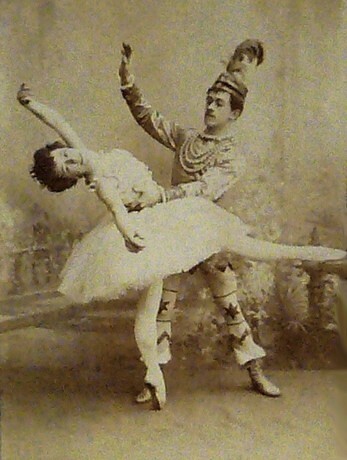
It was originally commissioned by Ivan Vsevolozhsky for the Imperial Theater, even though Tchaikovsky did not want to write it. Tchaikovsky actually detested this ballet while composing it and even after the premiere. He considered the ballet inferior to his previous one ("Sleeping Beauty"). I’ve always found that somewhat sad since The Nutcracker is considered to be one of his most famous works. While composing the music for the ballet, Tchaikovsky is said to have argued with a friend who wagered that the composer could not write a melody based on the notes of the octave in sequence. Tchaikovsky asked if it mattered whether the notes were in ascending or descending order, and was assured it did not. This resulted in the "Grand pas de deux" of the second act. It is also thought that the melancholy melody of the pas de deux is the result of his sister dying shortly before he began the composition. Other noteworthy aspects of the ballet include its prominent use of celesta, featured in the "Dance of the Sugar Plum Fairy" of the second act. Below is a photo of Olga Preobrajenska as the Sugarplum Fairy and Nikolai Legat as Prince Coqueluche in the Grand pas de deux of the original production (St. Petersburg, c. 1900).


Unit 4

Russian Cars

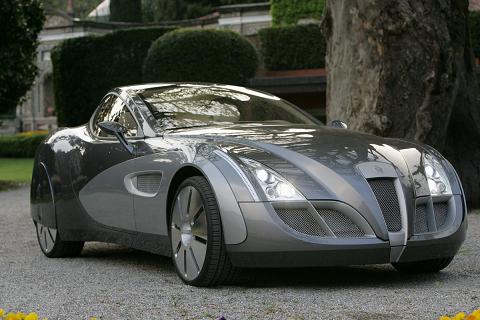
We all remember the Soviets and their stereotypical poor engineering, embodied in the infamous Yugo, but now a new modern style car born out of the post Russo-Balt company is turning heads:
http://carbl.com/2007/03/12/russo-balt.html


Priced around $1,500,000 it isn't exactly expected to become a Model T, but there are many other successful manufacturers in Russia today:
http://kamaz.net/en/
http://eng.gazgroup.ru/
http://www.lada-auto.ru/
http://www.amo-zil.ru/

Last Posting needed

Seeing as it is almost Christmas I thought I would try and them my final post a bit towards that. It seems that the famous ballet The Nutcracker, which was based of the book The Nutcracker and the Mouse King written by Hoffman and the music was commissioned by the great Russian composer Pyotr Ilyich Tchaikovsky in 1891. The first performance was in 1892 at the Mariinsky Theatre of Russia, home of the Kirov Ballet.