Tuesday, October 6, 2015
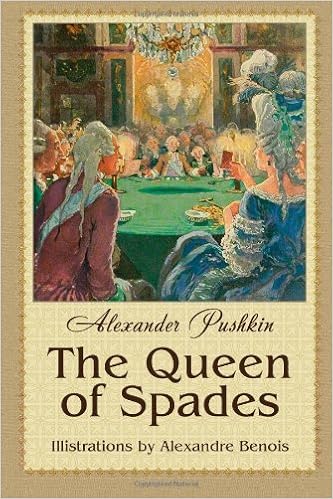
The Queen of Spades

Religion in Russia
Sources appear to disagree on the specifics and percentages regarding the different religions. One site states the existence only a 41% Orthodox Christian population, with a 6.5% Muslim population and a nearly nonexistent Jewish population. Yet another claims a massive increase in the Orthodox personage to 75%, whilst maintaining a similar Muslim percentage at a crisp 5%. However, a highly reputable source in Stetson's Dr. Denner claims that, in Moscow, a solid 90% of Russia's population is Orthodox Christian, with 5% coming again from Islam, and only an estimated 10,000 Jews. We can infer several key points from such disparities and similarities - Moscow, a much more highly concentrated part of Russia than the more often seen countryside, has a larger percent of Orthodox Christians. Such a large portion of Moscow being Orthodox most likely comes from continuous efforts at Communism throughout the 20th century -- such efforts appearing in a much more concentrated form in the city (Moscow). The consistent 5ish percent of Muslims comes from the attempted integration of countries directly south of Russia - while other religious parties are missing from Russia's conglomerate of religion.

The graph above shows an even different approximation of "Russian Religions," with Muslims making up just nigh of 20% this time around.
While the numbers may differ, what we can take away from this is obvious in the graph.
The graph above shows an even different approximation of "Russian Religions," with Muslims making up just nigh of 20% this time around.
While the numbers may differ, what we can take away from this is obvious in the graph.
Russian Tea Cakes Recipe
RUSSIAN TEA CAKES

INGREDIENTS:
1 cup of butter
1 teaspoon of vanilla extract
6 tablespoons of confectioners' sugar
2 cups of all-purpose flour
1 cup of chopped walnuts
1/3 cup of confectioners' sugar for decoration
DIRECTIONS:
1) Pre-heat oven to 350 degrees F.
2) In a medium bowl, cream butter and vanilla until smooth.
3) Combine the 6 tablespoons of confectioners' sugar and the 2 cups of all-purpose flower. Stir into butter mixture until just blended.
4) Mix in the chopped walnuts.
5) Roll dough into 1-inch balls, and place them 2 inches apart on an ungreased cookie sheet.
6) Once oven is finished pre-heating, keep the temperature at 350 degrees F and bake for 12 minutes.
7) When cool, roll the cakes in the remaining confectioners' sugar.
A Thawing of the Cold War

The selection of Mikhail Gorbachev as General secretary of the Soviet Union ushered a new era in Soviet and American relations. His policies of glasnost (openness) and perestroika signaled that the Soviet Union is changing dramatically. Together with President Ronald Reagan, Gorbachev would sign the landmark INF treaty which would scale back the nuclear forces of both nations. These developments, along with the increase dialogue between the two nations, would lessen Cold War tensions.
The picture above perfectly captures the climax of this monumental development. It depicts Reagan's visit of Red Square during the Moscow Summit of 1988. In the picture Gorbachev tells a Russian child, "Shake hands with Grandfather Reagan."
Monday, October 5, 2015
Royal Origins: The Hermitage Museum
Without a doubt, the Hermitage Museum is one of the most famous museums in the world. Housed in the Winter Palace, the museum contains a nearly unrivaled collection of art; in fact, the museum has become so large, they have launched many "dependent museums" across Russia and other parts of Europe, with several more due to open late next year. However, the Hermitage was not always as prominent as it is today.
The Hermitage began as Екатерина Алексеевна's (Catherine II, Empress and Autocrat of all the Russias) private collection. It was assembled originally for Frederick II of Prussia by Johann Gotzkowsky, but after Frederick refused to purchase the collection, Catherine, a patroness of the arts, jumped to purchase the collection in 1764. In fact, many of the original pieces from Catherine's collection are still in residence at the Hermitage today, such as Rembrandt's Danae and Portrait of A Young Man Holding A Glove by Franz Hals. Over the next ten years, Catherine commissioned architects Yury Felten and Jean-Baptist Vallin de la Mothe to build the Small Hermitage, later called the Hermitage Complex, as an extension of the Winter Palace.
The collection soon outgrew the building complex it was housed in, leading to its placement in another building, now called the Old Hermitage, in 1787. Following the October Revolution by the Bolshevik Party in 1917, the Imperial Hermitage and the Winter Palace were merged, leading to the placement of the vast collection in the Winter Palace. In the last century the museum has continued to grow, as is evidenced by the launching of dependencies and the many traveling Hermitage exhibits across the world.
 |
| The Hermitage is currently housed in the Winter Palace Complex, Saint Petersburg. |
The collection soon outgrew the building complex it was housed in, leading to its placement in another building, now called the Old Hermitage, in 1787. Following the October Revolution by the Bolshevik Party in 1917, the Imperial Hermitage and the Winter Palace were merged, leading to the placement of the vast collection in the Winter Palace. In the last century the museum has continued to grow, as is evidenced by the launching of dependencies and the many traveling Hermitage exhibits across the world.
 |
| An interior view of a portion of the Hermitage today. |
Sunday, October 4, 2015
Kholodets (Meat Jelly)
This is a dish in Russia almost all Americans would find unusual. The history behind Kholodets is somewhat unknown, but what is thought to be the origin is that all the leftovers from yesterdays meal were thrown together and fed to the servants. Somehow eventually everyone started eating it. I thought it was interesting, but not sure I would ever try it.

INGREDIENTS
1 pig's foot, split
2 lbs pork neck bones
1⁄2lb boneless veal
1⁄2lb dark turkey meat
2 onions
2 carrots
1 bay leaf
4 garlic cloves (to taste)
1 tablespoon salt
1 teaspoon ground black pepper
1 tablespoon gelatin
1 cup hot broth
DIRECTIONS
-Scrub pig's foot in cold water and scrape off any bristles.
-Combine meats, vegetables peppercorns, and bay leaf in large kettle or pressure cooker.
-Cook covered in water until very well done (about 3 hours in kettle or 45 minutes at 15 pounds -pressure in pressure cooker).
-When meat is loose from bones, uncover and cool.
-Pour off broth, skim off fat, and reserve broth.
-Remove meat from bones, discarding turkey skin and fat and vegetables.
-Chop meat into bite-size pieces and place in an oblong pan.
-Add peeled and crushed garlic, salt, and pepper.
-Soften gelatin in 1 cup hot broth and add to meat.
-Pour enough remaining broth to cover meat by at least 1/2 inch.
-Taste broth and adjust seasoning.
-Cover with plastic wrap and chill overnight.
Saturday, October 3, 2015
Kholodets
Kholodets, also referred to as studen, is a traditional Russian jellied meat dish, important to the winter holidays and celebrations. It usually comprises of fresh meat and cold broth-- hence the jelly effect-- and must be served cold in order to maintain its shape and appearance. This dish is often an appetizer, and accompanied by strong horseradish sauce or Russian mustard. It is also a very good companion food with vodka. However, if you want to make this dish, be prepared to spend a full day on preparation and another just to cool the broth! The making of true kholodets is really quite an art.


Friday, October 2, 2015
While reading A Clockwork Orange for my FSEM I noticed
something very strange. It seemed that 90% of the words that were used in the
book were Russian. Being the only SPREE’s student in my class I felt really bad
for all the other students in my class. How on Earth were they to be expected
to understand this book if half of the words they didn’t know. Come to find
out, after a long process most of them started to get what was going on based
on context. I soon realized that there was a point to most of the words being
so different. We were supposed to disconnect from the narrator and main
character.
I know wonder if, where I
thought I had an advantage I now am missing a huge part of the main story.
Because I had a higher understanding did I not get the full effect of the book?
I don’t think I will ever be able to unlearn Russian so I may never be able to
find out what exactly it is that I missed.
Upon doing some further research the author was as linguist. He created a
fictional language for the teens of the book to speak called Nadsat. Below is a little more info as to how it translates into the contrary Russian language.
Russian influences play
the biggest role in Nadsat. Most of those Russian-influenced words are slightly
anglicized loan-words, often maintaining the original Russian pronunciation.[4] One example is the Russian word Lyudi, which is anglicized to lewdies, meaning "people".[5] Another Russian word is Bábushka which
is anglicized to baboochka, meaning
"grandmother", "old woman".[5] Some of the anglicised words are
truncated, for example "pony" from ponimát’, "to
understand", or otherwise shortened, for example "veck" from čelovék, "person", "man" (though
the anglicized word "chelloveck" is also used in the book).
A further means of constructing Nadsat words is the
employment of homophones (known as folk etymology). For
example, one Nadsat term which may seem like an English composition, horrorshow, actually stems from the Russian word for
"good";khorosho, which
sounds similar to horrorshow.[5][6] In this same manner many of the
Russian loanwords became an English–Russian hybrid, with Russian origins, but
English spellings and pronunciations.[7] A further example is the Russian word
for "head", golová, which sounds
similar to Gulliver known
from "Gulliver’s travels". Consequently Gulliver becomes
the Nadsat expression for the concept "head".[5][6]
However, many of Burgess' loan-words, such as devotchka ("girl")
and droog ("friend")
maintained both their relative spelling and meaning over the course of
translation.[7]
Pelmeni!
Russian Pelmeni
In the spirit of the upcoming cultural credit, here is a recipe for Pelmeni. Pelmeni are Russian poached pastries that have a meat filling. "Neighbours gathered after the frosts set in, having fun while pelmeni are being made in quantities running into the thousands. They are laid out on huge dough boards and carried outside to freeze, after which they are dumped into sacks like so many pebbles and stored away until needed...”
In the spirit of the upcoming cultural credit, here is a recipe for Pelmeni. Pelmeni are Russian poached pastries that have a meat filling. "Neighbours gathered after the frosts set in, having fun while pelmeni are being made in quantities running into the thousands. They are laid out on huge dough boards and carried outside to freeze, after which they are dumped into sacks like so many pebbles and stored away until needed...”
Ingredients:
2 c flour
1 c milk or water
2 c flour
1 c milk or water
1/2 tsp salt
1 tbsp vegetable oil
3 eggs
1/2 lb beef
1/2 lb pork
1 onion
salt and pepper to taste
3 eggs
1/2 lb beef
1/2 lb pork
1 onion
salt and pepper to taste
Method:
1. Grind beef and pork twice in meat chopper. Then add chopped onion, salt, and pepper. To make mincemeat more tender and juicy, add a bit of milk. Reserve.
1. Grind beef and pork twice in meat chopper. Then add chopped onion, salt, and pepper. To make mincemeat more tender and juicy, add a bit of milk. Reserve.
2. Mix flour with eggs and milk, salt and oil until a soft dough forms. Knead on floured surface until dough is elastic.
3. Take some dough and make a "sausage" (1 inch in diameter). Divide into pieces (1 inch thick). Roll each piece so that each is 1/16 inch thick.
4. Take a glass or a cup (2 inches in diameter) and make rounds with it's help on the dough. Fill each round with 1 teaspoon of the mincemeat, fold into half-moons.
5. Pinch edges together and connect the opposite sides. Pelmeni can be frozen to be cooked later ( you can keep them in the freezer for a long time), or cooked immediately.
6. To cook pelmeni, boil a large amount of water, as they can stick to each other. Salt water. Carefully drop pelmeni into boiling water. Don't forget to stir them from time to time. Boil for 20 minutes.
5. Served with butter, sour cream or vinegar, and ketchup.
(Ruscuisine.com)
Thursday, October 1, 2015
Reykjavik
A dose of Russian Foreign Policy history...
During 1986, the Soviet Union and United States were in the middle of a Cold War. Due to both nations' significant military advancements, they were in the middle of a MAD situation (yes, Gorbachev and Reagan were both pretty mad but in this case it stands for 'Mutually assured destruction').
At the conference in Reykjavik, Iceland, 1986, both strong leaders met to sort out a nuclear arms policy. Gorbachev was frustrated by Reagan's insistence on the STAR WARS project (a defense system based in space).
In order to successfully establish a INF treaty, Gorbachev and Reagan were both willing to consider giving up all of their INF weapons. Unfortunately, since Reagan was unwilling to compromise on his STAR WARS program, not much was able to be achieved at this conference, frustrating both foreign leaders.
Subscribe to:
Posts (Atom)