Showing posts with label Newfrock. Show all posts

Thursday, April 28, 2016

Ключевская сопка


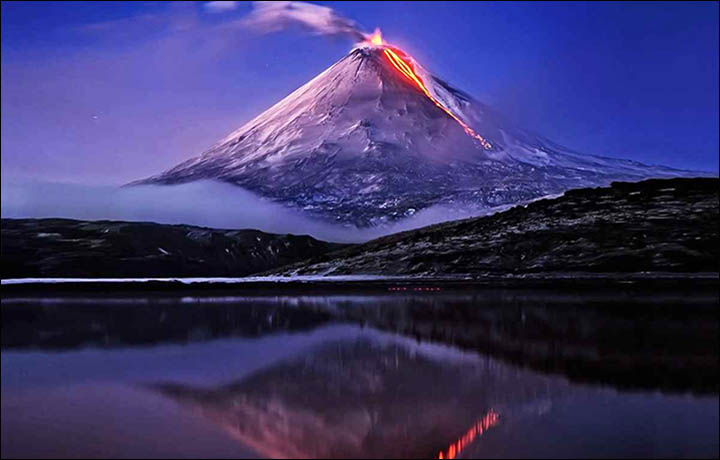
Russia is also home to the world’s largest active volcano Klyuchevskaya Sopka, which has a height of 4,750 m (15,584 ft). It is cone shaped volcano, that can be climbed from all sides. Mostly, climbs are from the pass between Klyuchevskaja nad Kamen from the south. Less popular is west route. The height of Klyuchevskaja is in the range from 4750 to 4850 m according to different sources. However, on the north side of the summit crater it is 4750 m.During the summer a helmet is necessity due to the falling of stones and rocks. In summer 2003, one Czech turist was hit to death by stone on the slope of Klyuchevskaja, and several members of rescue team were injured. For winter and spring climbs you need crampoons, ice-axe, avalanche transceiver, snow showel, etc. Helmet is recommendable, but not necessary, as majority of stones and rocks area stabilizated by ice and snow. 

Difficulties of the climb are mostly near the summit - strong volcanic activity, gases, temperature, etc. During the climb the worst troubles are falling stones and rocks. We set up our camp on the north at the altitude 2070 m, so that, 2700 altitude meters were for summit day. Usually, the advance camp is set up from the north/north-west at 2700-2900 m. From the south the summit day starts from the pass between Klyuchevskaja and Kamen.


Thursday, April 14, 2016

Марк Чагалл


Marc Chagall was born in Belarus in 1887 and developed an early interest in art. After studying painting, in 1907 he left Russia for Paris, where he lived in an artist colony on the city’s outskirts. Fusing his own personal, dreamlike imagery with hints of the fauvism and cubism popular in France at the time, Chagall created his most lasting work—including I and the Village (1911)—some of which would be featured in the Salon des Indépendants exhibitions. After returning to Vitebsk for a visit in 1914, the outbreak of WWI trapped Chagall in Russia. He returned to France in 1923 but was forced to flee the country and Nazi persecution during WWII. Finding asylum in the U.S., Chagall became involved in set and costume design before returning to France in 1948. In his later years, he experimented with new art forms and was commissioned to produce numerous large-scale works. Chagall died in St.-Paul-de-Vence in 1985. 
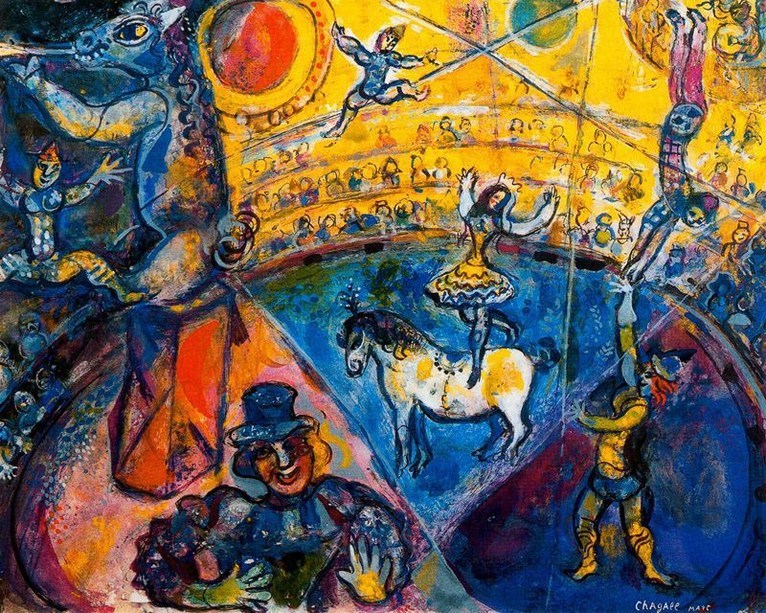
I would highly encourage you to search his name to see some of the pieces he's painted. I won an art show in high school by replicating his famous take on Georges Seurat's "The Circus". Chagall's "Circus Horse" is below.


More information: http://www.biography.com/people/marc-chagall-9243488

Wednesday, March 23, 2016

Кавказская овчарка


Кавказская овчарка (Caucasian Ovcharka)
The Caucasian Shepherd or Caucasian Ovcharka is one of the most brutal Russian dog breeds (maybe not the puppy featured above). It is a large, even-tempered dog with powerful and muscular body, bear-look face, deeply set oval dark eyes, round-shaped cropped ears and low carried long tail. It has a thick and water resistant double coat in shades of gray, brindle, yellow, rust, red or white. The coat may be longer or shorter depending on the region the dog comes from.

The strength and dedication of this dog has made it a popular working, police and guard dog throughout Europe and the former Soviet Union states. They call it Caucasian Shepherd in Europe and Caucasian Mountain Dog in America. In the West it is also known as the Russian Bear Dog. In Russia its usual name is Caucasian Ovcharka which means means sheepdog in Russian.The Caucasian Ovcharka was used for centuries to guard flocks, kill wolves, hunt bears and protect properties against trespassers and thieves. 

Read more: http://www.dogbreedinfo.com/caucasianowtcharka.htm

Thursday, February 25, 2016

Нарва, Эстония


Narva is the third largest city in Estonia. It is located at the eastern extreme point of Estonia, by the Russian border, on the Narva River which drains Lake Peipus. 
It seems as the history had materialized in Narva in its architectural ensemble, uncommon in beauty and dramatic effect, that integrates the opposites and is unique in the whole Europe: two giants of stone towering in close vicinity to each other two opposite banks (at distance of an arrow flight or that of a musket shot) – the castle of Order of Germanic knights and the Russian fortress of Ivangorod. 
Heavy battles occurred in and around Narva in World War II. The city was damaged in the German invasion of 1941 and by smaller air raids throughout the war, but remained relatively intact until February 1944 However, being at the focus of the Battle of Narva (1944), the city was almost completely leveled. The most devastating action was the bombing of 6 March 1944 by the Soviet Air Force, which destroyed the baroque old town, built during the Swedish rule in the late 17th century.
Not far from the town is the Narva Waterfall, whose spillway capacity is one of the largest in northern Europe. From as early as the beginning of the 19. century it grew to become a favorite recreation place for the Saint-Petersburg aristocracy.
http://estonianworld.com/life/estonias-third-largest-city-4-reasons-to-visit-narva/

Sunday, December 6, 2015

Ѳеодоръ Васильевъ!

Feodor Vassilyev (Ѳеодоръ Васильевъ) was a peasant who lived in ShuyaRussia from 1707-1782. Feodor and his first wife Valentina set the record for most children birthed by a single woman/couple


She gave birth to a total of 69 children including 16 pairs of twins, 7 sets of triplets and 4 sets of quadruplets between 1725 and 1765, in a total of 69 births. 67 of which were reported to survive infancy. 

Vassilyev also had 18 children with his second wife, who had 6 pairs of twins and 2 sets of triplets, making him a father of 87 children in total. Of his 87 children, at least 82 are said to have survived infancy.

More information can be found below!
http://www.guinnessworldrecords.com/world-records/most-prolific-mother-ever

Wednesday, November 18, 2015

Фёдор Достое́вский


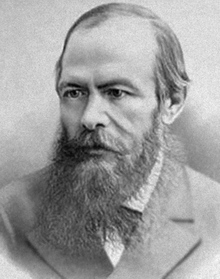
Fyodor Dostoyevsky is an acclaimed Russian writer and regarded as one of the best not only in Russian culture, but also internationally. After experiencing traumatic events in his life such as imprisonment, exile, and most importantly the mock execution ordered by Tsar Nicholas I, he wrote about human weakness and the struggle to fit in with society. His influence for writing came from no other than Pushkin, arguably the largest name in Russian literature. Notable works include IdiotNotes From the Underground, and Crime and Punishment