
Showing posts with label Unit 9. Show all posts
Showing posts with label Unit 9. Show all posts
Saturday, April 16, 2016
Top Russian senator proposes ‘Ministry of Happiness’ to improve life
House Speaker Valentina Matviyenko has recently pushed for a separate ministry to be created that would aim to increase happiness and feelings on any government initiative within Russia. Piggy-backing on the United Arab Emirates creation of the ministry, she feels that its creation would be beneficial to the government and its people. The UAE added the minister of happiness in February this year and is said to use work by the UN and various other experts and researches to base their work on. Matviyenko added that another benefit of such an institution is that citizens who are happy themselves would try to cheer other people up.

Thursday, April 14, 2016
Колобок: The Little Round Bun
Колобок is a Russian Folk Tale of a little round bun trying to escape being eaten by various characters. The following is a translation of this beloved tale.
Once upon a time there lived an old man and an old woman who were very poor and had nothing at all to their name. And they kept getting poorer and poorer till there was nothing left to eat in the house, not even bread, Said the old man:
"Do bake us a bun, old woman! If you scrape out the flour-box and sweep out the bin, you'll have enough flour."
So the old woman scraped out the flour-box and swept out the bin, she made some dough and she shaped a little round bun out of it. She then lit the oven, baked the bun and put it on the window sill to cool. But the bun jumped out of the window and onto the bench outside, and from the bench onto the ground, and away it rolled along the road!
On and on' it rolled, and it met a Rabbit coming toward it.
"I'm going to eat you up, Little Round Bun!" called the Rabbit.
"Don't do that, Fleet-Feet, let me sing you a song instead," said Little Round Bun.
"All right, let's hear it!"
"Here it is!
"Here it is!
"I was scraped from the flour-box
And swept from the bin
And baked in the oven
And cooled on the sill.
I ran away from Grandpa,
I ran away from Grandma,
And I'll run away from you, this minute I will!"
And off it rolled and away. By and by it met a Wolf coming toward it.
"I'm going to eat you up, Little Round Bun!" called the Wolf.
"Don't do that, Brother Wolf, let me sing you a song instead."
"All right, let's hear it!"
"I was scraped from the flour-box
And swept from the bin
And baked in the oven
And cooled on the sill.
I ran away from Grandpa,
I ran away from Grandma,
And I'll run away from you, this minute I will!"
And away it rolled.
By and by it met a Bear coming toward it.
"I'm going to eat you up, Little Round Bun!" called the Bear.
"Don't do that, Brother Bear, I'll sing you a song instead!"
"All right, let's hear it!"
"All right, let's hear it!"
"I was scraped from the flour-box
And swept from the bin
And baked in the oven
And cooled on the sill.
I ran away from Grandpa,
I ran away from Grandma,
And I'll run away from you, this minute I will!"
And away it rolled and away!
By and by it met a Fox coming toward it.
"I'm going to eat you up, Little Round Bun!" called the Fox.
"Don't do that, Sister fox, I'll sing you a song instead."
"All right, let's hear it!"
"I was scraped from the flour-box
And swept from the bin
And baked in the oven
And cooled on the sill.
I ran away from Grandpa,
I ran away from Grandma,
And I'll run away from you, this minute I will!"
"Sing some more, please, don't stop!" the Fox said. "Hop onto my tongue, I can hear you better."
Little Round Bun jumped onto the Fox's tongue and began to sing:
"I was scraped from the flour-box
And swept from the bin-"
But before it could go on, the Fox opened her mouth and - snap! -she gobbled it up.
Sand and Stones
This is ice cream?

Apparently so.
My dad is currently in Russia for work and sent us that picture. Apparently it's ice cream that has the literal translation of "silica and stones." I tried Googling it, but to no avail. The picture is from somewhere in St. Petersburg.
Is it a common, normal Russian dessert? I'd guess not, though Google can lie.
Is it really ice cream? Yeah, my pops wouldn't make it up.
Was it a fluke thing presented to my dad to be impressive since his company deals within silica and the like? Potentially, though rocks for ice cream may not be the way I'd go about it...
The mystery of rock-looking ice cream has yet to be solved, but apparently it's Russian.

Apparently so.
My dad is currently in Russia for work and sent us that picture. Apparently it's ice cream that has the literal translation of "silica and stones." I tried Googling it, but to no avail. The picture is from somewhere in St. Petersburg.
Is it a common, normal Russian dessert? I'd guess not, though Google can lie.
Is it really ice cream? Yeah, my pops wouldn't make it up.
Was it a fluke thing presented to my dad to be impressive since his company deals within silica and the like? Potentially, though rocks for ice cream may not be the way I'd go about it...
The mystery of rock-looking ice cream has yet to be solved, but apparently it's Russian.
Марк Чагалл

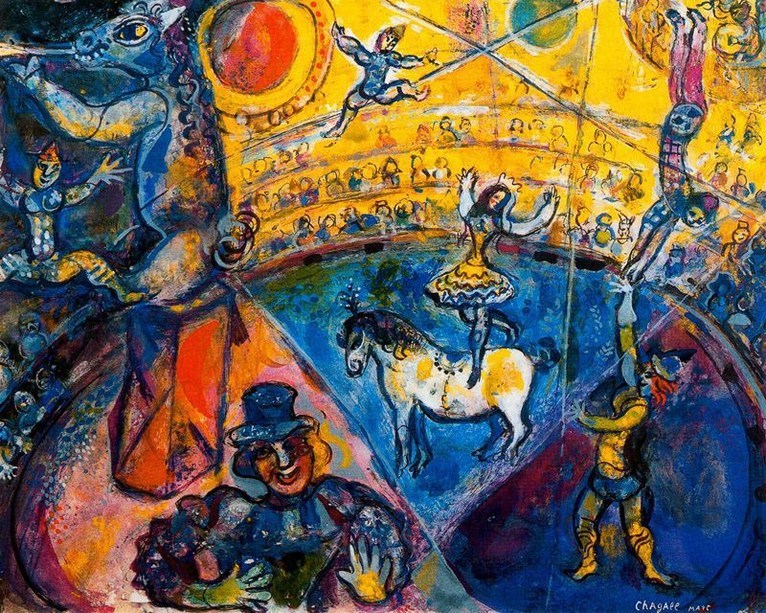
Marc Chagall was born in Belarus in 1887 and developed an early interest in art. After studying painting, in 1907 he left Russia for Paris, where he lived in an artist colony on the city’s outskirts. Fusing his own personal, dreamlike imagery with hints of the fauvism and cubism popular in France at the time, Chagall created his most lasting work—including I and the Village (1911)—some of which would be featured in the Salon des Indépendants exhibitions. After returning to Vitebsk for a visit in 1914, the outbreak of WWI trapped Chagall in Russia. He returned to France in 1923 but was forced to flee the country and Nazi persecution during WWII. Finding asylum in the U.S., Chagall became involved in set and costume design before returning to France in 1948. In his later years, he experimented with new art forms and was commissioned to produce numerous large-scale works. Chagall died in St.-Paul-de-Vence in 1985.
I would highly encourage you to search his name to see some of the pieces he's painted. I won an art show in high school by replicating his famous take on Georges Seurat's "The Circus". Chagall's "Circus Horse" is below.
More information: http://www.biography.com/people/marc-chagall-9243488
Wednesday, April 13, 2016
I love the movie Anastasia as much as the next SPREES kid but while listening to the music recently I couldn't help but wonder just how inaccurate it is. I did some digging on the dark net and here is what I found...
Anastasia and her family are run out of the Winter Palace during the February revolution. Anastasia is about 8 years old, give or take. They flee for their lives! They run to the train station! Anastasia is accidentally lost in the chaos!
In reality:
Anastasia and her family were long, long out of the Winter Palace by the time the February revolution happened. Because the political climate in St. Petersburg had gotten so bad, they were living just outside of the city, in another residence called the Alexander Palace. Anastasia was actually about 16 at the time. The family was put under house arrest at the Alexander Palace, and eventually were moved across the country along with a handful of servants.

Movie Anastasia at the time of the Revolution

Real Anastasia at the time of the Revolution (She’s on the far right. Okay, I know it’s not the most flattering photo of her, but they’d been captured and were living in Siberia, so cut her a break?)
In the movie:
Anastasia returns to St. Petersburg when she’s about 18, with a dog and a head full of amnesia. The rest of the royal family has been executed, but the rumor in St. Petersburg (delightfully explained via a musical number) is that Anastasia survived the execution. In reality:
I’m sad to say, Anastasia did not survive the execution of her family. Tsar Nicholas, his wife Alexandra, and their children Olga, Tatiana, Maria, Anastasia, and Alexei all died. They were executed in a basement in Ekaterinberg, after having been imprisoned by the Reds for about a year. It was a brutal execution, and one that, quite honestly, I have to work very hard not to dwell on. For a long time there was speculation that Anastasia (or Maria) and Alexei survived, because their bodies were not recovered with the others. However, many years later, their bones were found and DNA confirmed that all of the Romanovs are accounted for.
In the movie:
A young man named Dmitri is holding auditions, looking for someone to play Anastasia so that he can collect the reward her grandmother— who survived the revolution by fleeing to Paris early— is offering.
In reality:
Basically, all of the “real” bits are in this section:
1) Anastasia’s grandmother, Maria Feodorova, did survive the revolution and desperately, desperately wanted to believe that her children and grandchildren did as well. She wasn’t living in Paris, though— she was in London.
2) There was, in fact, a man who defrauded noble families with impostors he tried to pass off as the grand duchesses. He wasn’t handsome, and he wasn’t named Dmitri— he was named Boris, and he was actually the husband of Maria Rasputin, who was Grigori Rasputin’s daughter.
In the movie:
Dmitri has those aforementioned auditions in the Winter Palace in St. Petersburg
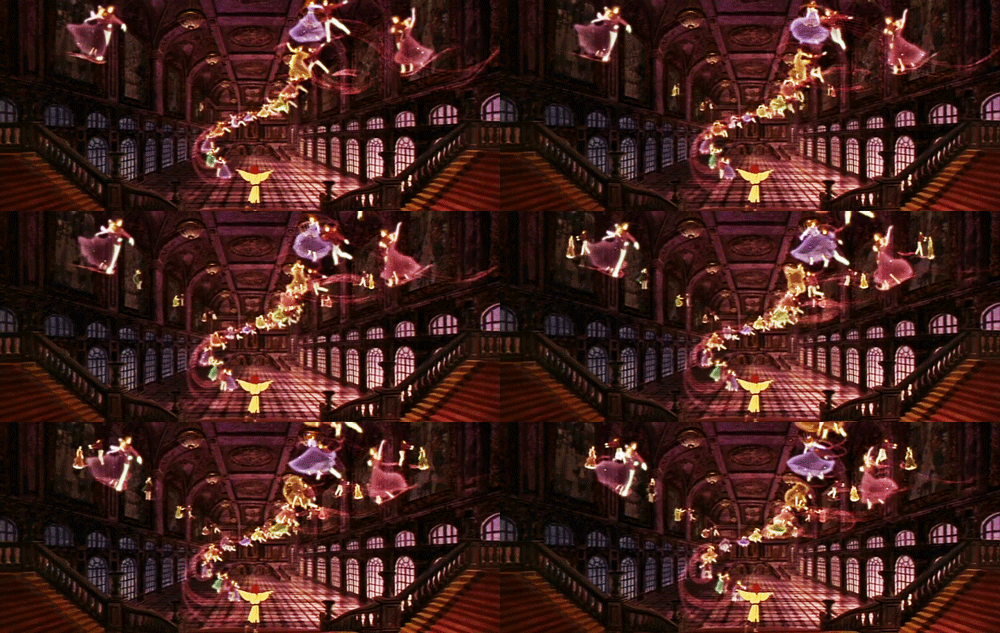
The Alexander Ballroom in the movie.
In reality:
The movie actually did a pretty decent job with the Winter Palace– it’s pretty accurate, if you ask me!

The Alexander Ballroom in real life (restored).
In the movie:
Rasputin sings the best villain song ever, after Poor Unfortunate Souls (which, obviously, is the number one villain song of all time). Rasputin has cursed the Romanov family because they betrayed him and threw him out of Russian court. His curse made each of them pay! But one little girl got away! Little Anya beware, Rasputin’s AWAKE!
In reality:
Rasputin sort of fueled the Russian revolution, but saying that he was directly responsible for the Romanov’s fate is a pretty huge stretch. Rasputin came into the Romanov’s lives because he was a “holy man” who the Tsarina believed could cure Alexei’s hemophilia. Was he holy? I don’t know. He was definitely a pretty strange guy, though. He was allowed access to the royal family that a lot of nobles were very uncomfortable with— especially since he was a drunk womanizer who didn’t bathe. Eventually, a group of nobles coaxed Rasputin out of his house, and murdered him, because his creep level had just gotten way too high. The royal family never betrayed him, and they continued to secretly love and miss him after he was gone.
In the movie:
Bartok

In reality:
Zero Bartoks

Here’s the thing though— if the Anastasia movie, no matter how inaccurate, makes people interested in Russian history? Makes them turn to Google and read up? Then it’s AWESOME. It’s sort of like a My First History lesson, which eases you into the whole thing by way of catchy songs and a charming love story. Plus, the songs, guys. HOW MUCH DO YOU LOVE THE SONGS? Yep. This movie rocks.
Here's where I found my information
http://jackson-pearce.com/blog/that-animated-anastasia-movie-is-full-of-lies/
Anastasia and her family are run out of the Winter Palace during the February revolution. Anastasia is about 8 years old, give or take. They flee for their lives! They run to the train station! Anastasia is accidentally lost in the chaos!
In reality:
Anastasia and her family were long, long out of the Winter Palace by the time the February revolution happened. Because the political climate in St. Petersburg had gotten so bad, they were living just outside of the city, in another residence called the Alexander Palace. Anastasia was actually about 16 at the time. The family was put under house arrest at the Alexander Palace, and eventually were moved across the country along with a handful of servants.
Movie Anastasia at the time of the Revolution
Real Anastasia at the time of the Revolution (She’s on the far right. Okay, I know it’s not the most flattering photo of her, but they’d been captured and were living in Siberia, so cut her a break?)
In the movie:
Anastasia returns to St. Petersburg when she’s about 18, with a dog and a head full of amnesia. The rest of the royal family has been executed, but the rumor in St. Petersburg (delightfully explained via a musical number) is that Anastasia survived the execution. In reality:
I’m sad to say, Anastasia did not survive the execution of her family. Tsar Nicholas, his wife Alexandra, and their children Olga, Tatiana, Maria, Anastasia, and Alexei all died. They were executed in a basement in Ekaterinberg, after having been imprisoned by the Reds for about a year. It was a brutal execution, and one that, quite honestly, I have to work very hard not to dwell on. For a long time there was speculation that Anastasia (or Maria) and Alexei survived, because their bodies were not recovered with the others. However, many years later, their bones were found and DNA confirmed that all of the Romanovs are accounted for.
In the movie:
A young man named Dmitri is holding auditions, looking for someone to play Anastasia so that he can collect the reward her grandmother— who survived the revolution by fleeing to Paris early— is offering.
In reality:
Basically, all of the “real” bits are in this section:
1) Anastasia’s grandmother, Maria Feodorova, did survive the revolution and desperately, desperately wanted to believe that her children and grandchildren did as well. She wasn’t living in Paris, though— she was in London.
2) There was, in fact, a man who defrauded noble families with impostors he tried to pass off as the grand duchesses. He wasn’t handsome, and he wasn’t named Dmitri— he was named Boris, and he was actually the husband of Maria Rasputin, who was Grigori Rasputin’s daughter.
In the movie:
Dmitri has those aforementioned auditions in the Winter Palace in St. Petersburg
The Alexander Ballroom in the movie.
In reality:
The movie actually did a pretty decent job with the Winter Palace– it’s pretty accurate, if you ask me!
The Alexander Ballroom in real life (restored).
In the movie:
Rasputin sings the best villain song ever, after Poor Unfortunate Souls (which, obviously, is the number one villain song of all time). Rasputin has cursed the Romanov family because they betrayed him and threw him out of Russian court. His curse made each of them pay! But one little girl got away! Little Anya beware, Rasputin’s AWAKE!
Rasputin sort of fueled the Russian revolution, but saying that he was directly responsible for the Romanov’s fate is a pretty huge stretch. Rasputin came into the Romanov’s lives because he was a “holy man” who the Tsarina believed could cure Alexei’s hemophilia. Was he holy? I don’t know. He was definitely a pretty strange guy, though. He was allowed access to the royal family that a lot of nobles were very uncomfortable with— especially since he was a drunk womanizer who didn’t bathe. Eventually, a group of nobles coaxed Rasputin out of his house, and murdered him, because his creep level had just gotten way too high. The royal family never betrayed him, and they continued to secretly love and miss him after he was gone.
In the movie:
Bartok
In reality:
Zero Bartoks
Here’s the thing though— if the Anastasia movie, no matter how inaccurate, makes people interested in Russian history? Makes them turn to Google and read up? Then it’s AWESOME. It’s sort of like a My First History lesson, which eases you into the whole thing by way of catchy songs and a charming love story. Plus, the songs, guys. HOW MUCH DO YOU LOVE THE SONGS? Yep. This movie rocks.
Here's where I found my information
http://jackson-pearce.com/blog/that-animated-anastasia-movie-is-full-of-lies/
Corruption in Russia
In Russia, corruption is considered in much the same way as the climate: something that makes life harder and causes constant grumbling, but is an unchangeable part of the fabric of life.
“Of course all politicians are corrupt, we’ll never be able to do anything about it,” says Nadezdha, a 47-year-old housewife in the town of Kimry, about 100 miles from Moscow. She had not heard of the allegations in the Panama Papers, which suggested members of Vladimir Putin’s family, and those close to him, had benefited from dubious cash flows. Instead, she insists the Russian president is part of the solution, not the problem.
“Poor Putin is trying to fight these bloodsucking bureaucrats, but he can’t clean up everything on his own.”
Save for limited online discussion among the politically active classes – one video compares the $2bn (£1.4bn) that passed through a company controlled by Putin’s friend, the cellist Sergei Roldugin, to state spending on healthcare, roads and pensions – for the most part the leaks have passed by with little fanfare. The allegations, published in Russia by the small independent paper Novaya Gazeta, were dismissed by Putin, and state TV, as a western plot.
The above is an excerpt from an article discussing corruption in Russian. This woman believes that Putin is not a part of the problem, but instead a way of solving this massive "corruption" present in their nation.
http://www.theguardian.com/world/2016/apr/13/vladimi-putin-russia-unmoved-by-offshore-revelations
Here is the full article discussing this, I also wanted to do a blog post on these photos from the 20th century Russia, fully colored now, which are really fascinating and have wonderful captions.
http://imgur.com/a/cxMZT#0
Monday, April 11, 2016
Catherine the Great
Catherine the Great was the longest ruling female monarch of Russia who ruled until her death at the age of 67. She came to power after a coup d'etat with the death of her husband, Peter III. The Catherinian Era is considered the Golden Age of Russia Empire. Catherine confirmed the Manifesto on Freedom of the Nobility which exempted nobles from being compelled into state service. She was considered an enlightened depot in the age of enlightenment hosting famous thinkers such as Voltaire.
.jpg)
The Russian Coat of Arms
The Coat of Arms for the Russian Federation is adapted from the coat of arms that was used during Imperial Russia until 1917. All the Romanov's get killed, there's a big revolution and BAM! The Soviet Union is born. Obviously, this emblem with its notions of imperialism did not reflect the goals of the new communist regime, so it was abolished. the Imperial coat of arms was replaced by the well-known hammer and sickle. It was not until after the fall of the Soviet Union in '93, that the imperial coat of arms was adapted again to suit today's Russian Federation. It is said the the crest has been changed many times since its creation during the reign of Ivan III. The current crest was designed by Yevgeny Ukhnalyov.
The design of the coat of arms features a double-headed, crowned eagle (Russia's national bird called a Tundra Swan). The bird is holding an imperial scepter in one hand and an imperial orb in the other (you know what Elsa was holding when she was coronated? Her hands were shaking cuz she was trying not freeze everything? Yeah, you do. Great.) These guys represent Russia's sovereignty.
The other main feature of the crest is the mounted, sword-wielding soldier fighting off the dragon in the center of the image. He is supposedly meant to represent Saint George. Today nothing is mentioned of the religious nature of this figure to keep in line with Russia's modern secular character.
This figure is a common feature on Russian souvenirs like ushanka hats, jackets, and patches. It is also seen in many prison tattoos. The convicts cover themselves in many symbolic tattoos. When the coat of arms is used it can either mean that they were in the army or that they hold the government responsible for their lack of freedom.

The design of the coat of arms features a double-headed, crowned eagle (Russia's national bird called a Tundra Swan). The bird is holding an imperial scepter in one hand and an imperial orb in the other (you know what Elsa was holding when she was coronated? Her hands were shaking cuz she was trying not freeze everything? Yeah, you do. Great.) These guys represent Russia's sovereignty.
The other main feature of the crest is the mounted, sword-wielding soldier fighting off the dragon in the center of the image. He is supposedly meant to represent Saint George. Today nothing is mentioned of the religious nature of this figure to keep in line with Russia's modern secular character.
This figure is a common feature on Russian souvenirs like ushanka hats, jackets, and patches. It is also seen in many prison tattoos. The convicts cover themselves in many symbolic tattoos. When the coat of arms is used it can either mean that they were in the army or that they hold the government responsible for their lack of freedom.

Sunday, April 10, 2016
Study Abroad in Poland
Since SPREEs just released their scholarship for Poland this summer I decided to write about my AWESOME trip to Poland. Last year, I received the half tuition scholarship to participate in the Crossroads of Empires study abroad program in Warsaw, Poland. The fact that I met Polish and European Union officials and got to listen to them lecture made the entire trip a priceless experience. I got to travel to a country that had previously been completely off my radar (I didn't even know where it was on a map) and learn about one of my passions, security. This month long trip felt like an entire semester with the number of lectures we attended and trips we took. Every weekend was a new city and a new cultural experience. From studying in the Collegium Civitas in the very center of Warsaw (every girl's dream after learning Russian history) to visiting the Stasi Museum in Berlin, I had experiences that never would have been possible without my scholarship. This opportunity completely changed the trajectory of my summer for the better. That being said, if you're reading the blog APPLY FOR THE SCHOLARSHIP. Even if you don't know if you want to go, APPLY. Even if you don't think you'll get it, APPLY.
https://sway.com/S0vFywHdqUBQ82F5#st_refDomain=www.facebook.com&st_refQuery=/

*end of shameless plug for this program*
https://sway.com/S0vFywHdqUBQ82F5#st_refDomain=www.facebook.com&st_refQuery=/

*end of shameless plug for this program*
Thursday, March 24, 2016
Putin orders start of Russian military withdrawal from Syria
On the 14th of March, Putin ordered the start of the withdraw of their military forces in Syria. Russia claims that they have been able to help the Syrian Army to a point where negotiations for the peace talk process will be able to start now.
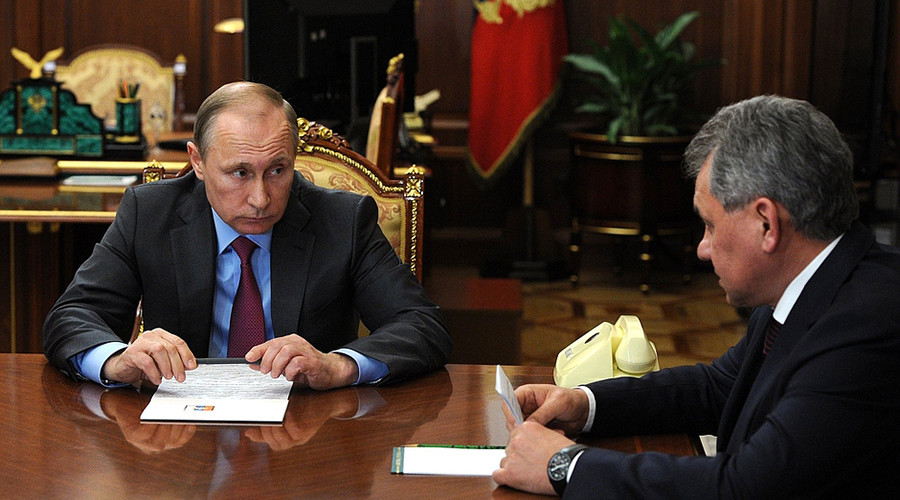
“I consider the objectives that have been set for the Defense Ministry to be generally accomplished. That is why I order to start withdrawal of the main part of our military group from the territory of the Syrian Arab Republic starting from tomorrow,”Putin said on Monday during a meeting with Shoigu and Russian Foreign Minister Sergey Lavrov.
"In a short period of time Russia has created a small but very effective military group [in Syria]... the effective work of our military allowed the peace process to begin," Putin said, adding that with the assistance of the Russian Air Force "Syrian government troops and patriotic forces have changed the situation in the fight with international terrorism and have ceased the initiative."
Russia plans to keep their naval base in Tartus and the Khmeimim airbase in Latakia operational with military forces and will continue supporting the Syrian forces with airstrikes. Russian airstrikes & advising support have helped the Syrian government to be moved into a position where they are currently stable and not at risk of falling and can now begin negotiations with some rebel groups.
Monday, May 4, 2015
As of recently during one of my studies I accidently came acorss Tchaikovsky's first piano concerto. This particular concerto, although sounds really good, there is one moment that makes the piece for me. About six minutes in the theme that was played thirty seconds earlier but this time the left hand and right hand are misplaced. Thus creating a real nice effect.
Wednesday, April 15, 2015
Red October
The Hunt for Red October is a 1984 novel written by the late Tom Clancy, a famed author specializing in realistic military fiction. The reason I find this particular story interesting as opposed to all the others (many of which involve both Russia and its people) is the thrilling film made in 1990. The plot details an advanced submarine leaving Russia during the height of tensions between Russia and the United States. Through three points of view (in Russian, on the submarine, and in America), Clancy expertly reveals the story of a defective Russian submarine.
The commander of the submarine, a certain Marko Ramius, decides to defect on the Red October's debut mission due to both personal and political factors which began influencing him far before the submarine leaves Russian soil (or water, I suppose). Once both Russians and Americans hear of Ramius' plan to defect from Russia to America with a state-of-the-art nuclear submarine, the race to find the submarine is on. There's only one problem - Ramius' sub includes a new propulsion system, making the underwater machine virtually undetectable to current technology.
Throughout this exceptional page-turner, Clancy brings us less into a world of weapons and violence, but more so into the world of politics, where often times the obvious choice is never the right one. I won't spoil the rest of the story for anyone who has actually read this far into my blog post, but if you haven't read this, I certainly recommend it.

The commander of the submarine, a certain Marko Ramius, decides to defect on the Red October's debut mission due to both personal and political factors which began influencing him far before the submarine leaves Russian soil (or water, I suppose). Once both Russians and Americans hear of Ramius' plan to defect from Russia to America with a state-of-the-art nuclear submarine, the race to find the submarine is on. There's only one problem - Ramius' sub includes a new propulsion system, making the underwater machine virtually undetectable to current technology.
Throughout this exceptional page-turner, Clancy brings us less into a world of weapons and violence, but more so into the world of politics, where often times the obvious choice is never the right one. I won't spoil the rest of the story for anyone who has actually read this far into my blog post, but if you haven't read this, I certainly recommend it.
Tuesday, April 14, 2015
The Representation of the Bronze Horseman, Peter the Great

Furthermore, the article points out that late twentieth century guidebooks for tourists have begun referring to the monument as the Bronze Horseman and Peter the Great. Going further they state that the monument is "an ambivalent marker of East and West". Since the statue is of Peter, it represents his goals of westernization in the eastern world.

To read more of the ideas and questions presented in the article, Visit: http://stpetersburg.berkeley.edu/stiliana/stil_stop2.html
Saturday, April 11, 2015
Ethnic Diversity in Russia
Most people have a very specific vision when they think of a
typical Russian person. While many Russians may fit this bill, it is
surprising to know that most people in Russia today are not ethnically Russian.
The Russian Empire, spanning from 1721 to 1971, covered a large amount of the
Eurasian area and, therefore, included many different nationalities of people.
In fact, during the height of the Empire, less than 50% of its people were
ethnically Russian. The rest were a scattered combination of Jews, Poles,
Germans, along with countless more nationalities. While the Russian Empire did
dissolve during the 1970s, many of the people residing in the Soviet Union then,
and Russia today, still bear some ancestry to the non-ethnic citizens of the
Russian Empire.
Wednesday, April 16, 2014
Yeltsin
I am starting to understand why so many cartoonists feature
politics as their go-to source for comedy...
Prominent figures (especially political leaders) find it
hard to avoid the public eye, and so the flaws that might have gone unnoticed
in the common man quickly become headlines of national scrutiny. Such was the
case of Russia’s first freely elected President, Boris Yeltsin.
Former President Bill Clinton (himself no stranger to the
spotlight) details an event in which Yeltsin became so intoxicated during a
visit to the White House that he stripped down to his underwear, stood by the
road and attempted to hail a taxi, all because he wanted a pizza...
Supposedly, just a night later Yeltsin once again slipped
past his Russian bodyguards and made his way to the White House basement, where
he was mistaken for an intruder.
But Yeltsin is known for more international incidents than
those in America. In 1992 the Russian leader, while on a mission to mend the
social relations with the post-Soviet Kyrgyzstan, drunkenly decided to play
musical spoons on Kyrgyz President Askar Akayev’s bald head.
Needless to say, no treaties were negotiated.
Yeltsin kicked off a Swedish conference in 1997 by comparing
famous tennis player Bjorn Borg’s face to Swedish meatballs, and subsequently created
headlines by announcing his intention to ban the production of all nuclear
weapons.
Then, while overseeing the departure of Russian troops from
Germany in 1994, Yeltsin apparently found it appropriate to join the performers
onstage to dance, sing (questionably), and wave a baton at the band like he
knew what he was doing...
We can say what we’d like about our state of presidential affairs,
but at least when our President gets onstage to sing, he doesn’t sound like a
Wookie.
And we wonder why we don’t hold our leaders to a higher
standard…

Tuesday, April 15, 2014
Отпусти и забудь
Most of us have seen the famous song from the movie Frozen called "Let it go". Well, Disney decided they were going to make this movie in 25+ different languages. One of those happened to be Russian!! Anna Burturlina, a modern Jazz singer who resides in Moscow, was recruited to sing the song in Russian.
Also, Russia beat Disney in the making of Frozen! Russia's famous film "The Snow Queen" was made in 2012, well over a year before Frozen was put into theaters, and by watching this trailer, you can see the many similarities.
The Narod
The radical Populists, the Narodniki, in the
late nineteenth century made an attempt at culturally and nationally redefining
the nation. They called this, “The Going
to the People Movement” because they themselves as rebels would go out and seek
those living in The Narod (the peasantry) and attempt to bridge that gap that
society had created between the educated and the peasants. They set out to
penetrate village culture and engage the peasants in order to teach them and
maybe educate them. The Populists had good intentions because in their mind
they were going to The Narod to help the people. However, the people in the
narod did not want their help. All of a sudden their villages are filled with privileged
people from the cities and they are trying to change their lifestyles and tell
them how to live. Trying to tell them that what they have been doing for centuries
is wrong and yet saying that they are only attempting to help. No one wants to
be treated like they are beneath someone else and especially not in their own comfort
zone. The villages they had once seen as escapes from the gap between them and
the people of the cities were now torn down and they feared the bridge just as
much as the Tsar. The Tsar did not like the idea of the Populists traveling to
the narod because he knew their true intentions were to incite the people of The Narod into a rebellion. The people in the cities did not have enough
numbers and they needed more soldiers. A rebellion would not succeed without
both the peasant and the working class. It is safe to say the Tsar always gets
his way and in the end he ended up arresting all the Populists he could find
and it was rather easy as the villagers did not want them in their homes any
more than the Tsar did. The Narod was a gap that the workers could not bridge
yet and there revolution that they were eager for would have to wait.

Periodic Table Creation
Have you ever wondered who created the Periodic Table of Elements? As it happens to be, that man is a Russian by the name of Dmitri Mendeleev. Although he is often regarded as the father of the Periodic Table, Mendeleev himself called his table, the Periodic System. He put elements into their correct places in the table. In some cases the relative atomic mass had been wrongly calculated by others. By correcting the relative atomic mass he put the element in the correct place. At the time, relative atomic masses (then called atomic weights) were laboriously determined using the formula

atomic weight = equivalent weight x valency
The combining weights were generally accurate but sometimes an element was given the wrong valency. Thus beryllium, combining weight 4.6, was given the valency 3 because it was chemically similar to aluminum. This gave an atomic weight of 13.8, placing it between carbon and nitrogen where there was no space. Mendeleev said the valency was 2; the problem was solved - it fitted into the space between lithium and boron.
Mendeleev sometimes decided that atomic weights must be wrong because the elements simply appeared in the wrong place. For example he placed tellurium before iodine although its atomic weight is greater simply because iodine’s properties are so similar to those of fluorine, chlorine and bromine and tellurium’s to those of oxygen, sulfur and selenium rather than the other way round. We now know that it is atomic number, not relative atomic mass that governs an element’s position in the Periodic Table but in most cases the two result in the same order.The greatness of Mendeleev was that not only did he leave spaces for elements that were not yet discovered but he predicted properties of five of these elements and their compounds.
Monday, April 14, 2014
Tread Lightly in the Russian Wilderness

There are twelve animals found
in Russia that are considered deadly if campers or hikers are caught unaware. The brown bear (Mishka) is considered the
hero of many children’s books and shows.
It was the mascot of the 1980 Moscow Olympics. Although the brown bear is extremely large,
it is also amazingly fast, as it can run up to speeds of 50 km an hour. The
brown bear inhabits almost the entire forest zone. The Amur Tiger, also known as the Northern
tiger, lives in the southeast of Russia on the banks of the Amur and Ussuri
rivers. Its night vision is five times
better than man’s. The Grey Wolf is
probably the most common predator in Russia. They live all over the country
except in the taiga thickets and on some islands. The White Polar Bear inhabits the drifting
and coastal sea ice where it finds its main prey: ringed seal, bearded seal,
walrus and other marine animals. The Wild Boar has excellent eyesight and sticks
to watery and marshy terrain in the Amur Region. The boar’s most formidable weapon is not its
impressive weight, although it can easily crush a person to death, but its
tusks. The Common Northern Viper is the
snake that killed the legendary Prince Oleg, one of the founders of the Old Rus
state. However, with modern medicine
people today can survive its bite. The Karakurt spider is among the 10 most
dangerous spiders on Earth and is encountered in Russia’s Astrakhan
Region. During hot summers, it can
migrate to more northern areas, such as the Moscow Region. Their favorite
habitat is ravine slopes. The wolverine
is a cunning and strong animal, a mix between a bear cub and a dog. Indigenous people of the Siberian north
believe that the wolverine, not the bear, is the master of the taiga. The ordinary catfish can reach a length of 5
meters (16 feet) and a weight of 360 kilograms (793 lbs). Large catfish are very smart and have
learned to hunt animals of any size that get into the water, even dogs. Several
attacks by giant catfish on humans have been recorded. The other two animals that are nuisances and
can spread disease are the tick and the mosquito.
Thursday, April 18, 2013
Russia and the Media as an Information War Tool (Unit 9)
Russia
and the Media as an Information War Tool
Carl
von Clausewitz, an early 19th
century Prussian general, once said that war is an extension of
politics.1
In the modern era, the line between the two has been inexplicably
blurred. The internet age has brought with it new and changed forms
of warfare; in particular, information warfare is of new importance.
Information warfare (IW) is a blanket term that can include different
methods ranging from cyber-attacks against internet infrastructure,
to espionage of poorly guarded sensitive material, to spreading a
certain view through the media. It may also be known as information
or psychological operations.2
For the purposes of this paper, IW explicitly refers to the
propaganda element. No longer are the generals of information warfare
solely censoring productions and jamming radio signals from abroad to
attempt to control the image that their populace receives. The
propaganda of revolutionary foreign policy has evolved. Russia openly
views information warfare as a critical component of soft power, and
has underlined the importance of using the media as a tool of “soft
propaganda” for controlling the information environment; its most
recent and seemingly innocuous weapon is its state-owned
international news outlet, RT – formerly known as Russia Today. To
understand this new use of media as a weapon, the theory behind RT
must be examined, along with the outlet's status, its content and
critique, along with the rebuttal of its defenders.

Russian
Professor Aleksandr Selivanov, writing in Voyenno-Promyshlennyy
Kuryer, states that the purpose of IW is “to form a stratum of
people with transformed values in society who actually become
carriers of a different culture and of the tasks and goals of other
states on the territory of one’s own country.” He further states
that territory can even be seized through the use of IW by
“‘nontraditional occupation’ as the possibility of controlling
territory and making use of its resources without the victor’s
physical presence on the territory of the vanquished.”3
According to Timothy Thomas, an analyst whose works are published by
the Strategic Studies Institute of the US Army War College, Russia's
strategy is using IW as a replacement for the loss of ideology.4
Whereas rudimentary IW was a tactic of revolutionary foreign policy
in the Soviet past, it is now an entity unto itself – applicable at
both foreign and domestic fronts. Russia portrays its IW practices as
a method of self-defense.5
There are two fronts of IW – domestic and foreign. On the domestic
front, there is a fear of foreign agents. Professor Igor Panarin –
a Russian political scientist analyst regularly cited by Russian
media for his expertise in IW – accuses the West, particularly
through military intelligence operations, of installing
anti-government agents in the more liberal media such as Novaya
Gazeta and Radio Echo, forcing the Russian government's hand in
creating state-run media.6
Despite the conspiracy-theory level of Panarin's claims, the idea
that the West is playing information warfare is taken seriously by
the Russian media. Defenders of Russia's IW practices regularly quote
US Secretary of State Hillary Clinton who said,
"We are in an
information war and we are losing that war. Al Jazeera is winning,
the Chinese have opened a global multi-language television network,
the Russians have opened up an English-language network. I’ve seen
it in a few countries, and it is quite instructive.7"
Walter
Isaacson, Chairman of the U.S. Government's Broadcasting Board of
Governors – which runs state-owned outlets including Voice of
America, requested higher funding because “We can't allow ourselves
to be out-communicated by our enemies.” He explicitly mentioned
channels such as RT.8
This motif of self-defensive soft power has continued. According to
RT, the modern information war was started by the United States.
Unlike many other international media outlets, RT's coverage is not
merely limited to its home nation and the near-abroad. In fact, RT
has had a shift from covering mostly Russian news to covering western
news with a Russian perspective, or hiring “alternative media”.
When interviewed by The New York Times, Aleksei Makarkin, an analyst
at the Institute of Political Technology, stated that “The
Americans have a view of Russia and they show it to us. Russians have
a point of view about America, too, and we want to show it to you.”9
RT
is certainly capable. RT now rivals Al Jazeera in Britain as the most
popular foreign English news channel.1011
Pew Research shows that RT is the top source for news videos on
YouTube.12
American viewers doubled in 2012 from 2011; in some regions of the
US, such as New York, viewership nearly tripled, and Nielsen Media
Research surveys indicate that audiences tend to prefer watching RT
as compared to other international news channels. 13
There is evidence of a continued push for utilizing state-owned media
as part of the information war. RT's funding has generally increased
every year. In US dollars, RT's budget has gone from 80 million in
2007, 120 million in 2008, 380 million in 2011, to 300 million in
2012 – a slight decrease.14
Recently, President Putin refused to allow Russia's Finance Ministry
to slash funding for state-run media, notably including “Rossikyskaya
Gazeta” and RT; simultaneously, funding for non state-run news
organizations such as ITAR-TASS was drastically cut – ITAR-TASS
alone had its funding cut by nearly 40%.15
Furthermore, RT is no longer a single channel, as it has been
expanded to Spanish and Arabic broadcasts, bringing RT to three
global channels.16
RT's performance has been chalked up to a combination of its young
staff, its provocative image, and its “alternative” take. Heidi
Brown, writing for Forbes, states that RT uses sex appeal of
attractive, young anchors as a method of the Kremlin “using
charm... to appeal to a diverse and skeptical audience.” 17

As
aforementioned, RT's coverage is self-admittedly aimed at giving a
“Russian perspective” of events in the West – or, more
accurately, RT has a hard agenda of representing the state view in a
positive light. There are two sorts of coverage that RT provides,
much like other cable media outlets: talk shows, and regular news.
Talk shows featured on RT are of particular interest, as RT has shown
willingness to be the soapbox for dissident voices in the West –
not merely Russian critics. Anti-war Marine veteran, libertarian
activist, and self-proclaimed anarchist Adam Kokesh was featured in a
show entitled “Adam versus the Man” on the English RT, regularly
criticizing the US government.18
His show also interviewed anarchist philosopher Stefan Molyneux, a
Canadian and host of the popular, online, anti-government podcast
Freedomain Radio.19
Adam Kokesh and others also regularly interviewed Alex Jones, founder
of InfoWars.com, an online platform for anti-government conspiracy
theories. 20
Recently, Julian Assange, founder of the Wikileaks organization was
even given a show, although Assange openly stated that he believed
that would not have been the case had Russian documents been part of
Wikileaks.21
RT's regular operations, from advertisement to news, have also come
under fire as an example of being propaganda, right down to its
slogan of “Question more.” RT correpsondant William Dunbar
resigned in protest, claiming that RT was intentionally censoring the
Georgian side of events in their coverage of the 2008 South Ossetian
War.22
RT placed ads superimposing US President Barack Obama and Iranian
President Mahmoud Ahmedinejad's face together with the question of
“Who poses the greater nuclear threat?” in Britain, and these ads
were quickly banned in American airports.23
The Southern Poverty Law Center criticized RT as pushing conspiracy
theories and white supremacy in its 2010 intelligence report by Sonia
Scherr, which also accuses the channel of making the United States
“look bad,” and that it gives the false impression that many of
these individuals are taken seriously in mainstream political
discourse.24
Cliff Kincaid of the conservative media-watchdog group Accuracy in
Media called Kokesh a “Russian agent of influence and a member of
the Moscow-funded 'resistance' to the U.S. Government on American
soil...KGB TV,” and he cites former KGB agent Preobrazhensky's
conspiracy theory that RT is nothing more than “propaganda...
managed by the Russian Foreign Intelligence Service.” Kincaid goes
further, blasting those who appear on the program as “playing into
Moscow's hands.” Preobazhensky further states that RT is “a part
of the Russian industry of misinformation and manipulation.” 25

It
would be a mistake to label RT as simply old-school propaganda.
According to James Painter, writing for the Reuters Institute for the
Study of Journalism at Oxford University, RT and other channels like
it represent a new wave of “soft-propaganda” but the staffers
within instead view themselves “counter-hegemonic” media. While
there is a bias, Painter says, Western media is hardly free of such a
bias, even in corporate media such as FOX News. Painter goes on to
say,
If there is evidence
of a soft or hard agenda in a station’s coverage, it can of course
be debated if this is a result of a conscious agenda, or rather as a
product of an unconscious ‘attitudinal’ set of values... [this
can be] seen as another example of a more general trend observed in
different parts of the world, namely the growing phenomenon of ‘news
with views’. The abundance of new 24x7 channels and news web sites
makes it more possible to choose a source of information which
confirms a news consumer’s particular point of view. Fox News is
the classic example of this, but there are plenty of others. 26
Glenn
Greenwald, writing for Salon.com, shot back at critics of RT by
answering criticism with criticism.
Let’s examine the
unstated premises at work here. There is apparently a rule that says
it’s perfectly OK for a journalist to work for a media outlet owned
and controlled by a weapons manufacturer (GE/NBC/MSNBC), or by the
U.S. and British governments (BBC/Stars & Stripes/Voice of
America), or by Rupert Murdoch and Saudi Prince Al-Waleed Bin Talal
(Wall St. Journal/Fox News), or by a banking corporation with
long-standing ties to right-wing governments (Politico), or by
for-profit corporations whose profits depend upon staying in the good
graces of the U.S. government (Kaplan/The Washington Post), or by
loyalists to one of the two major political parties (National
Review/TPM/countless others), but it’s an intrinsic violation of
journalistic integrity to work for a media outlet owned by the
Russian government. Where did that rule come from?

Greenwald
further argues is that there is a hypocritical view of RT by those in
the West, for doing – what he argues – the West does in Russia.
Josh Kucera, a journalist specializing in Russian affairs, states
that “RT covers the US like US media covers Russia – emphasizing
decline, interviewing marginal dissidents.”27
RT itself has come out in self-defense, stating that while they are
state-funded, they are editorially independent. The media outlet
further goes on to say that it readily embraces its role in in what
it claims is an information war declared by the US.28
The editor in chief of RT adds, in response to criticism over
supposedly negative reporting on America, that they are merely
applying the same standards Western reporters use in covering
Russia.29
Adam Kokesh stated in much plainer language, revealing his reasoning
behind dissident use of the network as a soapbox,
Truth is the best
propaganda. I love it! I really love the concept of that. It's funny:
People say we're hiding shit as a network. No, no—we put the fact
that this is propaganda right out front. We're putting out the truth
that no one else wants to say. I mean, if you want to put it in the
worst possible abstract, it's the Russian government, which is a
competing protection racket against the other governments of the
world, going against the United States and calling them on their
bullshit.30

It
is obvious that RT has a bias, if not indirect control by the
Kremlin. What RT is not, however, is “Pravda 2.0.” No permeating
ideology is attached to RT, and it has been used as a platform for
adversarial journalism – the only string attached is that the
information is anti-hegemonic, typically painting Russia's rival
states in a very negative light. The Kremlin obviously finds RT
useful, having tended to increase funding almost every fiscal year,
but the individuals attached to RT are anything but “useful idiots”
as displayed by Kokesh's frank statement on his lack of love for the
Russian government. Nevertheless, state-run media will continue to be
an important part of soft power and revolutionary diplomacy. There
is, and has been for some time, a raging war for the hearts and minds
of citizens. The use of the media as part of information warfare is
not unique to Russia – Russia did not start it, but Russia has
certainly been more apt about it. RT has been confronted with
relatively few incidents of outright misreporting, no more than
average. The critics themselves of RT have often been ideologically
biased; Kincaid even attempted to make the case that RT was “extreme
left propaganda” due to their interviewing of Americans on the far
left, despite the fact that the Kremlin as of today is anything but
liberal. RT is more than just a vanity project, and RT is not merely
a tool of the Kremlin, but neither is it purely objective. Then again
– there may not be such a thing. One may state that all media is
propaganda – RT does not claim otherwise.

Bibliography
«Анатомия
несопротивления.»
Lenizdat.ru.
2
July 2012. <http://lenizdat.ru/a0/ru/pm1/c-1105568-0.html#1>.
Accessed 3 Dec. 2012.
Adam
Vs The Man: Episode 1. RT. 11 Apr. 2011. Web.
<http://www.youtube.com/watch?v=0jM1xmSeMDE>.
Accessed 3 Dec. 2012.
“Alex
Jones on RT's Adam vs the Man.” InfoWars.com. 4 May 2011.
<http://www.infowars.com/alex-jones-on-rts-adam-vs-the-man-bin-laden-dead/>.
Accessed 3 Dec. 2012.
“A
New Kind of Visual News.” Pew Research Center's Project for
Excellence in Journalism. 16 July 2012. Web.
<http://www.journalism.org/analysis_report/youtube_news>.
Accessed 3 Dec. 2012.
Bassford,
Christopher. “Clausewitz and His Works.” 23 Sep. 2012. Web.
<http://www.clausewitz.com/readings/Bassford/Cworks/Works.htm>.
Accessed 3 Dec. 2012.
Brown,
Heidi. “Springtime (For Putin) In Russia” 27 Feb. 2008. Forbes.
<http://www.forbes.com/2008/02/26/putin-russia-today-vote-oped-cz_hb_0227putin.html>.
Accessed 3 Dec. 2012.
Burell,
Ian. “From Russia With News.” The Independent. 15 Jan. 2010. Web.
<http://www.independent.co.uk/news/media/tv-radio/from-russia-with-news-1869324.html>.
Accessed 3 Dec. 2012.
Dunbar,
William. “They Forced Me Out For Telling the Truth About Georgia.”
The Independent. 20 Sep. 2010. Web.
<http://www.independent.co.uk/voices/commentators/william-dunbar-they-forced-me-out-for-telling-the-truth-about-georgia-2083870.html>.
Accessed 3 Dec. 2012.
Greenwald,
Glenn. “Attacks on RT and Assange Reveal Much About the Critics.”
Salon. 18 Apr. 2012. Web.
<http://www.salon.com/2012/04/18/attacks_on_rt_and_assange_reveal_much_about_the_critics>.
Accessed 3 Dec. 2012.
“Is
RT state-run?” RT. 17 June 2011. Web.
<http://rt.com/usa/news/rt-government-broadcasting-radio/>.
Accessed 3 Dec. 2012.
“It's
Official: RT is the Enemy.” RT. 19 Oct. 2010. Web.
<http://rt.com/usa/news/us-money-media-wars/>.
Accessed 3 Dec. 2012.
Johnson,
L. Scott. “Toward a Functional Model of Information Warfare.”
Central Intelligence Agency. Web.
<https://www.cia.gov/library/center-for-the-study-of-intelligence/csi-publications/csi-studies/studies/97unclass/warfare.html>.
Accessed 3 Dec. 2012.
-Kramer,
Andrew. “Russian Cable Station Plays to U.S.” The New York Times.
22 Aug. 2010. Web.
<http://www.nytimes.com/2010/08/23/business/media/23russiatoday.html?pagewanted=all>.
Accessed 3 Dec. 2012
1 Christopher
Bassford, “Clausewitz and His Works.” 23 Sep. 2012.
2 L.
Scott Johnson, “Toward a Functional Model of Information Warfare.”
Central
Intelligence Agency.
3 Timothy
Thomas, “Russian Information Warfare Theory: The Consequences of
August 2008.” pp 5. The Foreign Military Studies Office.
4 Timothy
Thomas, “Russian Information Warfare Theory: The Consequences of
August 2008.” pp 4. The Foreign Military Studies Office.
5 “It's
Official: RT is the Enemy.” RT. 19 Oct. 2010.
6 Igor
Panarin. “The Information War Against Russia: Operation
Anti-Putin.” Schiller Institute.
7 Kirit
Radia. “Sec. Of State Hillary Clinton: Al Jazeera is 'Real News',
U.S. Losing 'Information War.' ABC News.
8 “It's
Official: RT is the Enemy.” RT. 19 Oct. 2010.
9 Andrew
Kramer, “Russian Cable Station Plays to U.S.” The New York
Times. 22 Aug. 2010.
10 “RT
Leads Al Jazeera in UK'S Barb Ratings.” RT. 16 July 2012.
11 “Russia
Today Catching Up With Murdoch's Sky News.” ITAR-TASS. 22 Nov.
2012.
12 “A
New Kind of Visual News.” Pew Research Center's Project for
Excellence in Journalism. 16 July 2012.
13 “'Russia
Today' Doubles its U.S. Audience.” Russia Briefing. 7 June 2012.
15 “Putin
Forbids Funding Cuts To State-Run Media Outlets.” Gazeta.ru. 30
Oct. 2012.
16 “Corporate
Profile.” RT.
17 Heidi
Brown. “Springtime (For Putin) In Russia” 27 Feb. 2008. Forbes.
18 Cliff
Kincaid. “KGB TV to Air Show Hosted by Anti-War Marine Vet.”
Accuracy in Media. 5 Apr. 2011.
19 Adam
Vs The Man: Episode 1. Produced by RT. Hosted by YouTube.
20 “Alex
Jones on RT's Adam vs the Man.” InfoWars.com
21 Jerome
Taylor. “Hello, Good Evening and Welcome to My Country House
Prison: Assange Makes His Talk Show Debut.” The Independent. 18
Apr. 2012. Gale:
Questia.
22 William
Dunbar. “They Forced Me Out For Telling the Truth About Georgia.”
The Independent. 20 Sep. 2010.
23 Ian
Burrell. “From Russia With News.” The Independent. 15 Jan. 2010.
24 Sonia
Scherr. “Russian TV Channel Pushes 'Patriot' Conspiracy Theories.”
Southern Poverty Law Center. 2010.
25 Cliff
Kincaid. “KGB TV to Air Show Hosted by Anti-War Marine Vet.” 5
Apr. 2011.
26 James
Painter. “The Boom In Counter-Hegemonic News Channels: a Case
Study of TeleSUR. Reuters Institute for the Study of Journalism at
Oxford University. 2006.
27 Glenn
Greenwald. “Attacks on RT and Assange Reveal Much About the
Critics.” 18 Apr. 2012.
28 “Is
RT state-run?” RT. 17 June 2011.
29 Andrew
Kramer. “Russian Cable Station Plays to U.S.” The New York
Times. 22 Aug. 2010.
30 David
Weigel. “Pravda Will Set You Free: Russian's Answer to FOX News
and MSNBC.” Slate. 27 June 2011.
Subscribe to:
Posts (Atom)