Showing posts with label Unit 5. Show all posts

Wednesday, December 9, 2015

Trans-Siberian Orchestra

We’ve all heard tales of soul-searching, and of the strange and mythical happenings that come from venturing deep into the heart of the rugged Russian wilderness. This is the story of one such adventure, and of a man who revolutionized symphonic music...

A LONG TIME AGO, IN A COUNTRY FAR, FAR AWAY Paul O’Neill was inspired. It was the middle of 1980, and he was fortunate enough to have visited the Russian/Siberian countryside. He describes his experience with the land as “incredibly beautiful but incredibly harsh and unforgiving as well.” This description would transcend a mere description of the landscape, as great-thinker O’Neill goes on to say that “Life, too, can be incredibly beautiful but also incredibly harsh and unforgiving…”

Led along this literal and philosophical track, O’Neill fondly recalls his experience with the Trans-Siberian Railway, the “one thing that everyone who lives there has in common that runs across [Russia] in relative safety.” This was his moment of truth. It was from this railway that O’Neill took the name Trans-Siberian, which would later be applied to his progressive, symphonic rock band, the Trans-Siberian Orchestra (TSO).

Since its inception, the TSO has been making waves. The flood of its popularity came in 1999, following the production of their album The Christmas Attic. They have a unique sound, and “elaborate concerts, which include a string section, a light show, lasers, ‘enough pyro to be seen from the international space station’, moving trusses, video screens, and effects synchronized to music.”

The Trans-Siberian Orchestra is also known for their extensive donations to charity and volunteerism. As O’Neill said when asked about TSO’s origins, “the one thing that we all have in common that runs across [Life] in relative safety is music.”

Whatever they do, TSO tries to uphold the meaning of their name.

Check out this Christmas mix if you haven’t heard it yet!

https://www.youtube.com/watch?v=6P9xxJ4V7no&list=PLaYPiBo1HyeUuirwVLP3UMkdcIv8ABDhb


Звёздные войны!!


10 Days to the world premiere!

here is a cool video to get you hyped!


Tuesday, December 8, 2015

Russians joining ISIS

There has been a spike within the last year or so of Russians joining forces with the Islamic State of Iraq and Syria (ISIS).  It has been estimated that there has been a 300 percent increase within the last year alone of Russians traveling to Iraq and Syria to fight with ISIS.  Over 2,400 Russians are now believed to be affiliated with or a part of this radical Islamist group; there were only 800 at June 2014.  With this radical increase in Russian-born ISIS supporters, Russia is now believed to be the third biggest supplier of foreign fighters to radical Islamist groups in Iraq and Syria.  The majority of Russia's foreign fighters is coming from Chechnya and Dagestan, where there has been long histories of Islamic extremism.
It has been understood that Russian authorities are encouraging these Russian-born extremists to go to Iraq and Syria because it would be better for them to fight abroad than to stir up trouble within Russia.

Monday, December 7, 2015

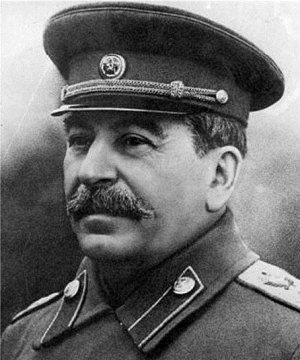
2016 Year of Stalin

Recently, Communists in the central Russian city of Penza have announced a plan to mark the 80th anniversary of the 1936 USSR Constitution by declaring 2016 the “Year of Stalin” 

They are opening and museum in memorial of Stalin and his reign over the Soviet Union.


2016 will be Stalin's constitution 80th birthday. 

 “This is necessary also because currently there are a lot of attacks on Stalin and on his period in Soviet history. Attack is the best defense. We will actively promote historical facts about this time and about Joseph Stalin’s personality.”The politician also announced that in the coming year the city will see the opening of a Stalin Center, a museum and meeting place used for events from cinema screenings to public discussions. The events will include “Stalin’s Readings,” a large-scale conference attended by prominent researchers and journalists, scheduled for early March

My Experiences with Public Transportation Abroad

Over the summer, I studied in Warsaw, Poland. Oh the memories… of getting lost… in Warsaw… I am not experienced with public transportation and this became a fatal flaw during my travels this summer. Who would have thought that public transportation stops at night? Not me. I realized it while trapped at City Center trying desperately to catch the last bus (since the trams stopped running) to Grojecka 29. I can now say that I am very experienced at getting on the wrong tram but somehow still making it to my destination… mostly by walking annoyingly far distances through extremely sketchy areas. By far, my absolute worst experience with transportation was not in Russia, but Israel. Did you know that form Friday at sundown to Saturday at sundown (Shabbat) virtually everything stops working? I found this out when I flew into Tel Aviv at 5 pm on a Saturday and had to wait in a very scary bus station for the midnight bus (Shout out to my knew 'friend' Israeli Elvis). With my plans to study abroad in Russia this coming year, I plan to look up their public transportation system extensively before my trip. 

In the eighties, when computer programming was starting to be available to the average person, the USSR decided to create their own, russian based,  programming language, called рапира. This was unusual compared to most languages that just used the english based languages. The language was high-level and used in schools to teach computer programming.  Look below for a hello world program in the рапира language.
ПРОЦ СТАРТ()
    ВЫВОД: 'Привет, мир!!!'
КОН ПРОЦ 

Islands of Conflict

The Kuril Islands

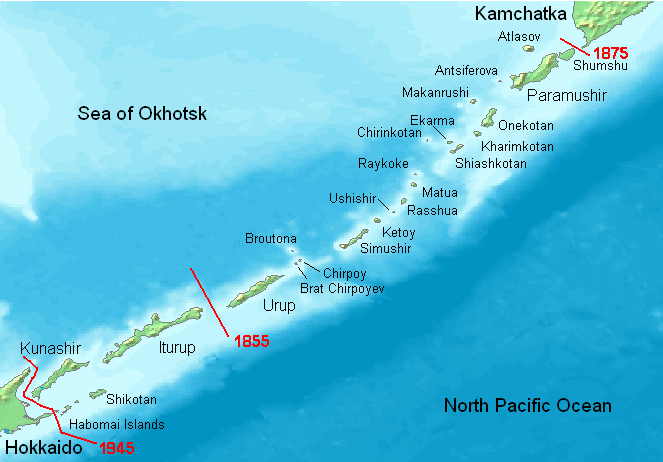
Located between the Japanese island of Hokkaido and the Russian Kamchatka Peninsula, the Kuril Islands are an archipelago consisting of 22 main islands and separate the Sea of Okhotsk from the North Pacific Ocean. With a combined area of 6,000 square miles, the Kuril Islands are hardly considered major land masses, but have nevertheless become major conflict in Russo-Japanese bilateral relations. Specifically, the conflicts over the Kuril Islands are centered on the southern islands of Kunashiri, Iturup, Shikotan, and the Habomai rocks. Both Russia and Japan are in dispute over the sovereignty of the four islands, with both nations citing history and past treaties as support for their claims. Various factors have influenced Russia’s foreign policy regarding the disputed islands including the overall benefits of the islands, domestic opinion, and international environment. The conflict over the Kuril Islands is a classic example of centrifugal forces within the context of Russian foreign policy.


The Influence on Russo-Japanese Relations 
The effect of the Kuril dispute on Russian and Japanese relations can hardly be understated. In the Putin era, poor Russia and Japanese relationship directly correlates with the stalemate over the Kuril Islands. The dispute over Kuril Islands is a classic example of a centrifugal force affecting foreign policy. Japan and Russia would both benefit from resolving the Kuril issue but the previously discussed factors are major barriers to a bilateral agreement. According to one article, “The never-ending dispute over the Kuril Islands is of disadvantage to both Russia and Japan: the resolution of the dispute would allow Japanese investment to improve the economy and living standards in Russia's far-flung province. For Japan, settlement of the issue would help weaken bumptious far-right groups that have the potential to complicate domestic politics and spark international crises.”[1] The possibility of a major eastern economic partner in Japan is seen as a major benefit to Russia and can act as a counterbalance to Chinese influence. Although the issue remains currently unresolved, recent developments have shown signs of a positive turn in Russian and Japanese relations.


[1] Anthony Wohns, "Island Warfare," Harvard International Review 34 (2013), no. 4: 8-9, http://eds.b.ebscohost.com/eds/pdfviewer/pdfviewer?sid=28d0fb87-141f-4708-b113-455b23325387%40sessionmgr114&vid=2&hid=114


Sunday, December 6, 2015

Ѳеодоръ Васильевъ!

Feodor Vassilyev (Ѳеодоръ Васильевъ) was a peasant who lived in ShuyaRussia from 1707-1782. Feodor and his first wife Valentina set the record for most children birthed by a single woman/couple


She gave birth to a total of 69 children including 16 pairs of twins, 7 sets of triplets and 4 sets of quadruplets between 1725 and 1765, in a total of 69 births. 67 of which were reported to survive infancy. 

Vassilyev also had 18 children with his second wife, who had 6 pairs of twins and 2 sets of triplets, making him a father of 87 children in total. Of his 87 children, at least 82 are said to have survived infancy.

More information can be found below!
http://www.guinnessworldrecords.com/world-records/most-prolific-mother-ever

Military Disneyland


Going to school so close to the Magic Kingdom and all of the other various theme parks brings a heightened awareness of all things Disney and theme park related. Because of this, when I stumbled across a theme park in Russia equated to a Military Disneyland, my interest was piqued.


Recently opened in Kubinka, this theme park is unlike any other. People can test out military grade weapons, hang out in tanks, and taste army food (hey, it's free if you can wait in line for ages--oddly reminiscent of the old Soviet days?). Part of the goal of the park is to promote the military and encourage young people to be a part. It's also a matter of pride and patriotism to display the machinery and technology used by the Russian armed forces.


Basically if Disney, its princesses, and over-priced food have become too boring, head over to Russia for a very different experience.


Christmas with the Soviets


On principle of communism is to have no links to religion. As a result after the October revolution in 1917 the traditional Christian holiday was adapted. In 1935, the Christian celebration became part of a more secular New Years holiday. A ёлка, or a spruce was decorated, just like a Christmas tree. Just like Christmas, houses put up decorations. Instead of Santa visiting, Дед Мороз, also know as Grand Father Frost came and delivered gifts with his granddaughter Снегурочка, the snow maiden.

Friday, December 4, 2015

Dog Breeds from Russia

Dogs were brought for a purpose and these dogs do just that and have adapted to the harsh climates of Russia.


  1. Black Russian Terrier: developed during WW2 in the USSR by mixing multiple imported breeds  and was mainly used as military working dog.shutterstock_192546512
  2. Bolonka: This is the one I would want off the list. This breed dates back to czarist Russia in the 18th and 19th centuries and were breed as fashionable companions to wealthy women.shutterstock_64477294
  3. Borzoi: breed for hunting wolves starting in the 9th and 10th centuries but this slighthound is not as popular as it once was.dog-633817_640
  4. Caucasian Shepherd Dog: Originating from the Caucasus mountains and were breed to protect property and livestock because of their aggressive natures.shutterstock_128054747
  5. Central Asian Shepherd Dog: also breed for the purpose of protecting property and livestock in the USSR. This breed is also used in traditional dog fighting however the dogs seldom injured each other because they were looking for the most dominate and not really the most aggressive.shutterstock_140443222
  6. Laika: a hunting dog skilled in bark-pointing and was very popular in the 19 and 20 centuries.shutterstock_150119321
  7. Russian Spaniel: because Cocker Spaniels have little legs they were bred to have longer legs so they could move through the harsh Russian terrain and help huntingshutterstock_141802981
  8. Russian Toy: This dog was bred to be a watchdog and a ratter but the breed nearly went extinct when the Iron Curtain fell.shutterstock_247252219
  9. Samoyed: a herder and a carting dog, this breed was developed by the people in Siberia. Recent studies has this is the oldest breed tracing back 3,000 years.shutterstock_241373218
  10. Siberian Husky: And of course, the sledding and carting dog that has spread across Russia and into Alaska. It is most popular for is ability to make it through tough terrain and being able to travel more than 600 miles.
shutterstock_241388311

Considering Beer Alcoholic

Russian President Dmitry Medvedev raises a glass with German Chancellor Angela Merkel (file image)Russia has believe it or not, considered beer as a foodstuff. Basically anything under 10% was not considered an alcoholic beverage. It was only until July 2011 when President Dmitry Medvedev passed the law making it considered alcoholic. Before the bill was passed, beer sales were up by 40%, however vodka sales were down by 30%. Russia's alcohol consumption was set twice the critical level by the World Health Organization (WHO).  

Sunday, November 29, 2015

Christmas in Russia: C рождеством!


Unless you are a Catholic, most people in Russia celebrate Christmas on January 7th.
Russia tradition is to fast on Christmas Eve, until the first star has appeared in the sky. People then eat 'kutia' a porridge made from wheat or rice served with honey, poppy seeds, berries and dried fruit, chopped walnuts or sometimes even fruit jellies!
Kutia is sometimes eaten from one common bowl, this symbolizes unity. In the past, some families like to throw a spoonful of sochivo up on the ceiling. If it stuck to the ceiling, some people thought it meant they would have good luck and would have a good harvest.  
Sauerkraut is normally the main dish in the Christmas Eve meal. It can be served with cranberries, cumin, shredded carrot and onion rings. It might be followed by vegetable pies or porridge dishes such as buckwheat with fried onions and fried mushrooms.
Dessert is often things like fruit pies, gingerbread and honeybread cookies and fresh and dried fruit and more nuts.
'Vzvar’ is normally served at the end of the meal, It's a sweet drink made from dried fruit and honey boiled in water. Vzvar is traditionally at the birth of a child, so at Christmas it symbolizes the birth of the baby Jesus.
The Russian Santa Claus is named Father Frost. Accompanied by the Snow Maiden, he brings presents to children to place under the New Year's tree. He carries a staff, wears Russian wool felt boots called “valenki” and is carried across Russia in a 3-horse drawn sleigh called a "troika.”
Fun Fact:  One of the most famous things about Christmas in Russia, to people in western Europe and the USA, is the story of Babushka. This famous story explains how an old women met the wise men on their way to see Jesus.  However, most people in Russia have never heard of the story.  It seems that it was probably made up by an American writer. 
http://www.whychristmas.com/cultures/russia.shtml 
http://goeasteurope.about.com/od/russianculture/a/russiachristmastraditions.htm

Thursday, December 11, 2014

Cartoon


So I found this really cute Russian cartoon with English subtitles. I thought it was interesting how they were encouraging smiling because I always thought that Russians generally saw smiling as foolish looking or something.

блинчики

This is one of the many dishes that we sometimes eat in my household, and is personally my favorite meal.
Here is the Russian blinchiki (блинчики) recipe:
Ingredients
2 ¼ cups of milk (молоко) or water (вода)
3 eggs
1 ¼ of flour
1 tbsp of sugar (if you want your blinchiki to be sweeter, you can use 2tbs of sugar)
1 tsp of salt
3 tbsp of vegetable or olive oil
Directions
1.    Mix the eggs, salt and sugar in a mixing bowl until thoroughly blended.
2.    Add milk or water to the mixture and mix well.
3.    Stir in flour, mixing well to make sure that there are no lumps in the mixture.
4.    Add vegetable oil to the batter (жидкое тесто) and mix well. Leave to stand for 10-15 min.
5.    Oil a skillet (Смажьте сковородку маслом). Pour the batter on the hot oiled skillet and cook on one side until golden then flip the blinchik over and brown the other side.
6.    Serve (подавать) sweet crepes (сладкие блинчики) with jam (варенье), sour cream,honey (мёд), syrup, melted chocolate, whipped cream, and fruit.
Very tasty! You will lick your fingers! (Так вкусно, что пальчики оближешь!) :-P

Wednesday, December 10, 2014

The Ukraine gave citizenship to a neo-Nazi, wanted in Russia for allegedly setting off a bomb near the Kremlin....on that note, the current Ukrainian President has included a rag doll into his daily musings on "how to protect the country".

View image on Twitter

http://www.buzzfeed.com/maxseddon/ukraines-president-is-taking-military-advice-from-a-doll


1 Ruble = 63 USD


One ruble, the currency in Russia, is equivalent to $63. This is over double what the dollar was worth in Russia one year ago. According the the New York Times, this will make most Russians 50% poorer. The economic crisis Russia has been facing is due to Putin's controversial acts of military aggression toward Ukraine. The rest of the Western world has handed many sanctions down upon Russia and Putin has done his best to isolate as much of Russia as possible. The world is eagerly awaiting Putin's next attempt at expanding the Russian Empire, no matter what economic downturn for the average Russian it causes. I have attached the New York Time's article called "The Myth of Russian Oligarchs".


http://www.nytimes.com/2014/12/11/opinion/masha-gessen-the-myth-of-the-russian-oligarchs.html?_r=0
VIKING INFLUENCE IN RUSSIA!

The beginning of the Russian - Scandinavian relationship dated from the 9th century is described in the Russian Primary Chronicle written by Orthodox monks. At that time, different Slav tribes lived in the North - West of Russia along the Neva and the Volkhov rivers as well as around the lakes Ladoga and Ilmen. The great Russian plain covered with forest and grassland was ideal for hunting, fishery and agriculture. Also it represented real trade crossroads between Northern Europe and Byzantine Empire. That was one of the reasons to build there the town of Novgorod which was a capital of the Old Northern Russia and an important commercial centre.
In 862 the Slavs, exhausted by uninterrupted inter-tribal wars, made the following proposal to the Rus (a name borrowed from the Finns to designate the Swedes): "Our country is rich and immense, but it is rent by disorder. Come and govern us and reign over us".
Three Swedish Vikings responded and came to Russia. Rurik became governor of Novgorod, Sineus settled down in Beloozerg and Truvor in Izborsk. Two years later Sineus and Truvor both died and Rurik extended his rule over the whole country. Later two of his lieutenants went down to Kiev, nearly six hundred miles away, and conquered it. In 882 Oleg, Rurik's successor, came to Kiev in his turn. Having established his own leadership over numerous towns and tribes Oleg strengthened considerably the new Russian State and became its master. The new capital, Kiev, little by little became one of the richest towns in Europe.
Rurik's successors became a ruling dynasty in Russia for more than 700 years.


Ivan the Terrible

One of Russia's best and worst Tsars, was Ivan the Terrible. Ivan was crowned Tsar in 1547 at the age of 16. His view of the position of Tsar was that it meant being an ultimate and supreme ruler. Ivan was not going to let anyone stand in his way. His policies involved making sure all Russian lands succumb to his great power. Ivan waged wars against everybody and everything that stood in his path to power. In his lifetime had conquered Siberia, he kept the Novgorod Republic under imperial control, fought and beat the Turks, raided Crimea and almost succeeded in gaining access to the Baltic sea by waging war. Ivan's Tsarship consisted primarily of desire for land and power and he failed to actually bring about a good policy to help his people. However, he did succeed to putting Russia on the map as a force to be feared when it comes to military prowess. Ivan died in 1584, leaving Russia to his son, who would then died childless and send Russia into the Time of Troubles.

бабушка любит музыка

Elderly women are iconic in Russian culture. They are known for sitting on the roadside selling vegetables. However, 600 miles outside Moscow, the village of Buranovo hosts a group of women who are going against that stereotype.

Buranovskiye Babushki is a musical group of six women in their 70s and 80s. They travel across Russia singing The Beatles and Viktor Tsoi. The group also embodies the sad reality of Russian life. Many of the women are widowed because of harsh work conditions and alcoholism. They use music as a way to get through their suffering.

"After I lost my husband, I received some kind of gift — the ability to compose music,"Elizaveta Zarbatova, 84 said in a recent interview in her village. "The music comes from the heart. The suffering comes right from my heart."

"Life goes on; it's impossible to stop," Galina Koneva, 72 said. "That's what we sing."


Source: http://www.npr.org/2011/06/27/137368820/russian-women-prove-its-hip-to-be-a-babushka
https://www.youtube.com/watch?v=SCebDtGhtZ0