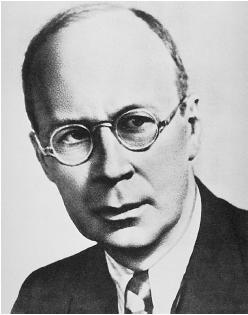
Every musician develops a taste towards certain styles of music but also towards certain composers. Since I have been playing since I was five I have performed various pieces by different composers. I found that I tend to enjoy as well as preform well music by Russian composers. My favorite turns out to be Prokofiev. Upon talking to other pianists I found it interesting that they would think that his music often represents many factory noises. As someone that has had some Russian influence in my life as well as lived on watching Russian animations, I had a completely different view. When I play or listen to his music I hear many of the Russian folk characters coming to life. There is a sense of magic that if you would just not see if one thought he was just trying to represent simple factory noises. You do not need to know the folk tales to fully hear that his music represents them. One amazing example is the concerto that I am currently working. I challenge you to listen to the different movements and hear that there is more to his music than just simply lots of noises. There is a magic there that simply cannot be described.
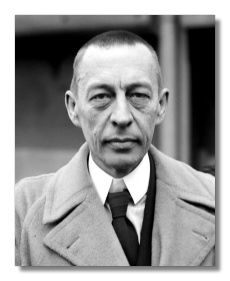
Born on (1 April, 1873 - 28 March 1943) in Semyonova Russia to an aristocratic family. Both Rachmaninoff's parents were amateur pianists who gave Sergei his first lessons when he was young. However, after Rachmaninoff's talents came to light, it was his maternal grandfather Arkady Alexandrovich who hired Anna Ornatskaya a musician from Saint Petersburg to give Rachmaninoff personal lessons in 1882.
Ornatskaya taught Rachmaninoff for three years until the Rachmaninoff family had financial issues said to be caused by gambling debts and had to sell 4 of their 5 estates. Upon returning to her home Ornatskaya arranged for Rachmaninoff to attend the Saint Petersburg Conservatory which he started at the age of 10. However soon after moving to Saint Petersburg Rachmaninoff's sister Sofia died in a diphtheria outbreak, at this same time Rachmaninoff's parents separated. This of course left Sergei in an academic disaster causing him to fail all of his exams.
At this point the faculty of the conservatory advised Rachmaninoff's mother to ship off her 12 year old son to study at the conservatory in Moscow. It was here where Sergei's musical career was put back on track due to Nikolai Zverev's strict work ethics. In fact Sergei thrived in Moscow not only was he getting piano lessons from Nikolai Zverev he was also getting them from Alexander Ziloti who was a former student of Franz Liszt.
In Moscow he was also being taught music theory and composition by names such as Anton Arensky and Sergei Tanyev. Quickly becoming their best and most valued student Rachmaninoff finished his piano studies a year early, and quickly finished his composition course in a single year by writing the one-act opera Aleko.
When Rachmaninoff first moved to Moscow his maternal grandmother frequently took Sergei to Russian Orthodox services, where he was first introduced to the liturgical chants and the big church bells of the city both of which have a huge influence on Rachmaninoff's compositions.
One composition you can clearly hear the influence of the big bells of the Moscow is in his Prelude in C# minor Op.3 No.2 which is one of his most popular/famous compositions. It also has been called "the bells of Moscow" and if you listen to the motif in the A section of the piece you can hear the bells ringing in the distance, and near the end you can hear them slowly fade away into the air.
Please Enjoy My Horrible Playing of Rachmaninoff's Prelude in C# minor