Showing posts with label music. Show all posts

Tuesday, September 15, 2015

In Search of the Soundtrack of my Life

I love to listen to music and I don’t really care if I can understand it or not. As long as it the beat and the words sounds good together, I am all for it…then later I actually listen to the lyrics and then I make a second opinion on the song…then I may or may not continue to listen to the song.

That’s my life.

So for this blog entry, I wanted to find Russian music that fits my personality and hope I can recognize some words and learn some new ones…maybe.  Also, for a disclaimer, I don’t know much Russian, therefore, I can’t be held responsible for whatever songs I find.

So my initial search, I started like any other person will, with YouTube! I turned on my Russian keyboard and typed randomly.

The first song I found was живота е един by Ice Cream. I loved the sound of the song but I had no clue, at all, what the song was about, didn’t even recognize a single word (which is fine, I don’t know enough words and I am sure the song isn’t about if she’s a student, her name, or where she is from, but I still added it to my morning playlist).

When I came to class the next day, I had to test my TA, make sure he knows what he’s talking about.  So, I played the song for him and he was going to translate it for me.  Well…that didn’t work out because 2 seconds in he said that it wasn’t Russian.  Turns out, it’s Bulgarian but to my defense it looks like Russian.  Therefore, random letters might not be the best way to search for Russian songs.

So for my real attempt number two, I found t.A.T.u. Turns out, I was listening to them back in middle school.  Meaning I was learning some Russian words before I had any clue it was Russian.  This lead me to my next discovery.  Russian music is written in plain English letters (!!!!) sometimes.  Here is the t.A.T.u. song I already knew which has Russian words as well as English –> Malchik Gay and here is another song from back when, Ya Soshia S Uma which has an English version, All The Things She Said!

Now, because I already knew these songs, I believe I need another attempt with Russian music. Now, I am googling Russian Top 10! This didn’t lead to an exciting search result since all of the Top 10 consisted of music I hear on the radio every day. With a bit more scrolling, I found a Russian song I like, with the trusted help of Shazam, and found song number 19, Имя 505 by Время И Стекло! I know what Имя mean, First Name!!! Exciting! And there’s number 22, Штрихкоды by ЭММА М, which I’m pretty sure I recognize some words.  Lastly, number 28, День И Ночь by Мот, which has also been add to my morning playlist and since I added it, I had to look up the lyrics. They are interesting, you should google translate it too!

If you are also interested in listening to the Russian Federation Top 100, you can check it out here: http://www.shazam.com/charts/top-100/russia


So this was the adventures of finding the sound track to my life!

Wednesday, October 8, 2014

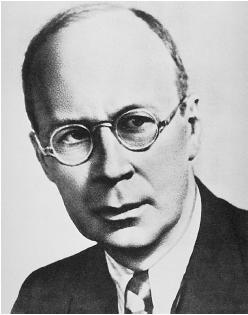
Sergei Prokofiev

Sergei Prokofiev
Every musician develops a taste towards certain styles of music but also towards certain composers.   Since I have been playing since I was five I have performed various pieces by different composers.  I found that I tend to enjoy as well as preform well music by Russian composers.   My favorite turns out to be Prokofiev.  Upon talking to other pianists I found it interesting that they would think that his music often represents many factory noises.  As someone that has had some Russian influence in my life as well as lived on watching Russian animations, I had a completely different view.   When I play or listen to his music I hear many of the Russian folk characters coming to life.  There is a sense of magic that if you would just not see if one thought he was just trying to represent simple factory noises.  You do not need to know the folk tales to fully hear that his music represents them.  One amazing example is the concerto that I am currently working.  I challenge you to listen to the different movements and hear that there is more to his music than just simply lots of noises.  There is a magic there that simply cannot be described.


Tuesday, September 16, 2014

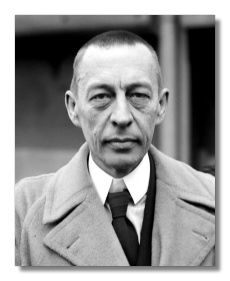
Сергей Рахманинов

Sergei Vassilievich Rachmaninoff

Sergei Rachmaninoff

     Born on (1 April, 1873 - 28 March 1943) in Semyonova Russia to an aristocratic family. Both Rachmaninoff's parents were amateur pianists who gave Sergei his first lessons when he was young. However, after Rachmaninoff's talents came to light, it was his maternal grandfather Arkady Alexandrovich who hired Anna Ornatskaya a musician from Saint Petersburg to give Rachmaninoff personal lessons in 1882.
    Ornatskaya taught Rachmaninoff for three years until the Rachmaninoff family had financial issues said to be caused by gambling debts and had to sell 4 of their 5 estates. Upon returning to her home Ornatskaya arranged for Rachmaninoff to attend the Saint Petersburg Conservatory which he started at the age of 10. However soon after moving to Saint Petersburg Rachmaninoff's sister Sofia died in a diphtheria outbreak, at this same time Rachmaninoff's parents separated. This of course left Sergei in an academic disaster causing him to fail all of his exams.
    At this point the faculty of the conservatory advised Rachmaninoff's mother to ship off her 12 year old son to study at the conservatory in Moscow. It was here where Sergei's musical career was put back on track due to Nikolai Zverev's strict work ethics. In fact Sergei thrived in Moscow not only was he getting piano lessons from Nikolai Zverev he was also getting them from Alexander Ziloti who was a former student of Franz Liszt.
    In Moscow he was also being taught music theory and composition by names such as Anton Arensky and Sergei Tanyev. Quickly becoming their best and most valued student Rachmaninoff finished his piano studies a year early, and quickly finished his composition course in a single year by writing the one-act opera Aleko.
   When Rachmaninoff first moved to Moscow his maternal grandmother  frequently took Sergei to Russian Orthodox services, where he was first introduced to the liturgical chants and the big church bells of the city both of which have a huge influence on Rachmaninoff's compositions.
   One composition you can clearly hear the influence of the big bells of the Moscow is in his Prelude in C# minor Op.3 No.2 which is one of his most popular/famous compositions. It also has been called "the bells of Moscow" and if you listen to the motif in the A section of the piece you can hear the bells ringing in the distance, and near the end you can hear them slowly fade away into the air.

Please Enjoy My Horrible Playing of Rachmaninoff's Prelude in C# minor


Thanks for reading and Listening!


Thursday, October 4, 2012

The бард and the семиструнка

In the 1960's, the term "bard" (бард) was applied to Russian singer-songwriters who were known for their poetry that they set to simple folk music.  Among the major emphases of bard poetry is a strong anti-Soviet sentiment that rendered bards mostly underground during the Soviet era, and consequently their music was rarely allowed to be recorded.  In general, bard poetry expresses messages of escapism and glorification of the outlaw life, and in this sense reminds one of American Western ballads and some American folk music.

Check out this Russian bard music here.

Bard poetry is generally accompanied only by a Russian guitar to maintain simplicity of the music so that the lyrics take prominence.  The Russian guitar itself is an interesting and unique aspect of bard music.  Unlike an ordinary six-string guitar, the Russian guitar has seven strings, and in Russian is often called a семиструнка, a nickname derived from семиструнная гитара (seven-stringed guitar).  The tuning of the семиструнка also differs from the standard tuning (E-A-D-G-B-e) of a six-string guitar; instead it is tuned to an open G-chord (D-G-B-d-g-b-d).


Thursday, September 22, 2011

Владимир Высоцкий

If any of you remember, Dr.Denner showed us this video during our first semester:
It is Владимир Высоцкий singing about a wolf hunt, and I seriously urge you to listen to it again (or for new students to listen for the first time). I can't understand everything he's saying, but I still find the emotion moving. It was good enough that I looked for more things that he's done. I came across a song called "Я не люблю". I've found a few translations, some of which give it as "I don't like" but I like it better translated as "I hate". It gives it more depth in my opinion. Here's a neat video site with the song in question and a few subtitle options for those who want an instant translation.

Monday, September 19, 2011

Музыка

As someone who appreciates good things, it's always fun to stumble across some quality music. Here are some pages with relatively good recordings of very good Russian choral groups.

Yale Russian Chorus - http://www.yale.edu/yrc/recordings.html (Kind of short recordings and only 3 or 4)

Russian Chamber Chorus of New York - http://www.rccny.org/WatchandListen.html (Really high quality and they're videos.)

Golosa - http://www.golosa.org/music (This one probably has the most music on it. Also it's the name of our book so it's gotta be good!)

Hope you enjoy this!

Wednesday, March 30, 2011

Russian Music through the ages

I have grown to really enjoy Russian music throughout the time I've been studying the Language in University. These are two of my favorite songs, which also do well in showing the progression of Russian music over the years ('80s-ish to present)

This first one, by Editha Pyekha, is a really great song about youth and years gone by.


The second one, by the artist Velvet, is a current top 50 hit in Russia (as per www.101.ru).

Monday, October 6, 2008

Great song

Sunday, September 30, 2007

Bolero

This is a short video that I found when I searched "Russian cartoon" on Youtube. There's really no way to write a synopsis of it, but watch it all the way through.


Director - Ivan Maximov
Music - Maurice Ravel, "Bolero"