Showing posts with label Unit 2. Show all posts

Tuesday, October 7, 2025

Сегодня в лингафонном кабинете! Unit 2 Week 3 Elementary Russian

Elementary Russian... LAB, Unit 2: Listening 


Добрый день! Мы рады вас видеть! = Good day! Nice to see you. 

Check out this week's Muzyka Monday!


OK, к делу! 

Grab the grammar quiz handout and write the quiz. It should be pretty straightforward.

Now, get a handout at the lab or download and print out your хендаут here (download your handout )


You will find two listening exercises, Давайте послушаем! Let's Listen! Do those first:

For the first, 2-38 магазин-салон, just listen a couple times to find out the items being advertised. You could circle the things... 

The second, 2-39 Магазин <<Мода>> ... just answer briefly the 3 questions, in the margin or below the exercise or the other side of the lab worksheet. Listen carefully for the words you understand and make your judgments accordingly.

 
This is it for today= ЭТО всё на сегодня (ta-dah!)


Wednesday, October 7, 2015

Some Russian home food!!

They say food is the front door to culture, it’s the way to immerse yourself for the first time, and a great way to meet new people. One of my favorite Russian dishes is Beef Stroganoff.  It takes about an hour and a half to make the dish from start to finish.

The necessary ingredients are:
·         2 pounds of beef chuck roast (quality depends on your budget)
·         ½ teaspoon of salt
·         ½ teaspoon of ground black pepper
·         4 ounces of butter
·         4 green onions sliced (white half only)
·         4 tablespoons of all-purpose flour
·         1 can (about 10.5 ounces) of condensed beef broth
·         1 teaspoon prepared mustard
·         1 can (6 ounce) of sliced mushrooms (drained)
·         1/3 cup of sour cream (I know, gross, but you don’t taste it and it's necessary)
·         1/3 cup of white wine
To cook:

1.       Remove any fat and gristle from the roast and cut into strips 1/2 inch thick by 2 inches long. Season with 1/2 teaspoon of both salt and pepper.
2.       In a large skillet over medium heat, melt the butter and brown the beef strips quickly, then push the beef strips off to one side.  Add the onions and cook slowly for 3 to 5 minutes, then push to the side with the beef strips.
3.       Stir the flour into the juices on the empty side of the pan. Pour in beef broth and bring to a boil, stirring constantly.  Lower the heat and stir in mustard. Cover and simmer for 1 hour or until the meat is tender.
4.       Five minutes before serving, stir in the mushrooms, sour cream, and white wine.  Heat briefly, then salt, and pepper to taste.

When I made this dinner for my sorority family dinner this past weekend, I served it over a bed of wide egg noodles and everyone enjoyed it.  This is a tasty meal to share with your friends and family because it is quick, easy, and inexpensive, especially for college students on a budget!!!


Всемирный день кошек!


International Cat Day (Всемирный день кошек) is an "unofficial" holiday celebrated most commonly on August 8th and has been a tribute to cats everywhere for over a decade. While some celebrate their feline companions in August, Russians prefer to celebrate March 1st. Luckily! For those who weren't on campus early enough to attend the numerous festivities I'm sure the SPREES center put on, the United States celebrates on October 29th! The day is fully supported by the ASPCA and is often revered as a great opportunity to encourage awareness of pets without homes as well as adoption of animals in general.

More information (and cat pictures) can be obtained from any of the following links:
http://www.nationalcatday.com/
http://www.huffingtonpost.com/2013/10/29/national-cat-day_n_4173471.html

Baba Yaga

Baba Yaga is a popular character in Russian folklore and fairytales.  She is an old, scary witch with iron teeth who lives in a hut deep in the forest. Her hut was a character of its own too.  Her hut had its own legs that it could use to walk and move around the forest with; it also would often shriek and scream, and would only cease its noises when a secret incantation was muttered to it.
One would know if Baba Yaga was near because her presence caused a strong wind to blow, the trees around to creak, sway, and groan, and a group of shrieking ghosts and spirits to appear.  Baba Yaga was often seen with carrying a broom made of silver birch, which she did not sit on to fly.  Rather this broom was used to sweep away all traces of herself.
Baba Yaga had 3 faithful servants: the White Horseman, the Red Horseman, and the Black Horseman. Each horseman represented a different part of the day; the White represented the dawn, the Red the Sun, and the Black the midnight.
Although she is mostly seen in stories as a scary witch, she is sometimes portrayed as a helper and voice of wisdom.  When seen this way in stories, she would usually give wisdom or magical gifts only to the heroes who were pure of heart.
     Image result for baba yaga

Russia Day

As we come into a university break of our own, I thought it might be interesting to learn more about a holiday in Russia. How better fitting than a holiday named after the nation itself? Russia Day is celebrated on June 12th and is comparable to our own 4th of July. On this day in 1990, Russia declared its independence and separation from the USSR. Now, then holiday is celebrated in a similar way our own independence day with fireworks and a day without work or school. Russia Day seems to be viewed by many as less of a call of nationalism and more of a mere day off of laboring.

Russia’s Stance on the LGBT Community

In two years leading up to the 2014 Olympics in Sochi, many antigay laws were put into effect in Russia.

As of March of 2012, there is a “gay propaganda” ban that is placed only on the city of Saint Petersburg.  This makes public demonstrations promoting LGBT illegal because Russia does not want its minors to be influenced by this type of “propaganda”.

In June of 2013, a nationwide ban went into effect on “Propaganda of Nontraditional Sexual Relations,” which banned everyone from giving information to minors regarding LGBT people and banned anyone from being able to say that those in the LGBT community are socially or morally equivalent to heterosexuals.  Later in June of the same year, the “gay propaganda” law of Saint Petersburg became nationwide. 

In July of 2013 a law went into effect that banned foreign, same sex couples from adopting Russian orphans. This law also forbade citizens of nations with marriage equality (whether they are gay or straight), from adopting Russian orphans.

In August of 2013, people were encouraged to report their gay neighbors to the government.  Causing gay people’s homes to be raided and searched for “propaganda.” 

In September of 2013, a new law was drafted giving rights to the government to be able to remove children from their parents only on the basis that the parents are homosexual.

The attitudes towards homosexuals in modern day Russia is reminiscent of the way citizens of the Soviet Union were treated when being suspected of being anti-communist. Especially disturbing is that the government is encouraging its own citizens to turn against each other.

Tuesday, October 6, 2015

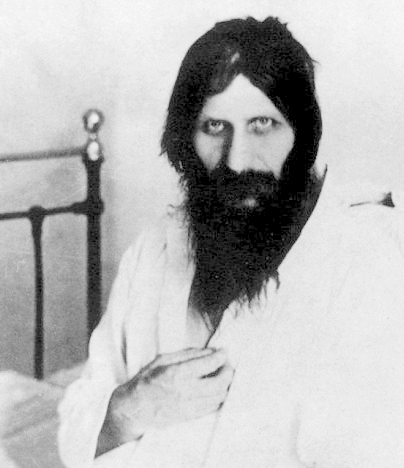
Rasputin

Grigori Rasputin was the famed 'holy man' who gave counsel to the last Czar of Russia. He was also incredibly hard to kill. In an elaborate assassination plot Prince Felix Yusupov and Dmitri Pavlovich laced wine with cyanide. Once Rasputin was drunk with the poisioned wine they shot him at close range, hitting his chest and liver. Rasputin; however, awoke and tried to escape. His escape attempt was discovered and he was shot again and beaten, including getting kicked in the eye. Rasputin, some how still alive was then thrown into the freezing cold, Malaya Nevka river. His body was discovered a few days later. The Soviets came to power soon after his death.

Religion in Russia

Sources appear to disagree on the specifics and percentages regarding the different religions. One site states the existence only a 41% Orthodox Christian population, with a 6.5% Muslim population and a nearly nonexistent Jewish population. Yet another claims a massive increase in the Orthodox personage to 75%, whilst maintaining a similar Muslim percentage at a crisp 5%. However, a highly reputable source in Stetson's Dr. Denner claims that, in Moscow, a solid 90% of Russia's population is Orthodox Christian, with 5% coming again from Islam, and only an estimated 10,000 Jews. We can infer several key points from such disparities and similarities - Moscow, a much more highly concentrated part of Russia than the more often seen countryside, has a larger percent of Orthodox Christians. Such a large portion of Moscow being Orthodox most likely comes from continuous efforts at Communism throughout the 20th century -- such efforts appearing in a much more concentrated form in the city (Moscow). The consistent 5ish percent of Muslims comes from the attempted integration of countries directly south of Russia - while other religious parties are missing from Russia's conglomerate of religion.


The graph above shows an even different approximation of "Russian Religions," with Muslims making up just nigh of 20% this time around.
While the numbers may differ, what we can take away from this is obvious in the graph.

A Thawing of the Cold War


The selection of Mikhail Gorbachev as General secretary of the Soviet Union ushered a new era in Soviet and American relations. His policies of glasnost (openness) and perestroika signaled that the Soviet Union is changing dramatically. Together with President Ronald Reagan, Gorbachev would sign the landmark INF treaty which would scale back the nuclear forces of both nations. These developments, along with the increase dialogue between the two nations, would lessen Cold War tensions.

The picture above perfectly captures the climax of this monumental development. It depicts Reagan's visit of Red Square during the Moscow Summit of 1988. In the picture Gorbachev tells a Russian child, "Shake hands with Grandfather Reagan."

Monday, October 5, 2015

Royal Origins: The Hermitage Museum

Without a doubt, the Hermitage Museum is one of the most famous museums in the world. Housed in the Winter Palace, the museum contains a nearly unrivaled collection of art; in fact, the museum has become so large, they have launched many "dependent museums" across Russia and other parts of Europe, with several more due to open late next year. However, the Hermitage was not always as prominent as it is today.
The Hermitage is currently housed in the Winter Palace Complex, Saint Petersburg.


The Hermitage began as Екатерина Алексеевна's (Catherine II, Empress and Autocrat of all the Russias) private collection. It was assembled originally for Frederick II of Prussia by Johann Gotzkowsky, but after Frederick refused to purchase the collection, Catherine, a patroness of the arts, jumped to purchase the collection in 1764. In fact, many of the original pieces from Catherine's collection are still in residence at the Hermitage today, such as Rembrandt's Danae and Portrait of A Young Man Holding A Glove by Franz Hals. Over the next ten years, Catherine commissioned architects Yury Felten and Jean-Baptist Vallin de la Mothe to build the Small Hermitage, later called the Hermitage Complex, as an extension of the Winter Palace.

The collection soon outgrew the building complex it was housed in, leading to its placement in another building, now called the Old Hermitage, in 1787. Following the October Revolution by the Bolshevik Party in 1917, the Imperial Hermitage and the Winter Palace were merged, leading to the placement of the vast collection in the Winter Palace. In the last century the museum has continued to grow, as is evidenced by the launching of dependencies and the many traveling Hermitage exhibits across the world.
An interior view of a portion of the Hermitage today.

Saturday, October 3, 2015

Kholodets

Kholodets, also referred to as studen, is a traditional Russian jellied meat dish, important to the winter holidays and celebrations. It usually comprises of fresh meat and cold broth-- hence the jelly effect-- and must be served cold in order to maintain its shape and appearance. This dish is often an appetizer, and accompanied by strong horseradish sauce or Russian mustard. It is also a very good companion food with vodka. However, if you want to make this dish, be prepared to spend a full day on preparation and another just to cool the broth! The making of true kholodets is really quite an art.


Friday, October 2, 2015

Pelmeni!

Russian Pelmeni 

In the spirit of the upcoming cultural credit, here is a recipe for Pelmeni.  Pelmeni are Russian poached pastries that have a meat filling. "Neighbours gathered after the frosts set in, having fun while pelmeni are being made in quantities running into the thousands. They are laid out on huge dough boards and carried outside to freeze, after which they are dumped into sacks like so many pebbles and stored away until needed...

Ingredients:
2 c flour
1 c milk or water
1/2 tsp salt
1 tbsp vegetable oil
3 eggs
1/2 lb beef
1/2 lb pork
1 onion
salt and pepper to taste
Method:
1. Grind beef and pork twice in meat chopper. Then add chopped onion, salt, and pepper. To make mincemeat more tender and juicy, add a bit of milk. Reserve.
2. Mix flour with eggs and milk, salt and oil until a soft dough forms. Knead on floured surface until dough is elastic.
3. Take some dough and make a "sausage" (1 inch in diameter). Divide into pieces (1 inch thick). Roll each piece so that each is 1/16 inch thick.
4. Take a glass or a cup (2 inches in diameter) and make rounds with it's help on the dough. Fill each round with 1 teaspoon of the mincemeat, fold into half-moons.
5. Pinch edges together and connect the opposite sides. Pelmeni can be frozen to be cooked later ( you can keep them in the freezer for a long time), or cooked immediately.
6. To cook pelmeni, boil a large amount of water, as they can stick to each other. Salt water. Carefully drop pelmeni into boiling water. Don't forget to stir them from time to time. Boil for 20 minutes.
5. Served with butter, sour cream or vinegar, and ketchup.

(Ruscuisine.com) 

Thursday, October 1, 2015

Reykjavik

A dose of Russian Foreign Policy history...

During 1986, the Soviet Union and United States were in the middle of a Cold War. Due to both nations' significant military advancements, they were in the middle of a MAD situation (yes, Gorbachev and Reagan were both pretty mad but in this case it stands for 'Mutually assured destruction'). 

At the conference in Reykjavik, Iceland, 1986, both strong leaders met to sort out a nuclear arms policy. Gorbachev was frustrated by Reagan's insistence on the STAR WARS project (a defense system based in space). 

In order to successfully establish a INF treaty, Gorbachev and Reagan were both willing to consider giving up all of their INF weapons. Unfortunately, since Reagan was unwilling to compromise on his STAR WARS program, not much was able to be achieved at this conference, frustrating both foreign leaders.

Wednesday, October 8, 2014

Traditional Russian Foods

After the Pelmeni Party last Wednesday, I was inspired to look at other Russian foods.  I found an article on traditional foods that are not popular here in the United States.

Here are some of the foods discussed in the article:

  • Borshch--A beet soup full of vegetables and meat, served with sour cream. 
  • Pirozhki--Little pastries stuffed with potatoes, meat, cabbage, or cheese.
  • Ikra--Caviar served or blini, crepes.
  • Shashlyk--A kebab formed of any combination of meat and vegetables.
  • Morozhenoe--Ice cream topped with fruit, nuts, or chocolate.

General Info About Putin

Hey,

Did anyone else realize that yesterday was Vladimir Putin's 62nd Birthday? According to the Kremlin Press, he was deep in the middle of nowhere, Siberia for his birthday.However, Moscow held a celebration in Red Square.

Some interesting facts about Putin's time in power:
He has been president of Russia since 2012, but he was president in the past, too. He was president from 2000-2008 as well.
Before his first reign as president, he was Russian prime minister; from 1999-2000. He also served as prime minister during those years between his presidencies, 2008-2012.
This means that for the past 15 years, Vladimir Putin has always held a position of power in Russia's government.

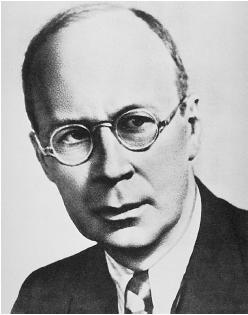
Sergei Prokofiev

Sergei Prokofiev
Every musician develops a taste towards certain styles of music but also towards certain composers.   Since I have been playing since I was five I have performed various pieces by different composers.  I found that I tend to enjoy as well as preform well music by Russian composers.   My favorite turns out to be Prokofiev.  Upon talking to other pianists I found it interesting that they would think that his music often represents many factory noises.  As someone that has had some Russian influence in my life as well as lived on watching Russian animations, I had a completely different view.   When I play or listen to his music I hear many of the Russian folk characters coming to life.  There is a sense of magic that if you would just not see if one thought he was just trying to represent simple factory noises.  You do not need to know the folk tales to fully hear that his music represents them.  One amazing example is the concerto that I am currently working.  I challenge you to listen to the different movements and hear that there is more to his music than just simply lots of noises.  There is a magic there that simply cannot be described.


Aleksandr Pushkin

(Born 1799, Died 1837)

Aleksandr Pushkin is, by common agreement -- at least among his own compatriots -- the greatest of all Russian writers. The major part of his lyrical poetry was written between 1820 and 1830, but some of his poetical masterpieces were composed in the last seven years of his life, when he was turning his attention to prose. He cleverly crafted a masterful blend of the three main ingredients of the Russian literary idiom -- the Church Slovanic, the Western European borrowings, and the spoken vernacular. Pushkin created the language of modern Russian poetry. His personal life was made difficult by his conflicts with the authorities who disapproved of his liberal views.

Not surprisingly, he was killed in a duel. 

Tuesday, October 7, 2014

Алекса́ндр Никола́евич Скря́бин

Alexander Nikolayevich Scriabin

    Born January 6th, in Moscow Russia, Died April 27th in Moscow Russia. Although during his lifetime Scriabin was never out of the mainstream music world. However, he was ignored quickly after his death. It was not until recently before his music and ideas were resurrected and studied.
    
    Scriabin wrote five three of which were the "Divine Poem", "Poem of Ecstasy", and the "Poem of Fire or Prometheus". He also wrote 10 piano sonatas which are now considered a must have in professional pianists repertoire. 

    Scriabin's hundreds of etudes and preludes are considered to be masterpieces of 20th century piano music. In the younger years of his life he stuck to the romantic style music but in his later years he began to explore atonality. Some say that if he lived longer than the 43 years he lived Moscow would have been the center of atonality.


    As soon as Scriabin passed, Sergei Rachmaninoff toured all of Russia playing concerts containing only pieces Scriabin wrote. Rachmaninoff and Scriabin were colleagues and students together in the conservatory. When Scriabin and Rachmaninoff were students together Rachmaninoff was the composer and Scriabin was the pianist. It was because of  Scriabin that Rachmaninoff was able to launch is piano career later in his life. 


Enjoy Horowitz play one of Scriabin's piano Etudes.
Op 8 No. 12

Валенти́н Алекса́ндрович Серо́в

     This Russian painter known as Валентин Серов was the first of his era to perfect the "selfie". Joking aside, Серов truly was one of the premier portrait artists of his time. Серов was born on January 19th, 1865 and died on December 5th, 1911. He was born in St. Petersburg, Russia to a Russian composer named Александр Серов and another composer of Jewish-German background named Valentina Bergman.
     In Серов's time span alive he accomplished many feats in his career. In his childhood he began studying art in Paris and Moscow, and as an adult studied in the St. Petersburg Academy of Arts under Павел Чистяков. Серов's early creativity was influenced by Чистяков's realist art of Repin  and strict pedagogical system. His later influence came from old master paintings he viewed in the museums of Russia and Western Europe.
     The greatest works of Серов were his portraits. In fact, his portrait known as The Girl with Peaches (1887) was the painting that inaugurated Russian Impressionism. From 1890 on, his focus was mainly on portraits and Серов's favorite models were actors, artists, and writers (Константин Коровин, 1891, Исак Левитан, 1893, Николай Лесков, 1894, Николай Римски-Корсаков, 1898). When married to Ольга Трубникова in 1887, his wife and children were became subject of many of his works. Notably, his painting Children was of his sons Юра and Саша. In 1900, Серов was a member of "The World of art", an influential Russian art association and magazine. At this point in time a turning point in the art community began and Серов's modernistic style started to develop. The last years of Серов's life were marked by works on themes from classical mythology. While addressing images from the ancient tradition, Серов endowed classical subject matter with a personal interpretation.
     When Серов died he left behind a legacy for all Russian artists, and artists in general to admire. The best works of Серов are among the greatest of Russian realistic art.Also a random fact would be that a minor planet discovered by a soviet astronomer named Людмила Журавлёва named it after Серов  as 3547 Серов.

Sunday, October 5, 2014

Русский Хэллоуин

It’s almost that special day of the year when all of the пебёнок run from door to door, dressed as призраки, упыри, и гоблины. Yes, I’m talking about Halloween; a beloved American holiday, marked by many traditions and the commercialization of death, which is celebrated each year on October 31.  Unfortunately, Russians do not share American’s adoration of this very westernized holiday. In fact, many areas have banned its celebration in schools and are encouraging youths not to participate in any activities at all. The components considered to be harmless fun by Americans are said to be satanic and harmful to children by Russian religious groups.


The rejection of Halloween has more of a purpose than to reject supposedly satanic principles, though. Many Russians believe that, by eliminating holidays such as Halloween and Valentine’s Day, Russia can revive some of its own traditions. Put simply, Halloween is synonymous with the westernization of Russia in the minds of many. After the Soviet Union fell, Halloween became very popular.