Showing posts with label Unit 4. Show all posts

Thursday, November 19, 2015

Love

From Russia With -Or Without- Love

Since it is clearly the Winter Season here in Florida (it is officially sub-80; break out the Uggs!), there’s nothing people want to do more than plop down in front of a blazing fireplace and bundle themselves up in a thick bear-fur coat in preparation of the blizzards that are sure to come. Now, while Russian winters are clearly milder than those of the frigid Southern US, the thin-blooded people still use it as an excuse to cuddle. Which brings us to love…

Love is an interesting thing, in Russia. I could write an entire dissertation on Putin and gay rights, but that is another paper for another day.

Just as exciting is the idea that it is considered a bad thing, when attempting to woo a potential date, to give him/her an even number of flowers. This is because large bouquets like this are typically associated with funerals, and are considered bad luck when bestowed upon the living. So, buying a dozen roses is a big no-no.

That said, if your woman turns you down because you didn’t bring flowers, you’re chances are still pretty decent! There are substantially more women in Russia than men, almost 10,000,000. People initially believed it was due to the number of men who died during World War II. Romantic, indeed.
And on the off-chance one of the many women in said country does decide to partake in the classic American chivalry, you may find yourself wearing your wedding rings on your right hand rather than your left. In many Eastern countries, this is considered the tradition.

Something you might want to consider, since Moscow is home to more billionaires than any other city in the world.

Winter is coming. May mittens and hot chocolate bring warm fuzzies to your heart.


Wednesday, November 18, 2015

Recycling in Russia


Every year, Moscow produces about 9 million tonnes of rubbish - a fifth of all the waste produced in Russia - which goes to 38 landfill sites on the edges of the city. In Dyakovo, a town next to the Dmitrovsky dump, the soil is so contaminated that vegetables will not grow there.

With 24 dumps scheduled to shut this year, the situation is so urgent that local authorities are pledging to recycle or incinerate as much as 65% of the city's waste - up from just 10% at present.


In the Soviet era, citizens sorted their own rubbish, earning a small amount of money for scrap metal, paper and glass handed in at local collection points. But mountains of rubbish have piled up ever since the system collapsed.
Recycling companies are starting to pop up in the region, sensing opportunity. But one firm says until local laws change, burying rubbish in a landfill is the cheapest option.

Katyn Massacre

In 1940, Soviet NKVD (secret police) agents massacred 22,000 Polish citizens, including military officers, scholars, and professionals. In the Katyn forest, 4,400 were massacred. Initially, the USSR blamed this tragedy on Nazi Germany. Special commissions were established to cover up the crime. In the end, those 'investigating' the massacre were the same men who had committed the original crime. These men originally used German pistols in anticipation of having to disguise their guilt. When the NKVD went back to the forest, the bodies were removed from their mass graves and false documents were planted on the victims in preparation for further investigation. It took many years of both the USSR and Germany rejecting all accusations of guilt before the truth was finally revealed during Gorbachev's glasnost. Still, not all of the documents were released and it took many years for the Polish to piece together these tragic events.

The Ural Mountains


One of Russia's major geographical features is the Ural mountain range. The range runs from the Arctic Ocean down to Kazakhstan and is considered to be natural division between Europe and Asia. "Ural" also refers to the region famous for the presence of gems and other stones. Mining in this also includes copper, iron, gold, platinum, silver, nickel, and other various metals.


In addition to the natural resources found in this area, there are also a variety of people groups inhabiting the area. One website (peoplegroups.org <- very original name), claims there are 42 people groups in this region.

Also, there was a meteor that hit in 2013.


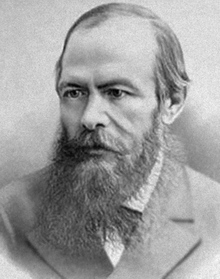
Фёдор Достое́вский


Fyodor Dostoyevsky is an acclaimed Russian writer and regarded as one of the best not only in Russian culture, but also internationally. After experiencing traumatic events in his life such as imprisonment, exile, and most importantly the mock execution ordered by Tsar Nicholas I, he wrote about human weakness and the struggle to fit in with society. His influence for writing came from no other than Pushkin, arguably the largest name in Russian literature. Notable works include IdiotNotes From the Underground, and Crime and Punishment

Come and See

Come and See is a soviet anti-war film from 1985. It takes place in 1943 Belarus and follows a young boy trying to survive as part of a group of Belarusian partisans fighting the German occupation. At first the young boy is excited about joining the cause against the nazis, but he soon finds out about the harsh realities of war, and especially the atrocities done by the Nazis. Many of the scenes of this movie, although accurate, are truly vile and will put you in a state of shock. The director was truly trying to portray the evil deeds done by the Nazis in the war against the Eastern European countries. Although hard to watch, this remains one of my all time favorite movies. The title refers to the beginning of several sentences in the Book of Revelations, which tell you to look upon the destruction brought upon by the four horsemen of the aocolypse.

Tuesday, November 17, 2015

Kazimir Malevich

Kazimir Malevich was a notable artist born in Kiev when it was still part of the Russian Empire in 1878. He was one of the first artists to move towards Suprematism. Suprematism focuses on shapes and limited colors. Many of these suprematism works were banned in the USSR because the Stalin regime considered them to be too bourgeois. Two of his most famous paintings are White on White and Black Square. White on white is now located in the Museum of Modern Art in New York City and Black Square, his magnum opus, is located in Tretyakov Gallery in Moscow.

Current Events: An Impromptu Meeting

Saturday, November 7, 2015

Russian Tea Cakes

Ingredients 

    • 1 cup butter or 1 cup margarine, softened
    • 1/2 cup powdered sugar
    • 1 teaspoon vanilla
    • 2 1/4 cups all-purpose flour
    • 1/4 teaspoon salt
    • 3/4 cup finely chopped nuts
    • powdered sugar

Directions

  1. Heat oven to 400 degrees F.
  2. Beat butter, 1/2 cup powdered sugar and the vanilla in large bowl with electric mixer on medium speed, or mix with spoon.
  3. Stir in flour and salt.
  4. Stir in nuts.
  5. Shape dough into 1-inch balls.
  6. Place about 2 inches apart on ungreased cookie sheet.
  7. Bake 8 to 9 minutes or until set but not brown.
  8. Immediately remove from cookie sheet; roll in powdered sugar.
  9. Cool completely on wire rack.
  10. Roll in powdered sugar again.(food.com)

Wednesday, November 19, 2014

Interesting Book

Russian themes:
So when studying Russian history prior to the revolutions in the early 1900s, there are there main themes to keep in mind.
1) Autocracy
2) Empire
3) East or West

When reading the novella Fathers and Sons, by Turgenev it is important to keep these themes in mind to understand the roles and differences between the two generations. Additionally, this book takes place during the timeframe where many new generation Russians were turning against the traditions of the old empire.
I would recommend this book to anyone as a fun read, or as a book for better understanding Russian culture.

Russian Alcohol Abuse

After all of the fun class discussion about Russia’s relationship with водка, it is interesting to look at this common pastime’s impact on the nation’s health. According to the Central Intelligence Agency, as of 2014, Russian men are expected to live to the ripe old age of about 64, being surpassed by women who are expected to live until their mid-70’s. This death-age gap is found in the United States as well, with women living about 82 years and men only 77. The important thing to note, though, is that men in the United States are, on average, living more than ten years longer than Russian men. Many attribute this drastic difference to the prevalence of alcohol abuse in Russia. It is well known that one of the leading causes of liver disease is alcohol abuse and binge drinking; partnered with the fact that the mortality rate due to alcohol (in 2010) was 20 times higher than in other European countries, it can be seen that Russia has a serious alcohol problem. 

Russian Literature Week 2014

"Hemingway acknowledged that he would not have known Leo Tolstoy and Fedor Dostoevsky if not for the translations of Constance Garnett.  How could we learn about other cultures and civilizations without reading their literature?  And how could we do that without translation, the most vital and underappreciated art?"--Antonia W. Bouis, Read Russia Anthology

Chekhov poster image

Russian Literature Week is held annually from December 1st to December 5th in New York, with some online events. It is described as “a celebration of Russian literature in translation featuring distinguished authors, translators, editors, publishers, journalists, filmmakers, broadcasters, & arts, education, and cultural institutions." This year they are celebrating new translations from a large variety of publishers and producers.

The group that organizes this annual event is known as Read Russia. They were founded in 2012 and they have locations in Moscow, New York, and London. They support English translation and publication of Russian works. In addition, they provide international audiences with opportunities to interact with Russia's literary leaders and heritage.

Source: http://readrussia.org/

My trip to St. Petersburg, Russia

December 2012, I had the amazing opportunity to compete internationally at St. Petersburg, Russia in a piano competition.  Having never been to Russia before I experienced a massive culture shock. Initially I did not enjoy my time there but at the end of the two weeks I realized it was an incredibly cultured place.

The Hermitage


A synagogue that we went to
 ,   


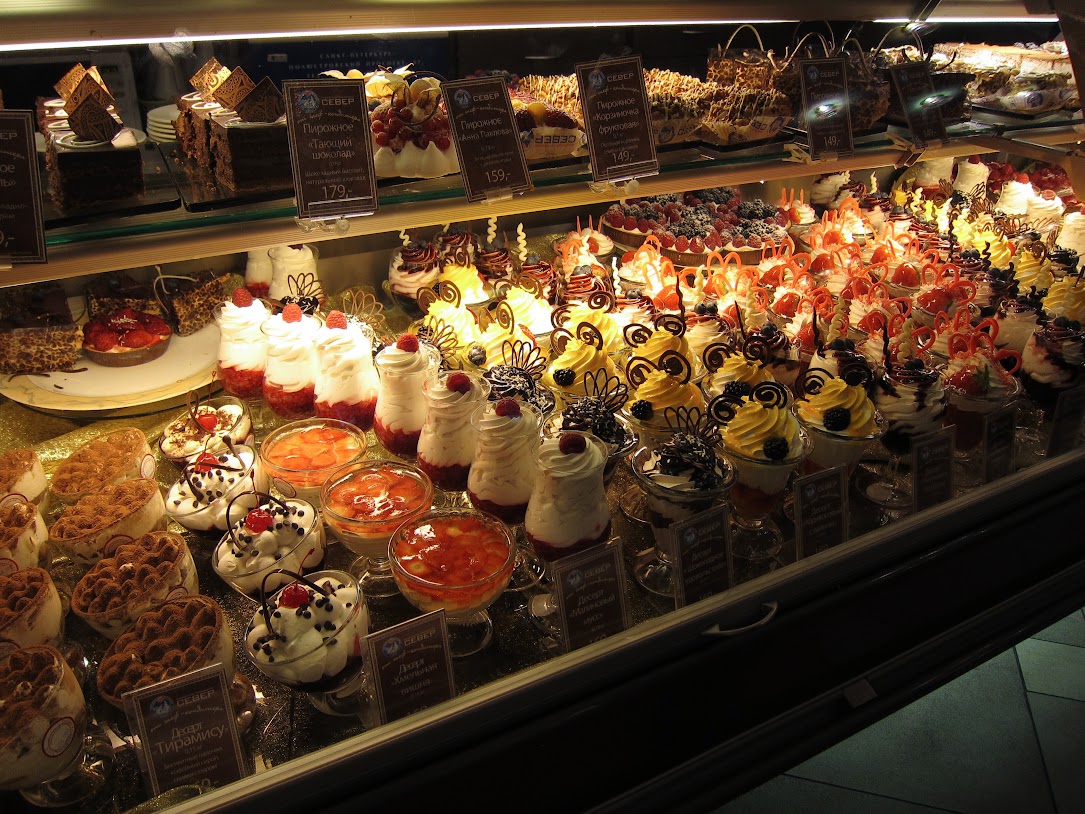
CEBEP - name of an amazing cake/pasty/sweet shop


Watched Gergiev (very famous Russian conductor)
 
Conducted an orchestra
 
 Conducting at an Opera - Mariinsky Theater


Look! The River is starting to freeze!


Random Stuff


By far my favorite image....we needed to keep the cakes frozen that we got from CEBEP and the freezer in our hotel  was way to small for it and it was below freezing so we simply hung it outside the hotel room which was on the top floor.


All photos are credited to my father (except the last one...that one is mine)

Tuesday, November 18, 2014

The Cossacks: The Legendary Fighting Force of Russia with Silly Hats

The Cossacks : The Legendary Fighting Force of Russia


Who were these guys in the silly hats? These are the Cossacks, a unique part of Russia's history. These men where around since the 15th century and the fighting force of Russia. Sure they may look silly but they would surely kill you without hesitation. It was these guys who protected the borders of Russia, found Siberia. All of the Europeans feared their skills in battle.

The Cossacks communities formed around the lower reaches of the Dnieper, Don, Terek, Volga and Ural rivers. These communities however were at constant war with the states and tribes around them, it was almost barbaric in a sense. As time went on the Cossacks had eventually fought every single one of their neighbors. The Cossacks would even charge a toll to anyone trying to trade through their routes. These men were the force to be reckoned with in Russia back in the day. They wearnt full blown Russianhowever, they were also Turkish and Caucasian influences aka. Dark-haired and dark-eyes were often traits of a Cossack warrior. 

Sunday, November 16, 2014

Фотограф Маша Демианова!


    There is an up and coming photographer from Moscow, Russia named Masha Demianova/Маша Демианова that I discovered over the summer when I was taking a photography class. I love her work, her portraits are very contemporary.
     A little about Маша: when she was 14 or 15 is when she bought her first Canon AE1 and has done nothing but shoot since. When asked about what she tries to achieve in terms of effect on her viewers and she answered as follows, "I guess I'm trying to give people the possibility to see more than what appears in a picture – not just a girl in a dress laying on the grass but also a feeling of inner substance within the frame. If I shoot with a particular idea the goal is to transmit it as honestly and purely as possible." Маша has a number of influences from already renowned artists, such as Vincent van de Wijngaard, Tim Barber, Ryan McGinley, Cass Bird, Lina Scheynius, and a influence of a personal mentor and some American and French film directors. Маша enjoys shooting in nature, it is her ideal place to have photo shoots with her models. She has said that loves to shoot in her grandma’s country house and around it; "cause I spent lots of summers there as a kid and I really know the area. I know where my favorite tree is and how the light works on every inch of grass in the forest."Маша believes gender matters for photographers, her reason being that men and women do everything differently and they are completely different creatures. Her last words in an interview she had with Dazed online magazine were "Keep shooting. I'm only at the beginning."
    I think that is great to hear from her, I am excited to see more of her work and see how she grows as a photographer. Attached to this entry are photographs of Маша's, and for more of her work and contact info here is her website: http://mashademianova.com/ Enjoy!

Tuesday, November 26, 2013

Almost WWIII...........

Everyone should know what the Cuban Missile Crisis is, but in case you don’t it was the closest the world has ever come to nuclear war. The U.S. and the U.S.S.R. were the two super powers in the world at this time after WWII and it just so happened that American capitalism and Soviet Communism made for an unhappy living arrangement causing the world to be on high alert for WWIII. Most people though don’t know how close we came to fighting a nuclear war. The decision to abstain from war actually rested on one officer’s command.
He was the man who saved the world by single-handedly averting World War Three. At the height of the Cold War, when paranoia on both sides meant the slightest mistake could spark nuclear war, four submarines secretly set sail from Russia to communist Cuba.Only a handful of the submariners on board knew that their ships carried nuclear weapons with them, each with the strength of the bombs dropped on Nagasaki and Hiroshima in 1945.
Vasili Arkhipov, aboard the sub B59, was one of them. As his craft neared Cuba, U.S. helicopters, aeroplanes and battleships were scouring the ocean for Russian subs. In a game of high stakes cat and mouse it wasn't long before the Russians were spotted. Arkhipov's sub was forced to make an emergency dive. As the submariners tried to stay hidden from their US hunters, conditions in the sub deteriorated. For a week they stayed underwater, in sweltering 60C heat, rationed to just one glass of water a day.

Above them, the U.S. navy were 'hunting by exhaustion' - trying to force the Soviet sub to come to the surface to recharge its batteries. They had no idea that on board the submarines were weapons capable of destroying the entire American fleet. The Americans decided to ratchet up the pressure, and dropped warning grenades into the sea. Inside the sub, the Soviet submariners thought they were under attack.
Valentin Savitsky, the captain of B59, was convinced the nuclear war had already started. 
He demanded that the submariners launch their torpedo to save some of Russia's pride.

The programme on Channel 5 revealed how in any normal circumstances Savitsky's orders would have been followed, and World War Three would have been unleashed. And although his men were against him, he insisted that they must not fire - and instead surrender. It was a humiliating move - but one that saved the world. The Soviet submariners were forced to return to their native Russia, where they were given the opposite of a hero's welcome.

Friday, November 22, 2013

A More Sporting Lifestyle

In Russia a new way to pay for subway tickets has been released. This is by doing squats. As payment for a one way trip on a subway you can do thirty squats in less than two minutes. This is opposed to about ninety cents you would pay for a normal ticket. Failing results in you having to pay for a ticket. There aren’t any participation points.

            This machine was installed for the 2014 Sochi Winter Olympics at the Vystavochnaya subway station. Alexander Zhukov said “We wanted to show that the Olympic Games is not just an international competition that people watch on TV, but that it is also about getting everyone involved in a sporting lifestyle.” Along with these squats new ways are being developed to add a sporting element to Russian lifestyle in preparation for the winter games. They are currently working on exercise bikes to be able to charge a phone and other various electronic devices.


Thursday, November 21, 2013

US Currency

In Russia currently, the banks support US currency. You can trade this directly at banks without having to worry about the exchange rates and all the nuances that come with that. A poll went around 130 cities in Russia getting approximately 1,600 respondents with a 3.4 percent margin of error. The poll shows that one in every four Russians support the proposal to ban US currency from circulation and savings deposits. 39 percent wanted the currency to remain legal and 32 percent had no opinion. This poll was run by the state-run VTsIOM pollster because of a bill proposed by a state lawmaker last week.

40 percent of the 28 percent who wanted to ban the US dollar completed an elementary level of education. More than half of the opposing side were highly educated. This statistic alone shows how various education levels view every day decisions.

This bill was because of the belief that the dollar was on the brink of collapse and needed to protect the russian economy from an economic disaster. Whether or not this is the case, we will find out in time.

Orthodox Icons

The Russian Orthodox Church is very into icons. They are believed to be windows into heaven, a link to the divine on the mortal plane. The mosaics are unique in the way they seem dematerialized and abstract.The figures are often painted onto a golden background. It makes the image seem to flicker in the candle light. Halos are also commonly used in Orthodox icons. Also known as nimbus or  auroras, they surround saints, prophets, Jesus and Mother Mary. One of the reasons icons are so useful is they were used to teach the illiterate. Paintings, mosaics, and statues could communicate the stories of the bible quite well to those who couldn't read it for themselves.

Plane crash in Russia

A Russian plane crashed a day ago, killing the 50 people on board. The plane crashed seemed to be caused by losing control of the aircraft, earlier that day the pilot had trouble landing the plane and eventually lost control. The aircraft that crashed was a Boeing 737, and in the crash teams found the tape of the cockpit's recordings, which is a crucial piece of evidence when piecing together why the crash happened. The Moscow-based Interstate Aviation Committee provided the teams to investigate the crash, The committee investigates crashes all over the former Soviet Union. They figured out that the crash was loss of control, but both pilots had sufficient experience, but not with second landings, which could have been the pilots' downfall.